
The First Time I Realized This Wasn't — Pocket Change —
I'll never forget the afternoon I stumbled across a Reddit thread in r/beermoney where someone had posted a screenshot of their annual GPT earnings: $847.34. Not life-changing money, but enough to cover a car payment, a few streaming subscriptions, and a couple of nice dinners. What struck me wasn't the amount — it was the comment underneath: — This is just from Swagbucks while I watched Netflix. I wasn't even trying that hard. —
That was three years ago. Since then, I've spent hundreds of hours across Swagbucks, Freecash, PrizeRebel, and more platforms than I care to admit. I've been disqualified from surveys at 11 PM. I've rage-quit mobile games three levels short of a payout milestone. I've also quietly cashed out enough in gift cards to fund an entire holiday season without touching my salary.
But here's what nobody told me when I started: the GPT (Get-Paid-To) industry isn't some niche corner of the internet where a few bored people click ads for pennies. It's a legitimate, multi-billion-dollar economy with millions of active users, publicly traded parent companies, and advertising budgets that rival some mid-sized media networks. The question isn't whether GPT sites are — real — — the question is how big they've actually become, and who, exactly, is sitting on the other side of those offer walls.
If you're reading this in 2026, you've probably noticed something annoying: search for — GPT — and you get drowned in results about OpenAI's ChatGPT. The acronym collision is real, and it's a genuine SEO headache for anyone writing about Get-Paid-To platforms. In this article, GPT means Get-Paid-To — reward platforms like Swagbucks, InboxDollars, Freecash, and PrizeRebel where users complete tasks in exchange for cash, gift cards, or points. It has nothing to do with generative AI, though the naming confusion is so pervasive now that even industry insiders joke about it.
Let's talk about the real numbers, the real people, and the real economics of an industry that's quietly paying out hundreds of millions of dollars every year.
What Exactly Is the GPT Market?
Before we measure the market, we need to define what we're measuring. The GPT market sits at the intersection of three much larger industries: performance marketing (CPA advertising), market research (online surveys and consumer panels), and affiliate commerce (cashback and referral programs).
A GPT platform is essentially a consumer-facing aggregator. On one side, advertisers — mobile game studios, fintech apps, VPN services, subscription brands, and market research firms — need real humans to install apps, complete surveys, sign up for trials, or make purchases. On the other side, millions of everyday people have spare minutes and an internet connection. The GPT platform sits in the middle, matching supply with demand and keeping a margin on every transaction.
This three-sided market structure is what makes the GPT economy durable. It's not a charity handing out — free money, — and it's not a scam preying on the desperate. It's a performance-marketing ecosystem where every dollar that lands in your PayPal account started as a verified customer-acquisition budget that a real company decided was cheaper than buying a Google or Meta ad.
If you want to understand the mechanics in detail — how offer walls work, how CPA networks function, and how platforms calculate their margins — our deep dive on the real economics behind a successful GPT platform breaks down the unit economics from the operator's perspective.
How Big Is the GPT Market in 2025 — 2026?
Here's where it gets interesting. The GPT market doesn't exist as a cleanly labeled category in most financial databases. You'll find it scattered across — online survey software, — — consumer rewards platforms, — — performance marketing, — and — affiliate networks. — But stitch those segments together, and the picture becomes surprisingly large.
The Online Survey Software Market Alone
The most directly comparable data point comes from the online survey software market, which powers the survey-router backbone of nearly every major GPT platform. According to Fortune Business Insights, the global online survey software market was valued at USD 4.66 billion in 2025 and is projected to grow to USD 15.87 billion by 2034, expanding at a compound annual growth rate (CAGR) of 14.58%.
Precedence Research offers a similar but even more aggressive forecast, calculating the market at USD 4.69 billion in 2025 and predicting it will reach approximately USD 18.04 billion by 2035 at a CAGR of 14.42%.
Mordor Intelligence places the 2025 market size at USD 5.42 billion, projecting it to hit USD 15.12 billion by 2031 at a blistering 18.67% CAGR.
Even the most conservative estimate from Research and Markets puts the 2025 figure at $3.91 billion, growing to $4.58 billion in 2026 at a 17.2% CAGR.
These aren't fringe projections. Every major market research firm is tracking double-digit growth, driven by enterprises embedding survey tools into customer-experience workflows, the explosion of mobile-first data collection, and AI-powered analytics that make real-time feedback more valuable than ever.
The CPA and Offerwall Layer
But surveys are only one pillar. The other major engine — and arguably the higher-margin one — is the cost-per-action (CPA) advertising layer that powers offer walls. This is where users get paid $5 to reach level 10 in a mobile game, $15 to sign up for a budgeting app, or $40 to deposit money into a trading platform.
The global performance marketing industry (of which CPA is a subset) was estimated to be worth over $20 billion annually by 2024, and the incentivized offerwall segment within it has grown steadily as mobile app install costs have risen. When a fintech app is willing to pay $60 for a verified customer who links a bank account, and a GPT platform passes $30 of that to the user while keeping $30 as gross margin, the economics become clear. The platform doesn't need millions of users to be viable — it needs enough users completing enough high-value actions to cover its operational costs.
Cashback and Affiliate Commerce
The third revenue stream is shopping cashback, which operates through standard retail affiliate programs. Platforms like Swagbucks have paid out over $450 million cumulatively since 2008, and a meaningful slice of that comes from users clicking through Swagbucks before buying from Amazon, Target, or Walmart — earning a percentage back on purchases they were already going to make.
This matters because cashback is the one GPT revenue stream that isn't capped by — how many minutes of attention does this user have today. — A single $1,200 laptop purchase can generate more platform revenue in one click than an entire evening of survey attempts, and it costs the user nothing extra.
Putting It All Together
If you combine online survey software ($4.5 — 5.5B), the CPA/offerwall segment (conservatively $3 — 5B), and cashback/affiliate rewards ($2 — 3B), the total addressable market for the GPT ecosystem in 2025 sits somewhere in the range of $9 to $13 billion globally. That's not a niche. That's a legitimate industry vertical.
And it's growing fast. Cloud deployment already accounts for more than 70% of survey software spend, mobile responses contribute nearly 69% of completed questionnaires globally, and AI-powered survey creation has surpassed 55% adoption among enterprise users — all trends that feed directly into more, better-paying tasks for GPT platform users.
The Major Players: Who Dominates the GPT Space?
Understanding the market means understanding the platforms that define it. Not all GPT sites are created equal, and the difference between a platform that's been running since 2000 and one that launched last Tuesday isn't just branding — it's survival.
Swagbucks: The Undisputed Incumbent
Swagbucks is the Kleenex of GPT sites — the brand so dominant that many people use the name interchangeably with the category. Launched in 2008 and operated by Prodege, LLC, Swagbucks has paid out over $450 million to members and covers virtually every GPT task type: surveys, offer walls, app installs, video watching, search engine usage, and shopping cashback.
What separates Swagbucks from newer competitors isn't per-task payout rates — several independent reviews note that its hourly rates have softened as the platform has scaled — but rather its diversification and trust record. No single revenue stream has to carry the whole business. When one advertiser relationship sours, there are twenty others filling the dashboard. That resilience is why Swagbucks has survived market crashes, regulatory shifts, and the rise and fall of dozens of imitators.
Prodege, Swagbucks — parent company, also owns InboxDollars, which it acquired when InboxDollars was already generating more than $25 million in annual revenue.
Freecash: The New Standard for Speed
Freecash has climbed to the top of independent rankings largely on the strength of its Trustpilot volume (over 200,000 reviews) and a $0.10 minimum cashout that removes virtually all barrier to entry. It leans heavily on game-offer tasks and app trials, which tend to pay more per completed task than pure survey work.
The platform's hourly rate ceiling is higher than survey-focused alternatives when users target the right tasks — some mobile game trials hit $5 — 15 per hour — and same-day PayPal payouts are standard after the first withdrawal clears manual review.
PrizeRebel: The Loyalty Veteran
PrizeRebel has been operating continuously since 2007 — a longevity that, in an industry where most platforms don't survive two years, is a trust signal in itself. The platform reports over 14 million users worldwide and has paid out more than $31 million in rewards.
Its competitive advantage is predictable, low-friction cashouts rather than headline-grabbing task payouts. For users who value reliability over flashy earning claims, PrizeRebel has built a genuinely loyal base.
InboxDollars: The Older Sibling
InboxDollars is even older than Swagbucks, having launched in 2000. Also owned by Prodege, it shares much of the same infrastructure and offer inventory but targets a slightly different user experience — one that emphasizes cash payouts over points systems. Like Swagbucks, it features surveys, offer signups, games, receipt-scanning, and cashback shopping.
TimeBucks: The Global Alternative
TimeBucks has been running since 2012 and distinguishes itself through geographic coverage that extends into markets where US-focused competitors have thin offer inventory — particularly parts of Asia, Africa, and Eastern Europe. It also offers unusual task variety, including social media posting tasks alongside standard offer walls, and supports direct bank transfer alongside PayPal and crypto.
For users outside the US/UK/Canada/Australia cluster, TimeBucks is often the difference between having viable earning options and staring at an empty task list.
EarnLab and the Emerging Tier
Newer platforms like EarnLab are competing aggressively on VIP bonus structures and cross-task consistency, while specialized platforms like Respondent (which pays $20 — $150+ for longer research interviews) serve entirely different user profiles. The market is fragmenting, not consolidating — which is good news for users who know how to shop around.
If you're trying to decide which type of platform fits your lifestyle, our detailed comparison of GPT sites vs. survey sites vs. cashback platforms breaks down the real differences in effort, earnings, and frustration levels.
Who Uses GPT Platforms? The Demographics Nobody Talks About
Here's the part that surprised me most when I started digging into the data: GPT users aren't who you probably think they are. The stereotype of a bored teenager clicking ads for pocket money isn't wrong, but it's wildly incomplete.
The Gig Economy Entry Point
According to a 2024 Pew Research Center study, around 16% of Americans have earned money through online gig platforms — and reward sites are consistently one of the most accessible entry points into that broader economy.
That 16% figure matters because it represents tens of millions of people. GPT sites are often the first — make money online — experience someone tries before graduating to freelancing, e-commerce, or content creation. They're the on-ramp, not the destination.
Students and Young Adults
The largest demographic segment on most GPT platforms is 18 — 34 years old. This aligns with broader internet usage patterns — younger adults are more comfortable with digital task completion, more likely to have irregular schedules that fit micro-tasking, and more motivated by small amounts of extra cash for entertainment, food, or textbook money.
But here's the nuance: students use GPT sites differently than working professionals. A college student might grind survey routers between classes, while a young professional might only use Swagbucks — cashback feature before buying from Amazon. Same platform, completely different use case.
Parents and Caregivers
One of the most underreported user groups is parents with irregular schedules, particularly stay-at-home parents and part-time caregivers. The flexibility is the selling point: no shifts, no minimum hours, no commute, and the ability to pause a survey mid-question when a toddler starts crying. For someone whose available time comes in unpredictable 10-minute fragments, GPT tasks are one of the few income-adjacent activities that actually fit.
Retirees and Supplemental Income Seekers
Older adults represent a smaller but growing segment. The 55+ demographic is increasingly comfortable with smartphones and online shopping, and cashback platforms like Rakuten and Ibotta have made significant inroads here. For retirees on fixed incomes, earning $30 — $50 a month in gift cards or PayPal cash can meaningfully offset prescription costs, streaming subscriptions, or small luxuries.
The Global User Base
Geography is the single biggest variable that determines who can realistically use GPT platforms — and how much they can earn. Users in the United States, United Kingdom, Canada, Australia, and Western Europe see offer inventories that users in Eastern Europe, Southeast Asia, and most of Africa simply don't have access to.
This isn't platform discrimination; it's advertiser economics. A budgeting-app sign-up worth $18 in the United States might be worth $1.50 in the Philippines because the advertiser's expected lifetime value per customer is lower in that market. The same logic applies to survey routing — US and UK panels are in much higher demand from research firms and pay noticeably better.
Several platforms are upfront about this disparity. TimeBucks, for example, actively markets itself to users in underserved regions where other platforms have thin inventory. EarnLab, Freecash, and PrizeRebel all work globally, but their realistic earning estimates vary by 40 — 60% depending on location.
The — Idle Time — Economy
If there's one common thread across all GPT demographics, it's this: users are people with genuinely idle time they want to convert into extra cash without committing to a schedule or developing a specific skill. That description covers a college student on a bus, a parent waiting at a doctor's appointment, a night-shift worker killing time between rounds, and a retiree watching television in the evening.
Anyone with a marketable freelance skill would be better served on Fiverr or Upwork — even entry-level freelance work pays $15 — 30/hour against the $3 — 5/hour ceiling on most GPT tasks. But not everyone has a marketable skill, and not everyone wants one. For millions of people, the choice isn't — GPT vs. freelancing — — it's — GPT vs. scrolling TikTok for free. —
How Much Do People Actually Earn? The Honest Numbers
This is where most GPT articles lose credibility. You've seen the headlines: — How I Made $500 a Month on Swagbucks! — What they don't mention is that those numbers usually require several hours a day of active task completion in a high-inventory country, often while running multiple platforms simultaneously.
The Realistic Range
For a casual user checking in a few times per week and completing whatever's available, independent estimates consistently land in the $20 — $50 per month range. An active user running two or three platforms, prioritizing offer walls over surveys, and checking in daily can realistically reach $50 — $150 per month.
The upper end of that range — $150+ — requires both consistent time investment and favorable regional offer availability. It's achievable, but it's not passive, and it's not typical.
Task Type Matters More Than Platform Choice
The difference between someone making $20 a month and someone making $100 has more to do with which tasks they're doing than which platform they're on. Surveys and video watching pay pennies. Mobile game trials and financial app sign-ups can pay $5 — $50 each. Cashback shopping requires zero extra time but only returns a percentage of money you were already spending.
According to Swagbucks — own data, earnings from paid surveys can range from $1 to $5 per day, or $365 to $1,825 annually — though that upper figure assumes near-daily participation and favorable qualification rates.
The Hourly Reality
On a pure hourly basis, most GPT tasks land between $1 and $5 per hour once you account for disqualifications, loading times, and the time spent on tasks that don't credit properly. Game offers and app trials can push toward $5 — 15 per hour on the best tasks, but they require sustained engagement over multiple days to hit milestone requirements.
The honest takeaway: GPT earnings are best measured against what you'd otherwise be doing with that specific block of time, not against your day job's hourly rate. If you're replacing unpaid scrolling with $3/hour of task completion, the math works. If you're skipping freelance work to grind surveys, it doesn't.
For a brutally honest assessment of whether these platforms are still worth your time in 2026, our article on whether GPT websites are still profitable cuts through the marketing fluff with real user experiences.
How GPT Platforms Make Money: The Three-Sided Market
Every dollar you earn on a GPT site started as someone else's marketing budget. Understanding that chain explains nearly everything about how these platforms operate.
Side One: The Advertiser. A mobile game studio, a VPN company, a fintech app, or a market research firm has a customer-acquisition budget and a specific, trackable action they want a user to take. Install the app. Reach level five. Complete a lead form. Answer a 20-minute survey.
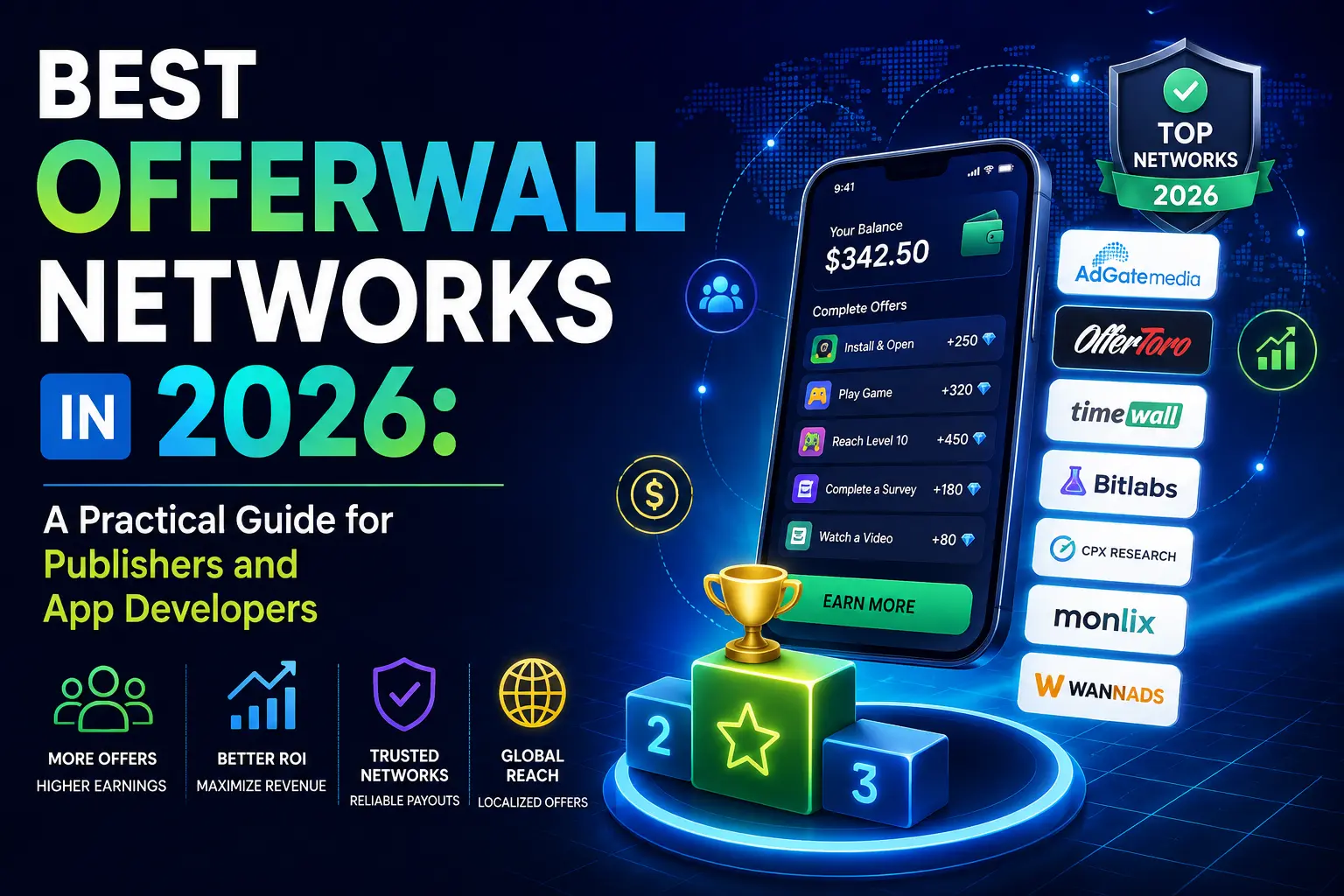
Side Two: The Network. Between the advertiser and the GPT site sits a layer of infrastructure — CPA networks and offerwall aggregators like AdGate Media, Tapjoy, or CPX Research — that vets advertisers, tracks conversions, filters fraud, and pools thousands of offers into a single API feed.
Side Three: The Platform and Its Users. The GPT platform displays that feed to members, who complete actions in exchange for a slice of what the platform gets paid. The platform's gross margin is the gap between the network payout and the user reward — typically somewhere between 20% and 50%, depending on the offer type and competitive dynamics.
This structure is what makes GPT sites sustainable. The advertiser gets a verified customer at a predictable cost. The network earns a commission for aggregation and fraud prevention. The platform keeps a margin for distribution and user management. And the user gets paid for something they might have done anyway — trying a new app, sharing an opinion, or shopping through a tracked link.
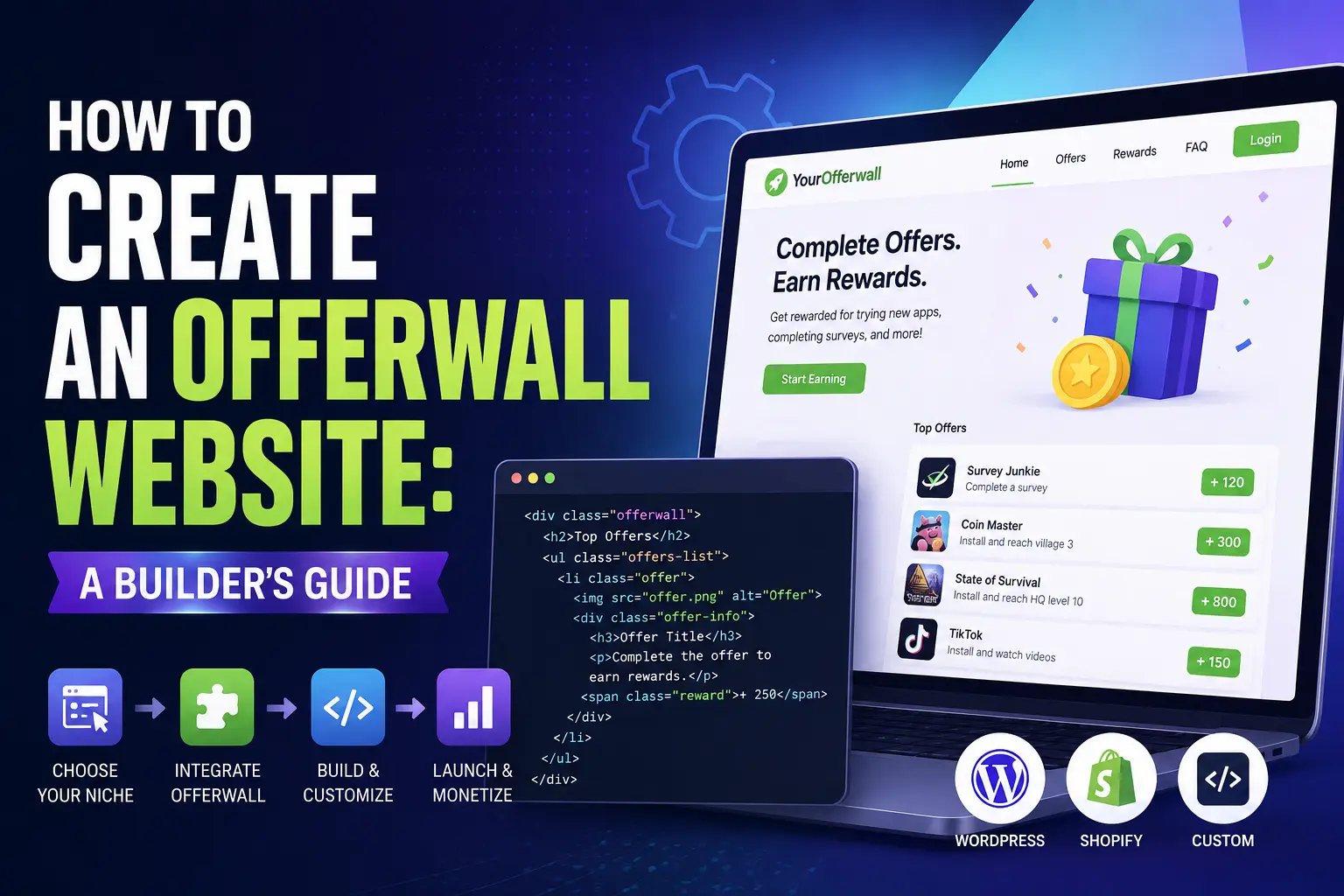
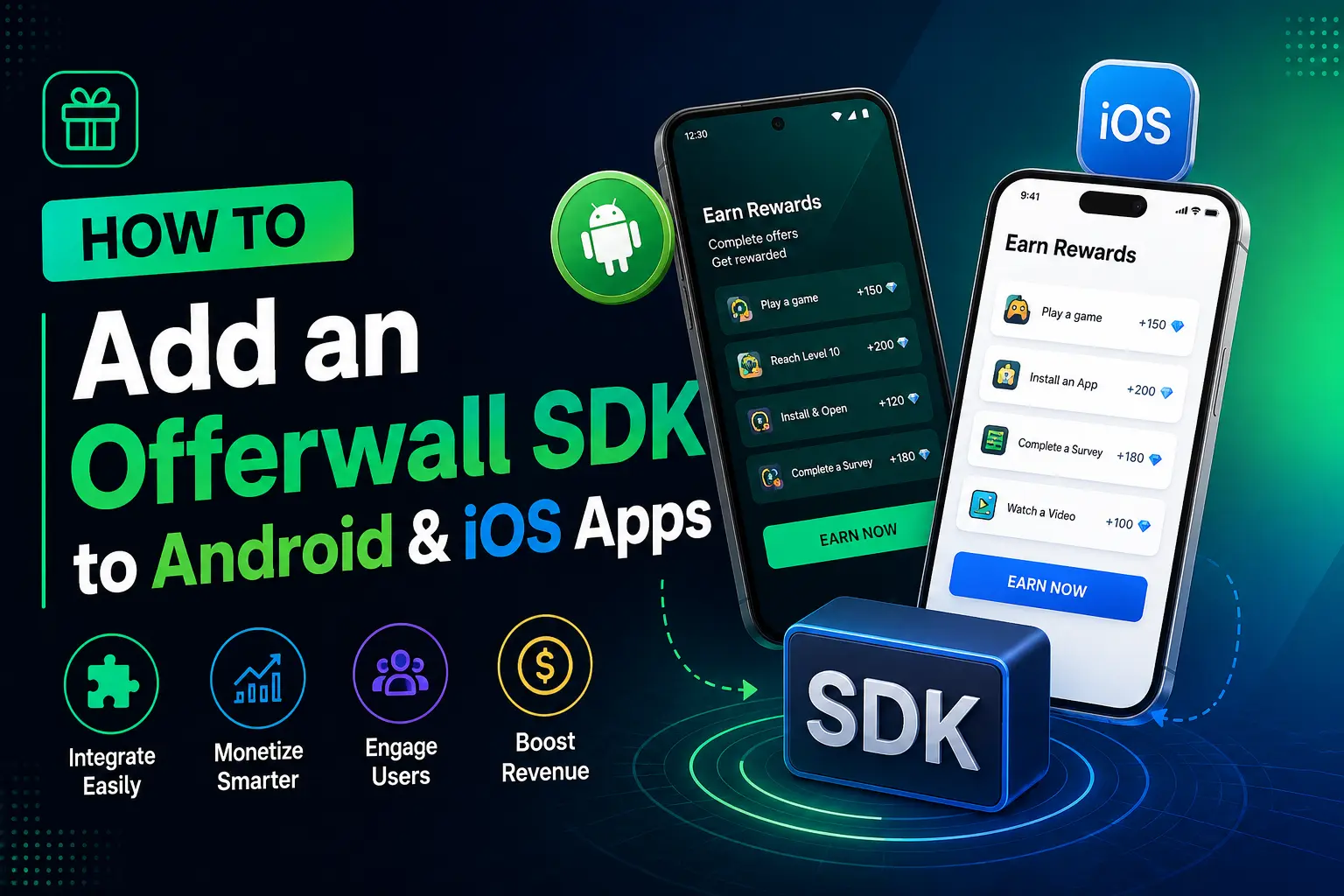
If you're technically minded and want to understand how to build this infrastructure yourself, our complete builder's guide to creating an offerwall website covers architecture, database design, S2S postbacks, and fraud prevention from a developer's perspective. For mobile products, our guide on adding an offerwall SDK to Android and iOS apps walks through secure integration patterns.
Regional Disparities: Why Your Location Changes Everything
One of the least-discussed realities of the GPT market is how dramatically geography rewrites the user experience. This isn't just about currency differences — it's about fundamental economics.
The US/UK Premium
Users in the United States, United Kingdom, Canada, and Australia see the highest offer inventories and payouts for a simple reason: advertisers concentrate their budgets where their target consumers are. A US-based user might see 50+ active surveys and dozens of high-paying game offers on a given day. A user in a less-represented country might see five surveys and a handful of low-payout app installs.
The UK market research industry alone is projected to climb at a CAGR of roughly 5.6% through 2025 — 26, reaching ??6.8 billion, fueled largely by rising demand for online and digital research methods.
That concentration of research spend directly translates to more, better-paying survey opportunities for UK users — and by extension, for the GPT platforms that serve them.
Emerging Markets and the Inventory Gap
Users in Eastern Europe, Southeast Asia, and most of Africa face a genuinely different platform. The same GPT site might work — globally — in the sense that you can create an account, but the task list can be sparse enough that reaching a $5 minimum payout takes weeks instead of days.
This is why platforms like TimeBucks have carved out a niche in these markets — they maintain relationships with networks that still have inventory for lower-CPA regions, and they offer task types (like social media engagement) that don't depend on high-value advertiser sign-ups.
The Geography Arbitrage
Savvy users have noticed something: running a VPN to appear as if you're in the US doesn't work, and it will get you banned. Offerwall networks have sophisticated fraud detection that flags proxy traffic, and getting blacklisted means losing your accumulated balance permanently. The geographic disparity is real, but it's not exploitable — it's simply the market functioning as designed.
The Future of GPT: Where This Market Is Heading
The GPT industry isn't static. Several trends are reshaping how platforms operate and how users earn.
AI-Powered Survey Targeting
Generative AI is already optimizing survey question phrasing in real time, lifting completion rates, and appearing as a paid add-on in 44% of SaaS survey offerings.
For GPT users, this means fewer frustratingly vague questions and better matching to relevant surveys — which should, over time, reduce disqualification rates and improve hourly earnings.
Mobile-First Everything
Mobile devices already account for approximately 69% of survey responses globally, and that share is still growing.
GPT platforms that haven't invested in native mobile apps or responsive mobile web experiences are falling behind. The future of GPT is overwhelmingly phone-based, with push notifications alerting users to high-paying offers before they fill their quotas.
Real-Time Fraud and Quality Segmentation
Offerwall networks are increasingly investing in traffic tiering — sorting users into quality segments so that higher-value, more reliable users see higher-paying offers. This should make payouts feel less arbitrary over time, but it also means that new or inconsistent users may see worse inventory until they establish a track record.
Cashback Expansion
As retail media budgets grow, the shopping-commission slice of GPT revenue keeps expanding relative to old-fashioned survey and offer-wall income. Swagbucks — model — blending active tasks with passive cashback — is increasingly looking like the template for sustainable GPT platforms rather than the exception.
Regulatory Scrutiny
Because real money and real advertiser relationships are involved, GPT platforms operate under the same general advertising-disclosure and consumer-protection expectations as any performance-marketing business. The US Federal Trade Commission's guidance on endorsements, online advertising, and consumer reviews serves as a useful baseline for what trustworthy platforms should be providing.
Expect more transparency requirements around minimum payouts, verification timelines, and the affiliate nature of shopping links as regulators catch up to the scale of this industry.
How to Choose a GPT Platform in 2026
If you're new to this space, the sheer number of platforms is overwhelming. Here's a practical framework for cutting through the noise.
Check the Trust Signals First
- Years in operation. A platform that's been running since 2007 or 2008 has survived multiple economic cycles and regulatory shifts. That's not a guarantee of future stability, but it's a strong signal.
- Transparent minimum payouts. Sites with low, achievable minimums ($1 — $5) and fast processing consistently earn the strongest independent trust scores.
- Third-party reviews. Trustpilot, the BBB, SurveyPolice, and app store reviews are harder to fake at scale than a testimonials page the company controls.
- Real company information. Legitimate platforms have identifiable parent companies, real privacy policies, and named leadership.
Match the Platform to Your Time
- Short, unpredictable pockets of time — Survey sites like Survey Junkie or Branded Surveys, where individual tasks are self-contained in 10 — 20 minutes.
- Longer evening sessions — GPT sites like Freecash or Swagbucks, where game offers and app trials reward sustained engagement.
- Zero behavior change — Cashback platforms like Rakuten or Ibotta, where you earn on purchases you were already making.
Never Pay to Join
This is the single most reliable scam filter across every category of work-from-home offer: legitimate companies do not charge people money to let them work. No registration fees, no — activation — charges, no requirement to deposit and wire back a check. The FTC has been consistent on this point for decades, and it applies just as strongly to GPT platforms as to any other income opportunity.
Diversify
Running two or three established platforms simultaneously outperforms sticking to one. The same offer can pay different amounts across platforms, and having alternatives protects you if any single site changes its terms or slows its payouts. This mirrors exactly the diversification logic that keeps the platforms themselves alive.
My Honest Take After Three Years in This Space
I've cashed out from Swagbucks, Freecash, PrizeRebel, and half a dozen other platforms. I've earned enough to cover Christmas gifts, fund a small — fun money — account, and offset a few monthly bills. I've also wasted evenings on disqualifications, tracking failures, and game offers that required far more time than the payout justified.
Here's what I've concluded: the GPT market is real, it's large, and it's growing. The platforms that have survived are legitimate businesses with genuine revenue models, not scams or pyramid schemes. But the earning ceiling is low, the hourly rates are modest, and the experience requires patience that not everyone has.
The people who do well in this space aren't the ones grinding hardest — they're the ones with realistic expectations. They use cashback for passive savings, GPT tasks for idle commute time, and survey sites for waiting rooms. They don't budget around the income, and they don't treat it as a replacement for employment. They treat it as what it actually is: a way to convert dead time into small amounts of money, funded by advertising budgets that would otherwise go entirely to Meta and Google.
If that sounds like something that fits your life, the market is bigger and more accessible than ever. If you're looking for a path to financial independence, this isn't it — and any article that tells you otherwise is selling something.
Key Takeaways
- The GPT (Get-Paid-To) market is part of a broader online rewards and performance-marketing ecosystem valued at approximately $9 — $13 billion globally in 2025.
- The online survey software market alone is worth $4.66 — 5.42 billion and growing at 11 — 18% CAGR, directly feeding task inventory to GPT platforms.
- Major players include Swagbucks ($450M+ paid out since 2008), PrizeRebel (14M+ users), Freecash, InboxDollars, and TimeBucks.
- Users span students, parents with irregular schedules, retirees, and gig-economy newcomers — but geography is the single biggest determinant of earning potential.
- Realistic monthly earnings range from $20 — $50 for casual users to $50 — $150 for active multi-platform users, with task selection mattering more than platform choice.
- The industry is shifting toward mobile-first experiences, AI-powered survey targeting, and cashback expansion — trends that should improve the user experience while maintaining modest earning ceilings.
Want to go deeper? Explore our related guides on GPT platform economics, profitability in 2026, platform comparisons, and technical implementation for builders.
Sources:
- Fortune Business Insights — Online Survey Software Market Size
- Precedence Research — Online Survey Software Market
- Mordor Intelligence — Online Survey Software Market
- Research and Markets — Online Survey Software Market Report
- EarnLab — Best GPT Sites in 2026
- PrizeRebel Official
- SideHustles — GPT Sites Guide
- Big News Network — What Are GPT Sites
- Save the Student — Best Paid Online Survey Sites
- Panel Opinea — What Are Paid Survey Sites
- Shopify — CPA Marketing Guide
- Federal Trade Commission — Consumer Guidance
- IBISWorld — UK Market Research Industry Report
- Wikipedia — Cost Per Action


Comments (0)
No comments yet. Be the first to share your thoughts!