
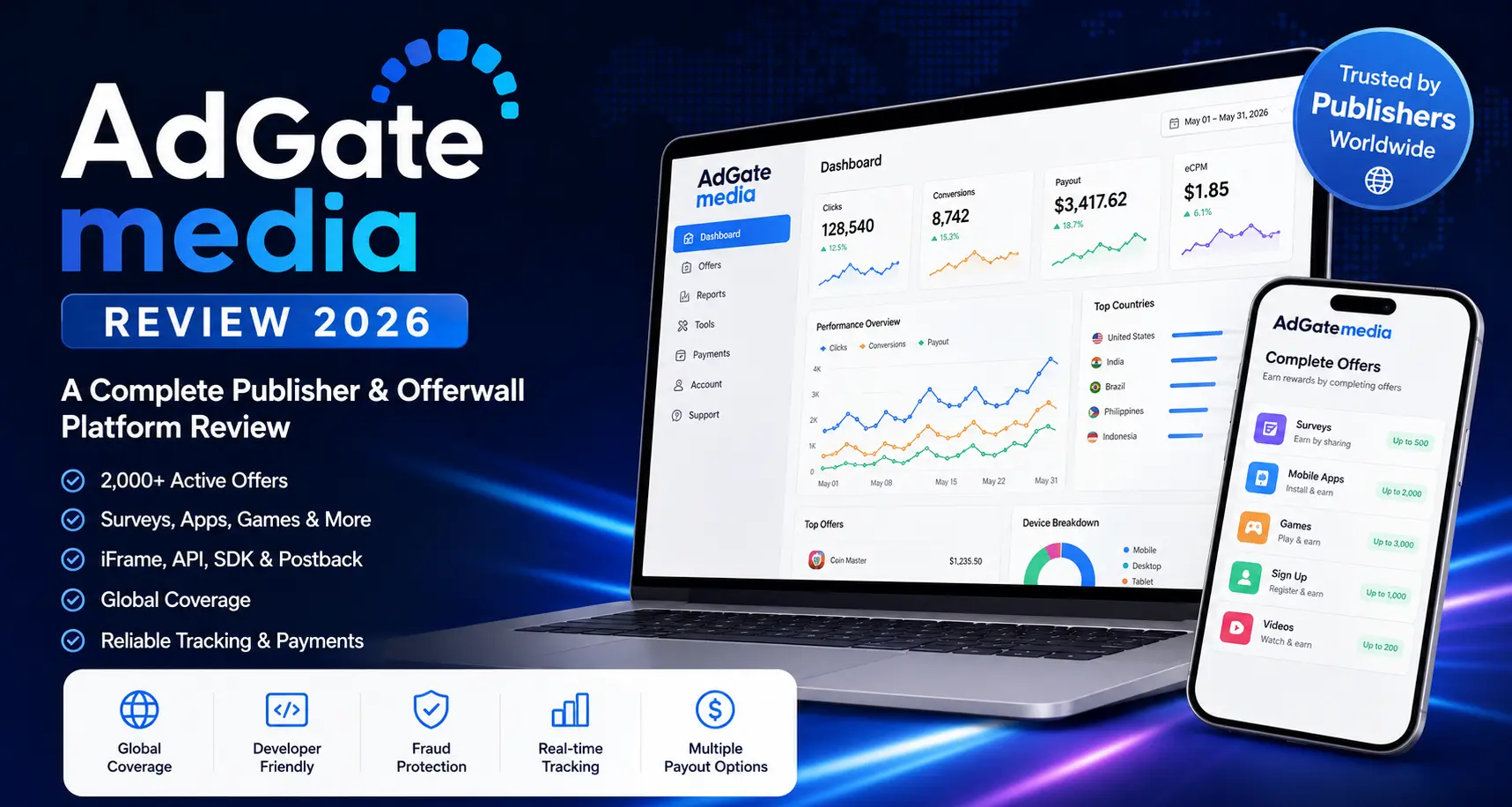
AdGate Media Review: Is It a Good Offerwall for Publishers in 2026?
AdGate Media is one of the better-known names in the rewarded advertising and offerwall industry. The company was founded in 2011 and was acquired by Prodege in July 2022. Today, AdGate continues to operate as a monetization and user-acquisition platform connecting advertisers with users of websites and applications.
For publishers, the important question is not simply whether AdGate Media is a legitimate company. The more useful question is whether its offerwall, integrations, inventory, tracking and payout structure make sense for your particular website, app, game or GPT platform.
This review looks at AdGate Media from a publisher's perspective, with a focus on the technical and commercial details that actually matter when choosing an offerwall.
One important distinction should be made from the beginning: AdGate has a large offer inventory, but inventory quality and availability are not identical for every country, device or audience. A publisher in the United States with a large mobile audience may have a completely different experience from a small website serving users in Tier-3 GEOs.
That is normal in performance advertising, and it is one of the most important things to understand before judging any offerwall network.
1. Overview
AdGate Media is a performance advertising platform offering both user acquisition for advertisers and rewarded monetization for publishers.
Its publisher product, generally known through AdGate Rewards, allows a website or app to present users with a selection of advertiser-sponsored activities. Users can complete surveys, quizzes, app installations, registrations, games and other actions in exchange for virtual currency or rewards.
The basic model looks like this:
Advertiser — AdGate Media — Publisher — User
The advertiser pays for a qualifying action. AdGate handles the advertising relationship, tracking and conversion validation. The publisher receives revenue, while the publisher's users receive points, coins or another internal reward.
AdGate currently advertises more than 2,000 active campaigns, although the actual inventory available to an individual user depends on geography, device, targeting and campaign availability.
From a publisher's perspective, AdGate is therefore best understood as a monetization layer, rather than a conventional banner advertising network.
2. Who Is It For?
AdGate Media is primarily useful for businesses that already have an engaged user base.
The strongest candidates include:
- GPT and get-paid-to websites
- Reward platforms
- Loyalty programs
- Survey and rewards websites
- Cashback-style platforms
- Mobile applications
- Mobile games
- Social or community applications
- Websites with virtual currencies
- Apps looking to monetize non-paying users
The offerwall model works particularly well when users already understand the idea of earning points or unlocking something through additional activities.
For example, a gaming website can let users earn coins through AdGate offers and then spend those coins inside the game.
A GPT platform can add AdGate alongside other offer providers so users have more earning opportunities.
That is considerably more attractive than simply placing an offerwall on a normal informational website where visitors have no reason to complete offers.
3. Supported Platforms
AdGate positions its monetization technology as platform-agnostic.
The company specifically mentions support for:
- Desktop
- Web
- Android
- iOS
- Mobile applications
AdGate also provides different integration methods depending on how much control the publisher wants. Its official monetization page lists a web offerwall, SDK and API integration, while also stating that publishers can use WebView instead of the SDK.
For a developer, this is a significant advantage because you are not forced into one architecture.
4. Website Support
Website publishers are one of the simplest groups to integrate with AdGate.
The standard AdGate Rewards implementation can be embedded into a website using an iframe, with a unique user ID passed to the offerwall.
The documentation recommends using a unique user identifier, with user IDs supported up to 255 characters. It also recommends using a hashed identifier where possible.
This makes the implementation suitable for:
- Laravel applications
- PHP websites
- WordPress-based reward platforms
- Custom PHP applications
- Node.js applications
- React-based front ends with a backend
- Traditional server-rendered applications
The important architectural point is that the website does not have to build the offerwall interface from scratch.
5. App Support
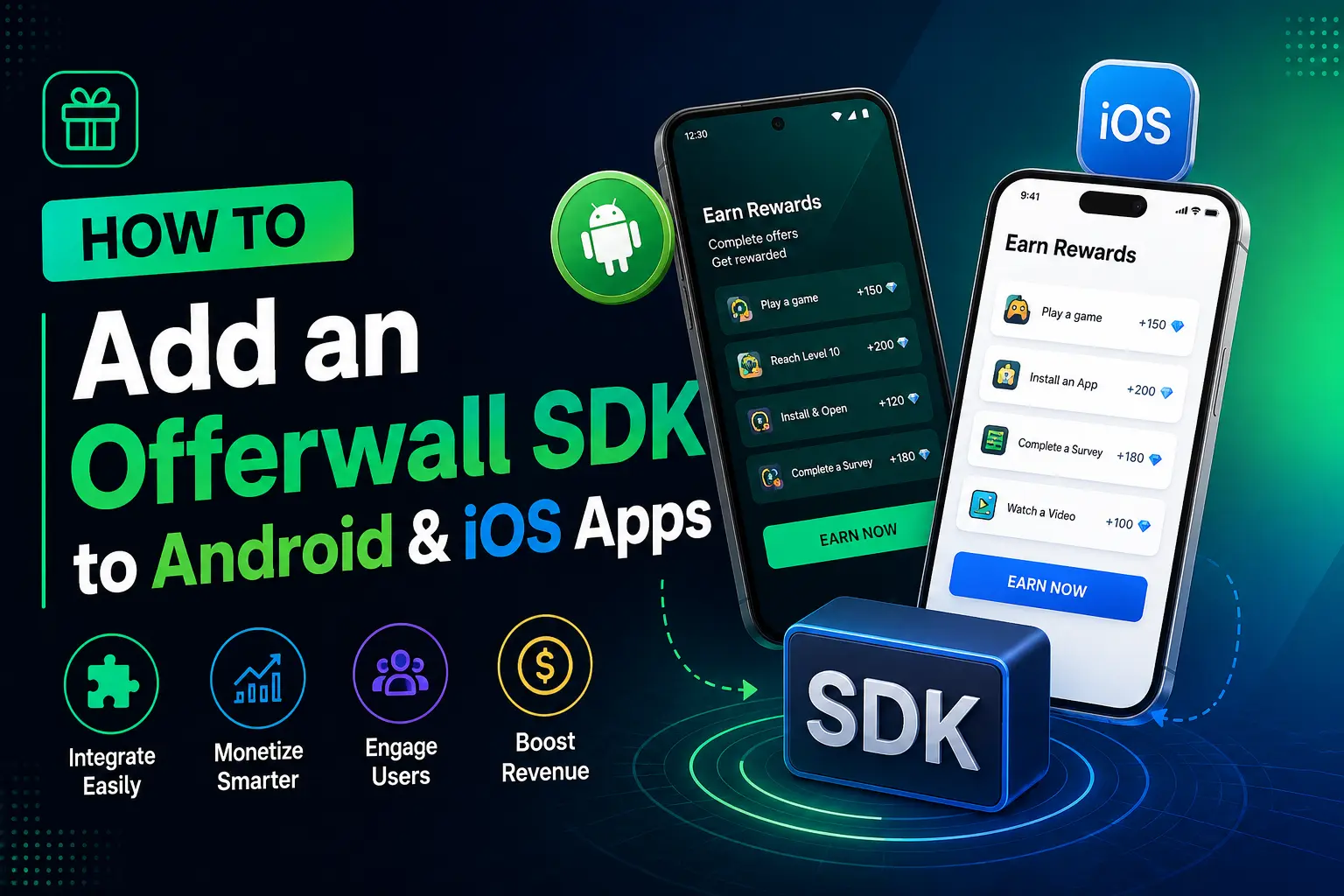
AdGate supports mobile applications through both SDK-based and web-based implementations.
The company specifically offers SDK integrations for Android and iOS, while also supporting WebView/API approaches.
For a mobile publisher, this provides three practical choices:
Native SDK: better for a deeper application experience.
WebView: simpler implementation when a native SDK is unnecessary.
API: appropriate when the publisher wants to create its own user interface.
That flexibility is one of AdGate's stronger technical advantages.
6. Game Support
Gaming is one of the most important use cases for rewarded advertising.
AdGate's advertiser platform explicitly supports cost-per-engagement campaigns, including campaigns where the advertiser pays when a user reaches a particular point in an app or unlocks an achievement in a game.
Its platform also advertises gaming inventory spanning mobile web and mobile app games.
For publishers, this means game-related offers can become a major revenue source, particularly when users are willing to spend significant amounts of time completing milestones.
The downside is equally important: gaming offers often involve complicated tracking rules, multi-step objectives and delayed verification. Publishers should therefore avoid assuming that every completed-looking milestone automatically becomes an immediately payable conversion.
7. Integration Methods
AdGate provides several integration models:
Web Offerwall
The simplest option. You can display an existing AdGate Rewards interface instead of building your own offer marketplace.
WebView
The official monetization page specifically states that publishers can use WebView instead of the SDK.
API
The API allows developers to retrieve offers and build a custom experience around them.
SDK
Native Android and iOS SDKs are available for mobile applications.
For most new developers, I would start with the WebView/iframe approach before moving to a full API implementation. It reduces development time and lets you validate whether users actually engage with the inventory.
8. API Availability
Yes. AdGate Media has publisher APIs.
The current documentation includes APIs for retrieving offers and separate reporting functionality. The User-Based API can return offers tailored using parameters such as user ID, IP, user agent and app context.
The API approach becomes interesting when you want to create your own UI.
Instead of showing:
AdGate's standard offerwall
you can theoretically build:
Your own offer marketplace powered by AdGate inventory.
The publisher API supports additional user and device information, and the reporting API provides structured performance data.
For experienced Laravel/React developers, this is where AdGate becomes considerably more interesting than a simple iframe network.
9. iFrame Availability
Yes. iFrame integration is explicitly supported.
The official integration documentation provides a wall URL that contains both the wall code and the user's unique ID.
This is probably the most attractive solution for:
- Small GPT websites
- MVPs
- Startups
- Reward sites
- Existing PHP projects
- Sites that want to launch quickly
It eliminates a considerable amount of UI development.
The main limitation is customization. You control the surrounding page, but you do not have the same control over the internal offerwall interface as you would have with an API-based implementation.
10. SDK Availability
Yes.
AdGate provides native SDK documentation for:
- Android
- iOS
The Android documentation includes support for a wall code, user ID and up to four additional SubID values. The SDK can also retrieve recent conversions for a user.
The iOS documentation supports CocoaPods as well as framework-based installation and provides similar offerwall/conversion functionality.
One caution is that some of the published SDK documentation is relatively old. The documentation pages currently available contain legacy platform requirements and dependencies, so developers should verify the latest release and compatibility before starting a new production mobile project.
That is an area where I would personally choose API/WebView first unless a native SDK is clearly justified.
11. Postback System
This is one of AdGate's strongest features for serious publishers.
AdGate supports server-side postbacks that notify the publisher's server when a conversion occurs.
The postback can include data such as:
- User ID
- Conversion ID
- Offer ID
- Offer name
- Event ID
- Event name
- Payout
- Points
- Conversion state
- SubIDs
- User IP
The state field can indicate approved, pending or rejected, allowing the publisher to handle different conversion states correctly.
AdGate also supports reversal/chargeback notifications.
For a reward platform, this is extremely important.
A weak reward system assumes:
Offer completed = permanently credited.
A robust reward system understands:
Offer completed — pending/approved — possibly reversed.
That difference matters financially.
12. Tracking
AdGate provides its own tracking infrastructure and uses user identifiers, SubIDs, offer IDs and conversion IDs to associate actions with users.
Its APIs can also use:
- IP address
- User agent
- device information
- country
- operating system
- browser
- app context
The reporting API can return detailed fields including country, device, browser, OS, tool, SubIDs, clicks, conversions and payout.
For publishers, this is much more useful than simply knowing how much money was generated at the end of the month.
You can investigate which GEOs, offers and traffic sources are actually performing.
13. Attribution Window
This is one of the areas where publishers should not rely on generic affiliate-network assumptions.
I could not find a current public AdGate document that defines one universal attribution window applicable to every publisher and every offer.
The documentation does, however, expose a CLICK_EXPIRED rejection reason and individual offer campaigns can contain their own completion requirements and time limitations.
Therefore, the correct interpretation is:
There is not a single publicly documented attribution window that should be applied to every AdGate offer.
The attribution and eligibility logic can depend on the individual campaign, advertiser and conversion event.
This is important when writing your own reward-platform rules. Do not promise users that every offer has the same 7-day, 30-day or 60-day attribution period unless the specific offer states it.
14. Offer Types
AdGate's inventory is broader than surveys.
Depending on GEO and availability, the offerwall can include:
- Surveys
- Quizzes
- App installations
- App engagement
- Registrations
- Sign-ups
- Trials
- Gaming milestones
- Sales
- Other performance-based actions
AdGate itself describes its offerwall as supporting surveys, quizzes and trying new apps, while its advertiser platform covers CPI, CPE, CPL, CPS and subscription-style campaigns.
That variety is valuable because user preferences differ considerably.
One user may prefer a 10-minute survey.
Another may prefer installing a mobile game.
A third may prefer a registration offer.
The more varied the inventory, the easier it becomes to monetize different user segments.
15. GEO Coverage
AdGate promotes worldwide demand and describes its solutions as globally available across desktop and mobile environments.
However, — global coverage — should not be confused with equal inventory in every country.
Performance advertising is heavily affected by advertiser demand.
A Tier-1 user may see:
- More surveys
- More app offers
- Higher-value gaming campaigns
- More financial or subscription offers
while a Tier-3 user may see a smaller catalog.
AdGate's API itself accepts country-related information and uses IP and device data for targeting, reinforcing the importance of geography in determining available inventory.
For a GPT platform, I would therefore evaluate AdGate by revenue per active user by GEO, not by the headline number of offers.
16. Survey Inventory
Survey inventory is one of AdGate's core offerwall categories.
The official product description specifically identifies surveys as one of the activities users can complete for rewards.
The main advantage is variety.
The main problem is qualification.
Survey inventory is usually driven by demographic targeting, research quotas and advertiser requirements. This means users may see many survey opportunities but qualify for only a subset.
A publisher should therefore monitor:
survey clicks — starts — completions — revenue
rather than simply counting the number of surveys displayed.
A high number of offers is meaningless if users repeatedly screen out.
17. Gaming Inventory
Gaming is arguably one of the most commercially interesting parts of rewarded offerwalls.
AdGate's advertiser materials specifically reference gaming inventory and engagement campaigns based on progression or achievements.
Game offers can produce higher revenue than simple surveys because the advertiser may value an engaged player more highly than a quick lead.
But gaming offers also generate the greatest risk of user frustration.
Users may:
- Spend many hours progressing
- Spend money inside the game
- Fail to trigger tracking
- Reach a milestone after the allowed period
- Use an unsupported device
- Have a previous installation
- Trigger an attribution conflict
This is why your reward platform needs a clear user-support process rather than simply telling users to — contact support. —
18. Fraud Prevention
Fraud prevention is clearly part of AdGate's conversion-validation system.
Its postback documentation lists rejection reasons including:
- Duplicate cookie
- Country mismatch
- High fraud score
- IP-related fraud
- Device not allowed
- Already converted
- Duplicate transaction
- IP already converted
- Chargeback
- User blocked
- Reattribution
- Expired clicks/events
From the advertiser's perspective, these controls are necessary.
From the publisher's perspective, however, strict fraud detection has a second side: legitimate users can sometimes have tracking or attribution problems.
This is one reason I would never build a reward platform that instantly allows users to withdraw every conversion without some form of risk management.
19. Reporting
AdGate provides substantial reporting capability.
Its publisher reporting API supports grouping by:
- Offer
- Country
- Device
- Browser
- Operating system
- Monetization tool
- SubIDs
- Month
- Day
- Hour
It can also return:
- Impressions
- Clicks
- Conversions
- Total payout
- PPC
- Conversion rate
- CPM
This is more than enough for most publishers to build their own analytics layer.
A technically mature GPT platform could import this information into its own dashboard and compare AdGate against other providers.
That is far more useful than relying only on the network's default dashboard.
20. Reward Flexibility
AdGate is designed around publisher-defined virtual currency.
Its Rewards setup allows the publisher to specify:
- Currency name
- Singular/plural naming
- Abbreviation
- Conversion rate
- Rounding
The documentation gives the example that if the publisher uses 100 points per $1 earned from AdGate, the publisher can define that conversion rate accordingly.
This is particularly useful for GPT systems.
For example:
AdGate revenue: $1.00
User reward: 800 coins
Platform margin: 20%
The actual ratio is your business decision, not simply something hard-coded by the offerwall.
21. Payout Model
AdGate operates on a performance-based model.
The publisher earns when users generate qualified actions rather than simply receiving a traditional CPM payment for displaying banners.
AdGate's terms state that commissions are paid monthly when the account balance exceeds $25. Balances below $25 roll over until the threshold is reached.
This is important because revenue is tied to qualified conversions, not pageviews alone.
The precise payment schedule can also depend on account conditions and current arrangements, so publishers should verify the terms shown inside their account.
22. Payment Methods
AdGate's current public marketing pages do not provide a single comprehensive, authoritative list of every payment method available to every publisher.
Historical and third-party industry listings have documented methods including:
- PayPal
- Payoneer
- Bank transfer
- Wire
- ACH
- Check
Crypto payments have also been associated with AdGate's publisher payout infrastructure through BitPay; BitPay published a case describing AdGate using BitPay Send to make crypto payments to affiliates.
Because payment options can depend on country and account configuration, the publisher dashboard should be treated as the final authority.
The one clearly documented baseline is the $25 minimum payment threshold in AdGate's terms.
23. Approval Requirements
AdGate Rewards requires an approved publisher account before creating an offerwall.
However, AdGate does not publicly publish a simple universal checklist such as:
— 10,000 monthly visitors required. —
That means approval is not something publishers should reduce to a single traffic number.
In practical terms, a serious application should present:
- A functioning website or application
- Real user activity
- Clear content
- A legitimate business model
- Transparent reward mechanics
- No obvious incentivized abuse
- No deceptive traffic
- No prohibited content
- Proper privacy and user-data practices
Having an attractive website is not enough. The network ultimately needs to understand what kind of traffic you generate and how that traffic will interact with advertiser campaigns.
24. Minimum Traffic
There is no current public AdGate document I could verify that states a universal minimum traffic requirement for all publishers.
That is actually good news for smaller startups.
It means you should not assume you must have hundreds of thousands of monthly visitors before applying.
At the same time, approval does not mean guaranteed high revenue.
A website with 5,000 highly engaged users can sometimes produce more valuable offer activity than a website with 100,000 visitors who never interact with rewards.
For a new GPT startup, I would focus less on meeting an arbitrary traffic target and more on proving that the platform has genuine users and a legitimate engagement loop.
25. Publisher Support
AdGate's business materials promote dedicated human account management for advertisers, while its publisher infrastructure provides dashboard, reporting and technical documentation.
However, independent user reviews tell a more complicated story.
Trustpilot contains both positive and strongly negative experiences, with some users reporting problems involving delayed support, missing credits and rejected game milestones.
Similar complaints appear in Reddit discussions, particularly around large gaming offers and tracking disputes.
This does not prove that every user has a poor experience. It does demonstrate that support and conversion disputes are one of the areas that deserve testing before you make AdGate your only offer provider.
26. Strengths
AdGate Media has several real advantages.
Strong integration flexibility
Web, iframe/WebView, API and native mobile SDK options cover most technical architectures.
Large offer inventory
AdGate currently advertises more than 2,000 active campaigns.
Strong fit for rewarded products
The platform was built around the exact model used by GPT, loyalty and reward-based applications.
Good developer options
The API and reporting API make it possible to build a custom monetization layer instead of depending entirely on an embedded UI.
Solid postback architecture
The postback system supports approved, pending and rejected states and reversal notifications.
27. Weaknesses
There are also important weaknesses.
Offer quality varies
A large inventory does not mean every offer is useful for every GEO.
Gaming offers can create support problems
Independent reviews frequently mention failed or delayed crediting, particularly with complex game offers.
Public documentation is not always current-looking
Some SDK documentation contains legacy platform requirements, so developers should verify current packages before committing to native SDK development.
Attribution details are not universally published
Publishers need to inspect individual campaigns instead of assuming one global attribution window.
You should not depend on one network
This is not specifically an AdGate problem. It is a business-model problem. Any single offer provider can experience advertiser changes, GEO shortages, tracking problems or policy changes.
28. Best Use Case
The best use case for AdGate Media is a real rewards platform with an existing user base.
For example:
A Laravel-based GPT platform has 20,000 registered users and wants to give users additional earning opportunities without building hundreds of advertiser relationships itself.
AdGate can become one component of that monetization stack.
The strongest architecture would be:
Your platform — AdGate Offerwall — Server Postback — Reward Ledger — User Wallet
rather than:
User — iframe — automatic balance credit
The first approach gives you considerably more control.
29. Who Should Avoid It?
AdGate is probably not the best first choice for:
- A website with almost no meaningful user engagement
- A site that expects guaranteed CPM revenue
- A publisher unwilling to handle reward disputes
- A platform with weak fraud protection
- A site targeting only very low-demand GEOs
- A business that wants every conversion to be instantly payable
- A developer who needs a completely modern native SDK without verifying compatibility first
It is also a poor idea to launch an offerwall before implementing a proper transaction ledger.
Your reward system should record:
conversion ID — user — offer — payout — reward — state — timestamp — reversal
That design protects both the publisher and the user.
30. Alternatives
AdGate should not be evaluated in isolation.
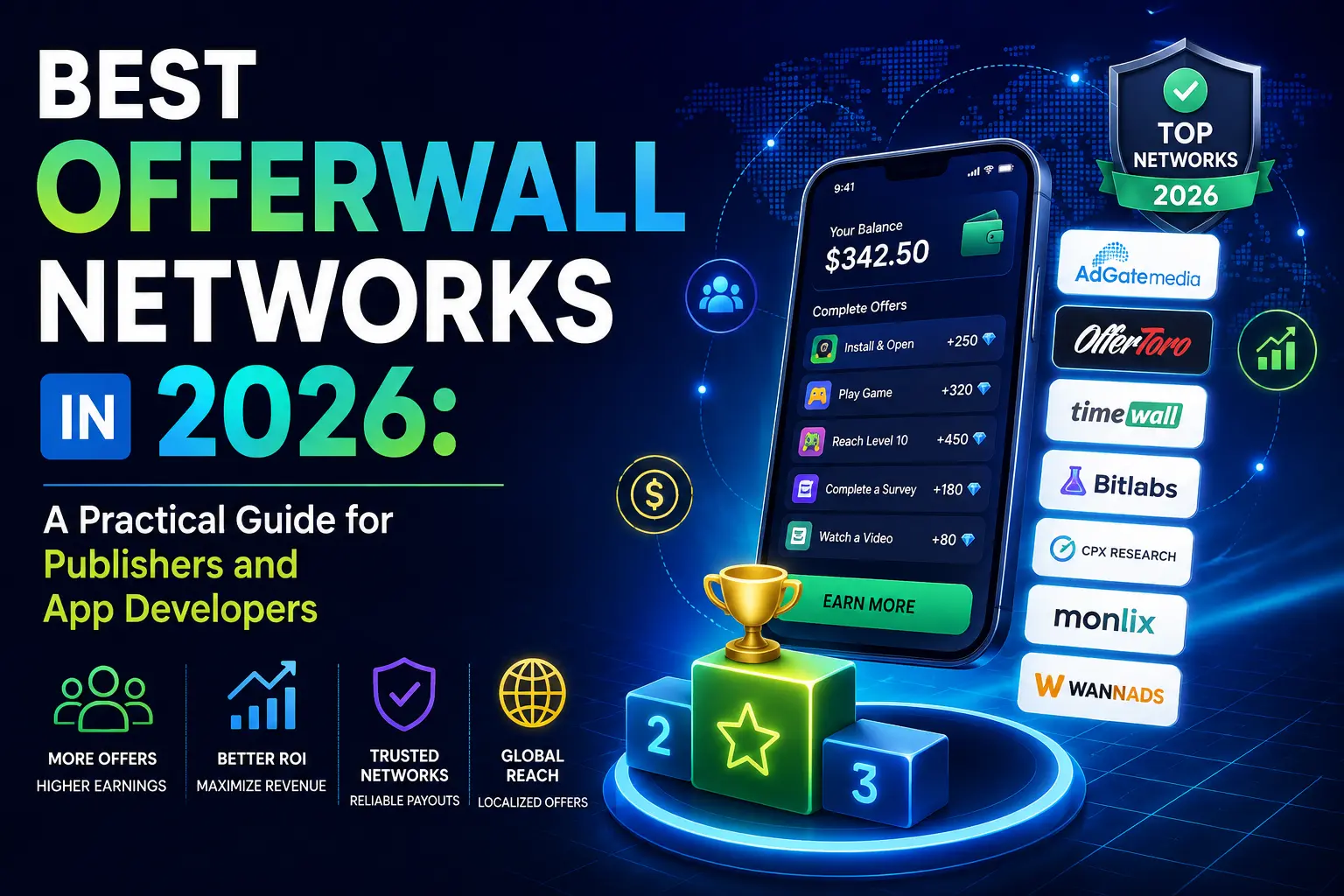
Several other offerwall networks are worth testing depending on your platform.
AdGem
AdGem offers web offerwalls, iOS and Android SDKs, REST APIs and newer custom integration options. Its documentation is particularly developer-oriented and explicitly distinguishes between pre-built and publisher-controlled integrations.
Adscend Media
Adscend supports Android, iOS, Web, Unity and API integrations. It offers surveys, games, videos, sign-ups and other reward categories, making it a natural competitor for GPT platforms.
CPAlead
CPAlead provides a publisher API for retrieving offers and conversion data and supports CPA/CPI/CPE inventory.
The right strategy for a serious GPT business is usually not:
— Which network is the best —
It is:
— Which combination of networks gives my users the best inventory while protecting my margin —
A multi-offerwall strategy can reduce dependence on a single provider and help fill inventory gaps by GEO.
31. Final Rating
AdGate Media Rating: 8.4/10
| CategoryRating | |
| Offer inventory | 9/10 |
| Integration flexibility | 9/10 |
| API | 9/10 |
| iFrame/WebView | 9/10 |
| SDK support | 7.5/10 |
| Tracking | 8.5/10 |
| Postbacks | 9/10 |
| Reporting | 9/10 |
| GEO coverage | 8.5/10 |
| Survey inventory | 8.5/10 |
| Gaming inventory | 9/10 |
| Fraud controls | 8.5/10 |
| Payment flexibility | 8/10 |
| Publisher support | 7/10 |
| Overall | 8.4/10 |
Final Verdict
AdGate Media is a serious offerwall network and a legitimate option for website and app publishers, particularly those operating GPT, rewards, loyalty or gaming platforms.
Its biggest advantage is not simply the number of offers. It is the combination of offer inventory + flexible integrations + API access + server-side postbacks + reporting.
That combination makes it suitable for developers who want to build a real monetization system rather than simply paste an advertising widget onto a website.
The biggest concern is the gap between the technical capabilities and the end-user experience.
A technically excellent postback system does not automatically guarantee that every advertiser offer will track perfectly. Independent user reports show recurring complaints involving missing credits, reversals and difficult support experiences, especially around high-value gaming offers.
So my recommendation is straightforward:
Use AdGate Media, but do not build your entire business around AdGate Media.
For a new GPT website, start with the Web/iFrame integration. Measure user engagement and revenue by GEO. Once the traffic becomes meaningful, add the API or more advanced integration. Most importantly, integrate server-side postbacks and maintain your own reward ledger.
And for a serious GPT or rewards business, consider running AdGate alongside two or three complementary offerwall providers. That gives you better inventory coverage, more reliable monetization and considerably more negotiating power.
The bigger lesson is that an offerwall is not the business itself.
It is infrastructure.
Your real competitive advantage comes from the platform around it: user acquisition, retention, reward economics, fraud prevention, wallet accounting, withdrawals and the quality of the overall user experience.
That is where the difference between a small GPT site and a scalable rewards business is usually created.
External Resources
- AdGate Media Monetization
- AdGate Rewards Developer Documentation
- Publisher Reporting API
- Postback Information
- . AdGate Rewards GitHub Repository
- . BitPay Affiliate Payouts
- . AdGate Media on Trustpilot
Disclosure
This review evaluates AdGate Media primarily as a publisher monetization and offerwall platform. Product features, available offers, payment options, GEO inventory and campaign terms can change over time and may vary by account, country, device and advertiser.
Where AdGate does not publicly publish a universal requirement — such as a single minimum traffic threshold or universal attribution window — this review explicitly states that rather than presenting an unverified number as fact.
Last verified: August 24, 2026.



Comments (0)
No comments yet. Be the first to share your thoughts!