

1. Overview
Monlix is an offerwall and user-monetization platform designed for publishers, websites, mobile applications, and games that want to turn user engagement into revenue.
At its core, Monlix connects publishers with a catalog of advertiser-funded activities. Depending on the user's device, country, profile, and available campaigns, those activities can include surveys, app installations, registrations, game-related tasks, and multi-step completion offers.
What makes Monlix interesting is that it is not limited to a single integration method. Its current documentation covers traditional web integration through HTML5/iFrame, Android and iOS SDKs, JSON APIs, static offer APIs, survey APIs, and server-to-server postbacks.
That matters because an offerwall can be extremely easy to install but difficult to operate correctly. A serious publisher eventually needs control over user IDs, sub IDs, crediting, reversals, fraud checks, reporting, reward conversion, and the actual presentation of offers.
Monlix provides most of those building blocks.
After reviewing the current publisher pages and technical documentation, my overall impression is that Monlix is more technically flexible than its relatively simple public-facing presentation suggests. It looks particularly relevant to GPT platforms, reward websites, mobile applications, and games where the owner wants direct control over the user-rewarding layer.
Monlix currently says it works with 200+ advertisers, supports offerwalls and surveys, and positions its product around engagement, retention, and revenue generation.
For publishers, the important question is therefore not simply "Does Monlix have offers?" It does.
The better question is whether the platform gives you enough integration and operational control to build a reliable monetization system around those offers.
For many publishers, the answer is yes.
2. Who is it for?
Monlix is primarily relevant to businesses that already have an audience and want to monetize voluntary user actions.
The strongest use cases include:
- GPT and reward websites
- "Get Paid To" platforms
- Survey and rewards websites
- Mobile applications
- Mobile games
- Loyalty platforms
- Online communities with virtual currencies
- Content platforms using rewards or unlock mechanisms
- Entertainment applications
- Shopping and discount platforms
- Research and survey platforms
Monlix itself lists use cases including shopping discounts, music unlocks, in-game rewards, editorial unlocks, dating profile unlocks, research surveys, social rewards, OTT unlocks, and book/chapter unlocks.
This is a useful distinction.
You do not necessarily need to operate a conventional "make money online" website. A publisher can use the offerwall as an engagement mechanism inside an application or service.
For example, instead of asking a user to buy virtual currency, you can allow them to earn some of that currency through sponsored activities.
That creates an additional monetization path without forcing every user through a traditional advertising experience.
3. Supported platforms
Monlix currently documents support for:
- Websites
- Android applications
- iOS applications
- Mobile games
- Web-based reward platforms
Its documentation specifically includes a web reward-site integration, Android SDK, iOS SDK, API integrations, and postback/S2S implementation.
The platform's public publisher page also positions the product for apps and games and describes an SDK-based implementation.
This gives Monlix a practical advantage over networks that focus heavily on one environment.
A publisher launching a GPT website can start with an iframe. A mobile developer can use an SDK. A larger engineering team can consume the API directly.
That is a sensible progression.
4. Website support
Website publishers are one of Monlix's clearest target audiences.
The HTML5 integration is particularly straightforward. Monlix provides an iframe URL that accepts the application/site ID, user ID, and optional sub ID.
The basic concept is:
Your website identifies the user — Monlix loads available offers — the user completes an offer — Monlix sends a postback — your system credits the user.
The documentation says the web offerwall can be integrated in roughly two minutes by inserting the provided iframe code and replacing the application and user identifiers.
In practice, the iframe itself is the easy part.
The more important engineering work is making sure your own reward system handles:
- unique user IDs
- duplicate transactions
- reversals
- validation
- ledger entries
- user-facing status
- balance updates
- postback security
That is where the quality of your implementation matters more than how quickly the iframe is installed.
5. App support
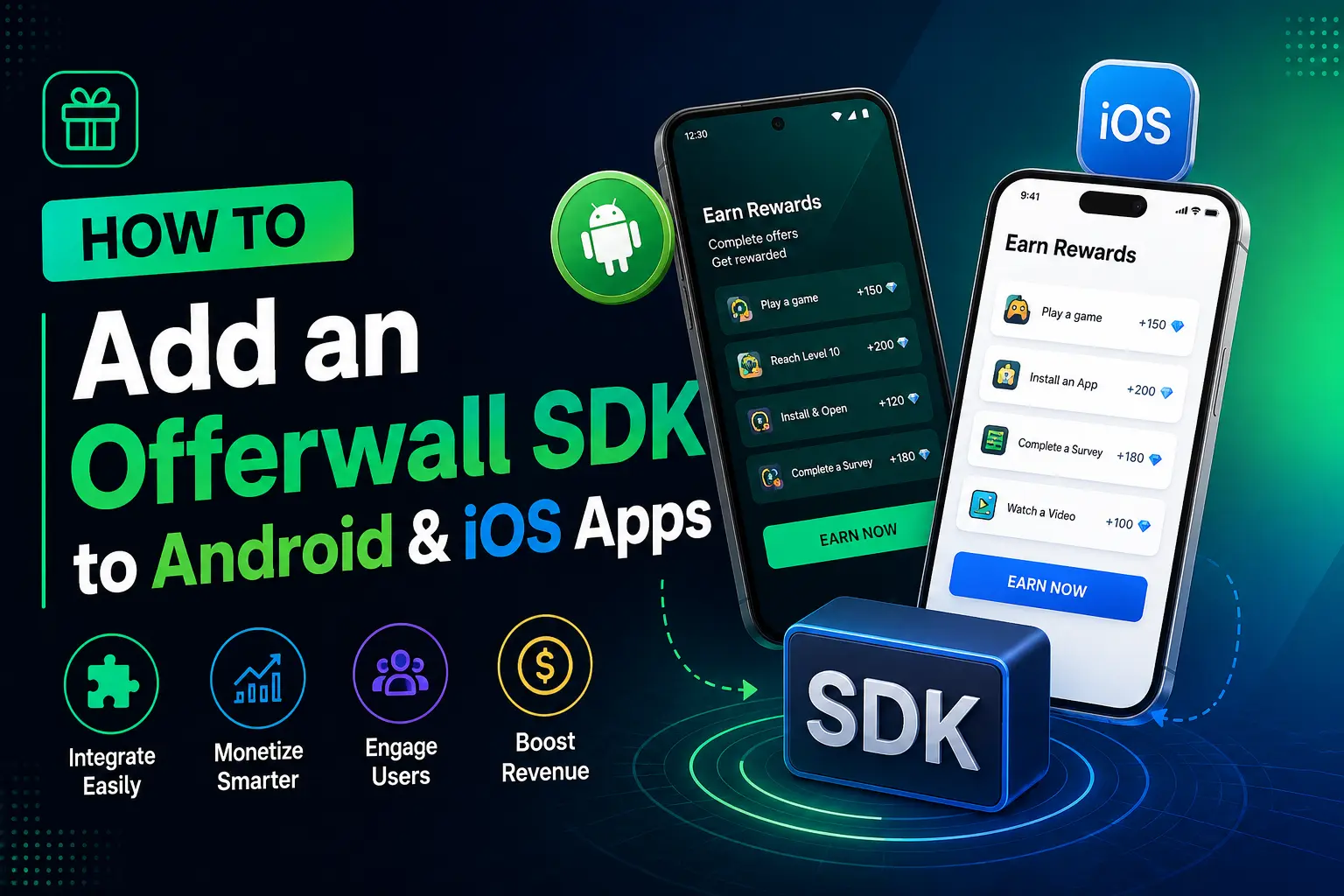
Monlix supports both Android and iOS applications.
The Android documentation provides a dedicated SDK and shows integration through Gradle with the Monlix Android library. Developers can configure the application ID, user ID, age, gender, operating system, and optionally a zone ID before opening the offerwall.
The iOS SDK is distributed through CocoaPods and includes support for UIKit/Storyboard, SwiftUI, and Objective-C integration.
That makes the mobile implementation more natural than wrapping a web offerwall in every situation.
For mobile products, native integration also gives developers more control over how and when the offerwall is presented.
6. Game support
Gaming is one of Monlix's strongest apparent use cases.
Monlix specifically markets its offerwall for mobile games and explains how offers can encourage downloads, engagement, and longer-term player activity.
The API also supports CPE (Cost Per Engagement) offers, where an advertiser pays for specific milestones rather than a single install. The documented JSON response includes a goals structure containing multiple conversion points such as reaching a level or completing another specified event.
This matters for game publishers.
A simple CPI offer rewards an install.
A CPE campaign can reward deeper actions such as:
- reaching a particular level
- completing an achievement
- using an application for a defined period
- reaching other advertiser-defined milestones
That aligns much better with gaming economics because the value of an acquired player is not determined by the initial install alone.
7. Integration methods
Monlix offers several integration approaches:
- HTML5/iFrame integration
- Android SDK
- iOS SDK
- JSON API
- Static JSON API
- Custom API
- Survey API
- Server-to-server postback
The documentation explicitly separates these approaches, which is a good sign for developers who need something beyond a basic hosted offerwall.
For a small website, I would start with the iframe.
For a larger GPT platform, I would seriously consider the API.
For a mobile application, the native SDK is likely the cleaner starting point.
8. API availability
Yes. Monlix provides a JSON API.
The standard campaign API allows an approved website or application to request available offers in JSON format. It supports identifiers such as application ID, user ID, and sub ID. Requests made server-side can additionally include the user's IP address and user-agent.
The API is especially useful when you want to build your own offerwall interface instead of displaying Monlix's hosted UI.
The documentation also exposes CPE goal information, meaning your application can receive structured conversion milestones from supported campaigns.
Monlix also provides:
- Static JSON API
- Custom Offers API
- Survey API
The static API is designed for bulk offer retrieval, while the custom API is intended for approved/whitelisted offers.
This is a substantial strength for developers.
9. iFrame availability
Yes.
Monlix has a dedicated HTML5/iFrame implementation for websites. The documented URL accepts the publisher's application ID, user ID, and optional sub ID.
The biggest advantage is speed.
For a Laravel, PHP, WordPress, or custom web platform, embedding an iframe can turn the technical integration from a major development project into a relatively small task.
The downside is control.
An iframe is less flexible than consuming the API yourself. You have less control over the presentation, filtering logic, loading behavior, and user experience.
For a basic reward site, that trade-off is often worthwhile.
10. SDK availability
Monlix has native SDK documentation for:
- Android
- iOS
The Android implementation uses the Monlix SDK through Gradle/JitPack.
The iOS implementation is available through CocoaPods and supports conventional UIKit applications as well as SwiftUI.
This is important for mobile publishers because the SDK approach makes Monlix feel like part of the application rather than a separate website embedded inside it.
11. Postback system
This is one of Monlix's strongest technical features.
Monlix supports server-to-server postbacks. When a user completes an offer, Monlix sends information to the publisher's endpoint so the publisher can credit the user's virtual currency.
The documented postback parameters include:
- User ID
- User IP
- Country
- Secret key
- Task name
- Transaction ID
- Reward currency
- Reward value
- Advertiser payout
- Sub ID
- Transaction status
The status value can indicate a valid conversion or a chargeback/reversal.
The transaction ID is particularly important.
Your database should treat it as an idempotency key. If the same transaction is received twice, your system should not credit the user twice.
That is not just good practice with Monlix; it is fundamental for any reward platform.
12. Tracking
Monlix provides user-level tracking through the user ID and optional sub ID.
The web integration documentation says the unique user ID allows Monlix to keep track of statistics and present suitable surveys and offers.
The API also supports subid, which is returned through the postback.
This can be useful for internal segmentation.
For example, a publisher could use a sub ID to distinguish between:
- homepage traffic
- mobile users
- referral campaigns
- a specific landing page
- a promotional placement
- a particular internal campaign
The important point is that tracking should be designed deliberately on the publisher side rather than relying only on the offerwall dashboard.
13. Attribution window
This is one area where I would be careful.
I could not find a clearly published, universal Monlix attribution-window value in its current public documentation.
Instead, the API and postback architecture indicate campaign-level tracking and conversion handling, while specific offers can have their own requirements and completion rules.
That means publishers should not assume a universal "7-day" or "30-day" Monlix window without confirmation for the specific campaign.
This is a good example of why offerwall reviews should not invent numbers simply to make a comparison table look complete.
For high-value campaigns, the advertiser's individual conversion requirements are more important than a generic platform-wide number.
14. Offer types
Monlix's inventory includes multiple forms of incentivized engagement.
Documented and visible categories include:
- Surveys
- App installs
- App engagement
- Registration/sign-up offers
- CPE campaigns
- Gaming offers
- Social offers
- Entertainment offers
- Other advertiser-defined completion tasks
Its APIs show categories such as Gaming, Finance, Social Media, Entertainment, Video, Lifestyle, and others depending on live inventory.
This variety is valuable because users have different preferences.
Some will happily complete a survey.
Others would rather install a game.
Others prefer a quick registration.
A healthy offerwall needs that diversity.
15. GEO coverage
Monlix is not limited to one country or region.
Its offer API exposes country-level targeting, and the published examples include markets such as the United States, United Kingdom, France, Italy, Spain, Saudi Arabia, the UAE, Egypt, Indonesia, Thailand, Russia, and others.
However, publishers should distinguish between technical GEO availability and consistent inventory depth.
A network can technically support a country while offering only a small number of campaigns there.
This is normal in performance marketing.
Inventory changes with advertiser demand, user demographics, device type, and campaign budgets.
For a publisher serving Egypt or other emerging markets, I would therefore judge Monlix using actual live inventory after approval rather than assuming that the volume available in the US will be replicated everywhere.
16. Survey inventory
Surveys are an important part of the Monlix product.
The company has dedicated survey documentation and a separate JSON Survey API. The API can return survey characteristics including minimum and maximum payout and estimated duration.
Monlix also publishes material specifically about survey offerwalls and their role in monetization and engagement.
For publishers, the survey API is particularly interesting because it makes it possible to build a more customized survey experience rather than simply sending users to a generic offerwall page.
Survey inventory naturally fluctuates.
Screen-out rates, quotas, demographic targeting, and country demand can make the user experience very different from one GEO to another.
That is not unique to Monlix.
17. Gaming inventory
Gaming is clearly represented in the offer catalog.
The API documentation provides examples of gaming campaigns, including mobile games, and CPE campaigns with multiple goals.
For a gaming publisher, the most interesting feature is not simply the presence of game offers.
It is the ability to reward deeper engagement.
A game developer can use the offerwall as:
- an alternative to an IAP
- a way to monetize non-paying players
- an additional retention mechanism
- a source of rewarded engagement
Monlix itself positions its offerwall as a tool to improve engagement and retention in games.
18. Fraud prevention
Fraud prevention is critical in offerwall monetization because the publisher is effectively operating a financial ledger.
Monlix states on its publisher page that its fraud-prevention mechanism contributes to publishers earning more revenue and claims that its publishers have earned 25% greater revenue than other offerwalls.
That figure is a Monlix marketing claim, not an independently verified benchmark, so I would not use it as a guaranteed performance expectation.
The technical postback design nevertheless provides useful fraud-control data. The postback includes the user's IP address, a secret key, a unique transaction ID, and transaction status.
The publisher should still add its own controls.
At minimum:
- Validate the secret.
- Reject duplicated transaction IDs.
- Store the raw postback.
- Log IP and user information where legally appropriate.
- Correctly process reversals.
- Avoid trusting client-side reward requests.
- Maintain an immutable reward ledger.
Monlix can provide fraud controls, but no network should be treated as a substitute for publisher-side security.
19. Reporting
Monlix provides reporting and dashboard functionality for publisher performance.
Its dashboard documentation describes performance reports intended to provide detailed visibility into offerwall activity and revenue generation.
The dashboard is also where publishers configure their site/app details and obtain the API and secret credentials after approval.
The exact depth of reporting available may depend on the account and integration model, so publishers looking for enterprise-grade BI capabilities should still evaluate the actual dashboard before replacing their own analytics stack.
My recommendation is simple:
Use Monlix reporting to understand the network.
Use your own database and analytics to understand your business.
Those are two different jobs.
20. Reward flexibility
Monlix allows publishers to define their own virtual reward currency.
Its documentation describes virtual currency as the publisher's chosen reward unit, while the currency multiplier determines how many virtual currency units correspond to $1 of advertiser value.
This is exactly the structure most GPT and gaming platforms need.
For example:
$1 advertiser value — 1,000 platform credits
or:
$1 advertiser value — 10,000 game coins
The publisher therefore maintains control over the user-facing economics.
That flexibility is valuable because a publisher does not need to expose advertiser dollar values directly to users.
21. Payout model
Monlix's current FAQ states that publisher payments use NET30 terms.
It also says the minimum withdrawal amount is $20 and that payments are automatically sent around the 15th of the month.
This is fairly straightforward.
However, NET30 should be interpreted as part of the publisher cash-flow model.
When calculating profitability, remember that the user's reward may be credited long before the publisher actually receives the corresponding payout.
A serious GPT platform should therefore maintain a reserve for:
- pending conversions
- reversals
- chargebacks
- user withdrawals
- payment delays
Offerwall revenue should not automatically be treated as immediately available cash.
22. Payment methods
According to Monlix's current FAQ, supported publisher payment methods include:
- Payeer
- FaucetPay
- AirTM
- Bitcoin
The same FAQ states NET30 terms and a $20 minimum withdrawal.
Because payment support can change, publishers should verify the available methods inside their account before making payment infrastructure decisions.
For crypto-oriented GPT publishers, the listed options are especially relevant.
For a conventional SaaS or mobile business expecting bank transfers or mainstream corporate payment rails, Monlix's publicly documented payment options may feel more limited.
That is one area where competitor selection can become important.
23. Approval requirements
Monlix uses an approval process.
The documentation states that publishers need a registered account and approved sites or apps.
The FAQ says that after submitting the site/app information, approval can take a maximum of three business days, after which API and secret keys become available.
This is normal for a performance advertising network.
It also makes sense from a fraud and quality perspective.
A publisher sending incentivized traffic to advertisers is part of the advertiser's acquisition funnel, so unrestricted approval would create obvious abuse risks.
24. Minimum traffic
I could not find a clearly published universal minimum-traffic requirement in Monlix's current public documentation.
That is actually useful information.
Rather than claiming that Monlix requires a specific number of monthly users, it is safer to say that approval is based on the site/app review process and that no universal public traffic threshold was located in the documentation reviewed for this article.
For a new project, I would therefore apply rather than assume rejection because of low traffic.
The quality of the audience, the product itself, and the intended use of incentivized offers can matter as much as raw visitor volume.
25. Publisher support
Monlix lists live chat and email as contact methods, with its FAQ describing live chat as the fastest route to the team.
Its documentation is also relatively developer-friendly.
There are separate pages for:
- Web integration
- Android
- iOS
- JSON APIs
- Survey API
- Static API
- Custom API
- Postbacks
- Frequently asked questions
That organization is valuable.
A developer should not need to reverse-engineer a network's system purely from example code found in forums.
26. Strengths
The biggest Monlix strengths are technical flexibility and relatively straightforward implementation.
Strong integration options
The platform offers iframe, Android SDK, iOS SDK, APIs, and S2S postbacks.
Good fit for reward platforms
Virtual currencies, postbacks, sub IDs, and reward values map naturally onto GPT and loyalty-platform architectures.
CPE support
The API supports offers with multiple engagement goals, which is particularly valuable for gaming and mobile user-acquisition offers.
Survey support
The dedicated survey API makes Monlix more than a basic "install an app" wall.
Low-friction website integration
The HTML5 integration is remarkably simple for small websites.
Suitable for international publishers
The API demonstrates campaigns targeted across multiple countries and operating systems.
27. Weaknesses
Monlix is not perfect, and some limitations become more visible once you look beyond the marketing page.
Limited publicly documented commercial detail
Important commercial questions such as a universal attribution window and minimum traffic requirement are not clearly documented publicly.
Payment options may feel narrow
The current FAQ focuses on Payeer, FaucetPay, AirTM, and Bitcoin. That is useful for reward platforms but not necessarily ideal for every mainstream publisher.
Inventory varies by GEO
As with almost every offerwall network, the existence of global targeting does not guarantee equally strong inventory in every country.
API integration requires more engineering
The API gives developers control, but it also makes them responsible for correct rendering, tracking, crediting, fraud controls, duplicate prevention, and user experience.
Marketing claims require context
Statements such as 25% greater revenue should be treated as vendor claims rather than guaranteed independent benchmarks.
28. Best use case
For me, the most compelling Monlix use case is a GPT, rewards, or mobile platform where the owner controls the user wallet and wants a flexible offerwall source.
Imagine a platform where users earn "Coins."
You could integrate Monlix through an iframe initially.
Once the platform grows, you could move to the API.
The user completes an offer.
Monlix sends an S2S postback.
Your system validates the transaction.
The ledger credits the user's Coins.
If a conversion is later reversed, the system records the reversal.
That architecture is much better than simply embedding an offerwall and trusting whatever happens inside the browser.
For mobile games, Monlix also makes sense because its native SDKs and CPE-style inventory align with engagement-based monetization.
29. Who should avoid it?
Monlix may not be the ideal first choice for:
- Publishers that need guaranteed inventory volume in one specific GEO
- Companies requiring conventional bank-transfer payment options as their primary payout mechanism
- Publishers unwilling to implement their own secure reward ledger
- Businesses looking for a completely managed monetization layer with almost no technical work
- Large enterprise publishers that require extensive public documentation around every commercial and attribution parameter before starting
It is also not a magic solution for a site with no audience.
An offerwall monetizes existing user engagement.
It does not solve the underlying traffic acquisition problem.
For practical guidance on how offerwalls fit into the broader GPT ecosystem, see What Is an Offerwall? Meaning, Mechanics, and Earning Potential.
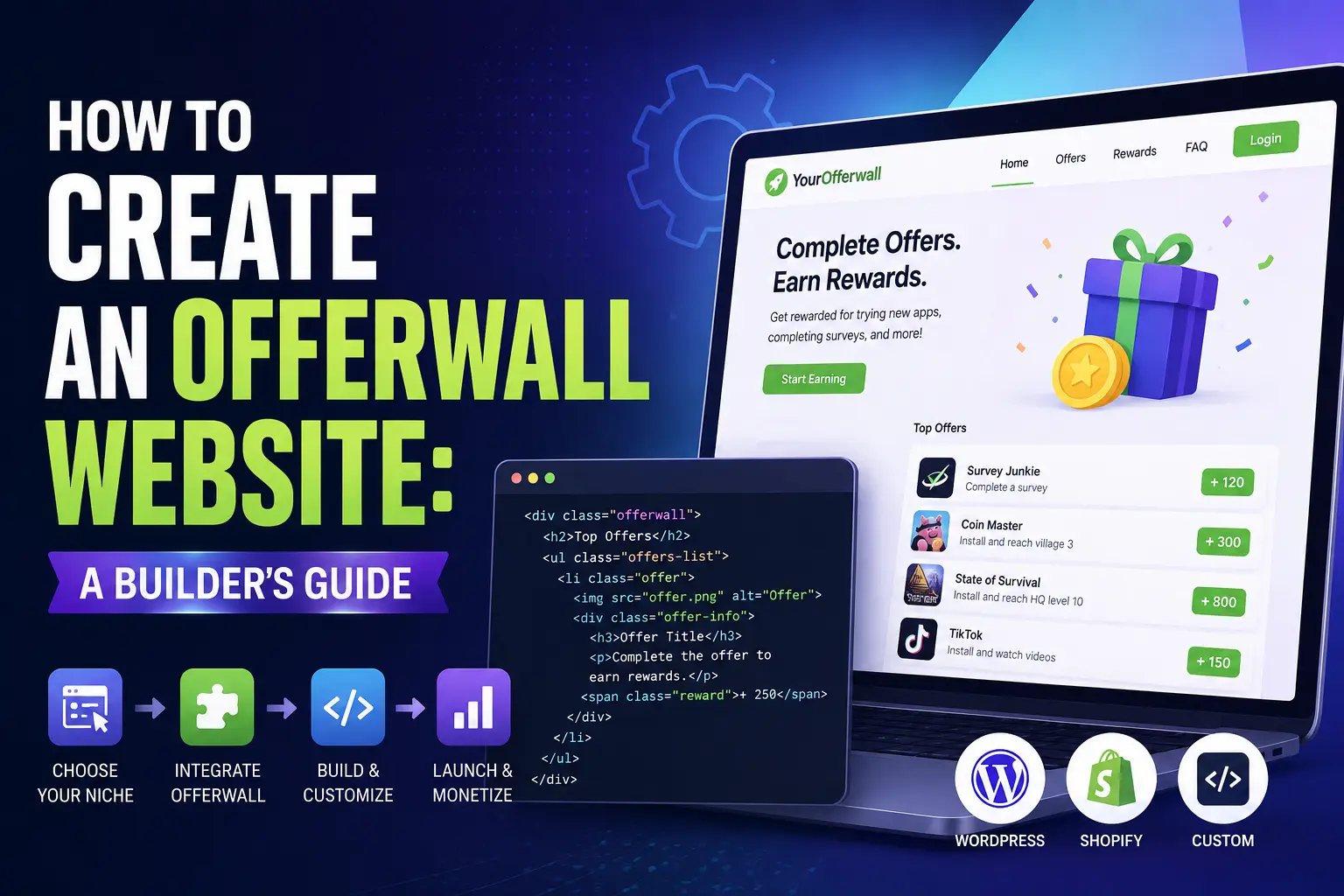
Publishers building a complete reward website may also find How to Create an Offerwall Website: Complete Builder's Guide useful as part of the wider technical planning process.
30. Alternatives
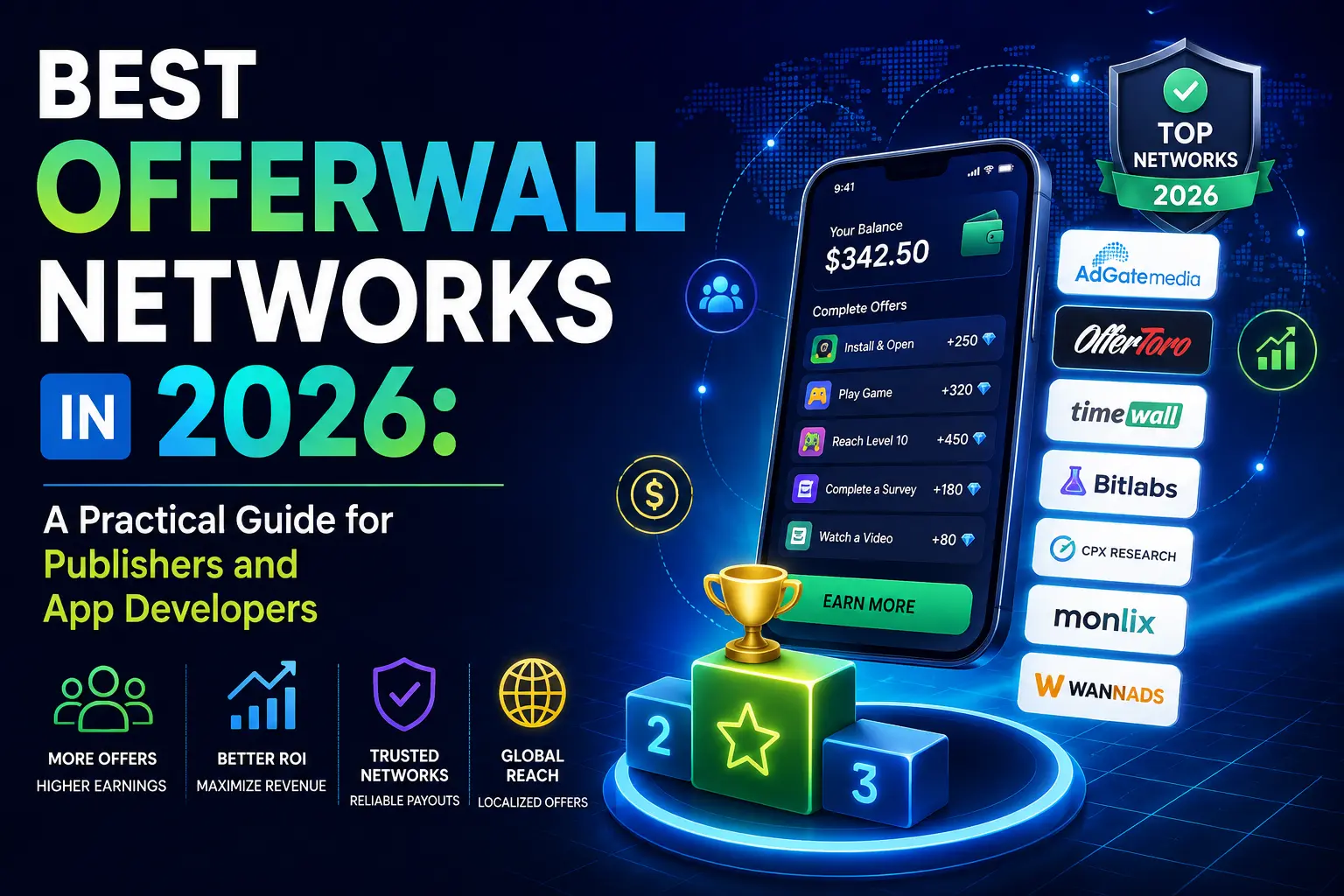
Monlix should not be evaluated in isolation.
Other networks worth comparing include:
RevU
A strong option to investigate when you want a mature offerwall ecosystem with a large range of rewarded offers and extensive publisher integrations.
Read a deeper comparison before choosing a network based solely on headline payout.
AdGate Media
Worth considering for publishers looking for another established offerwall provider with broad campaign coverage.
Lootably
Another interesting choice for GPT websites and reward applications, particularly where offerwall variety and user-facing customization are important.
CPX Research
A more survey-focused option when market-research inventory is the main objective. Hansal Dev's 2026 offerwall research also covers survey-focused providers in more detail.
TheoremReach
Another network worth considering when surveys are a major part of the monetization strategy.
The right strategy is often not choosing one provider.
For a serious GPT platform, multiple offerwalls can provide:
- more inventory
- better GEO coverage
- more user choice
- redundancy
- better overall monetization
- protection against temporary inventory shortages
That is why multi-offerwall architecture is increasingly attractive for reward platforms.
31. Final rating
Monlix Review 2026 Rating: 8.4/10
| CategoryRating | |
| Offerwall | 8.5/10 |
| Website integration | 9/10 |
| Android SDK | 8.5/10 |
| iOS SDK | 8.5/10 |
| API | 9/10 |
| Postbacks | 9/10 |
| Tracking | 8.5/10 |
| Surveys | 8/10 |
| Gaming | 8.5/10 |
| GEO coverage | 8/10 |
| Fraud controls | 8/10 |
| Reporting | 8/10 |
| Reward flexibility | 9/10 |
| Payments | 7.5/10 |
| Documentation | 8.5/10 |
| Overall | 8.4/10 |
Final verdict
Monlix is a serious offerwall option for publishers that want more than a simple embedded widget.
Its biggest advantage is the combination of HTML5 integration, native Android and iOS SDKs, JSON APIs, survey APIs, CPE support, user/sub-ID tracking, and server-to-server postbacks.
That combination makes it especially attractive for:
GPT websites + reward platforms + mobile apps + mobile games.
The main area where I would remain cautious is commercial transparency around things that are not clearly standardized publicly, especially attribution windows, traffic thresholds, and the exact depth of inventory by GEO.
I also would not take vendor revenue claims at face value without testing them against your own audience.
That is ultimately the most important point with offerwalls.
A network can look excellent on paper and still perform differently for a publisher depending on country mix, traffic source, device mix, user demographics, retention, and fraud profile.
My recommendation is therefore practical:
Start with Monlix if you need a technically flexible offerwall, especially for a GPT platform, reward website, app, or game.
Use the iframe when speed matters.
Move to the API when you need control.
Use S2S postbacks as the source of truth for rewards.
And once your platform reaches meaningful scale, compare Monlix against at least two other networks rather than allowing one provider to become your entire monetization infrastructure.
For developers building their own reward ecosystem, Monlix is not just another offerwall — it can function as one component of a larger monetization architecture.
Final score: 8.4/10 — Recommended for publishers and developers seeking flexible offerwall monetization with strong technical integration options.
Trusted resources and further reading
Monlix Documentation: Current technical documentation covering web, SDK, APIs, surveys, and postbacks.
Monlix Publisher Page: Publisher-focused information about offerwalls, surveys, rewards, and monetization.
Monlix Postback Documentation: Technical reference for server-to-server conversion callbacks and reward parameters.
Monlix JSON API Documentation: Campaign API and CPE offer structure.
Monlix Survey API Documentation: Survey retrieval and payout information.
Monlix HTML5 Integration: Official iframe integration guide.
Monlix Android SDK: Official Android integration guide.
Monlix iOS SDK: Official iOS integration guide.
Hansal Dev Offerwall Guide: What Is an Offerwall? Meaning, Mechanics, and Earning Potential.
Hansal Dev Offerwall Research: Best Offerwall Sites 2026.



Comments (0)
No comments yet. Be the first to share your thoughts!