
1. Overview
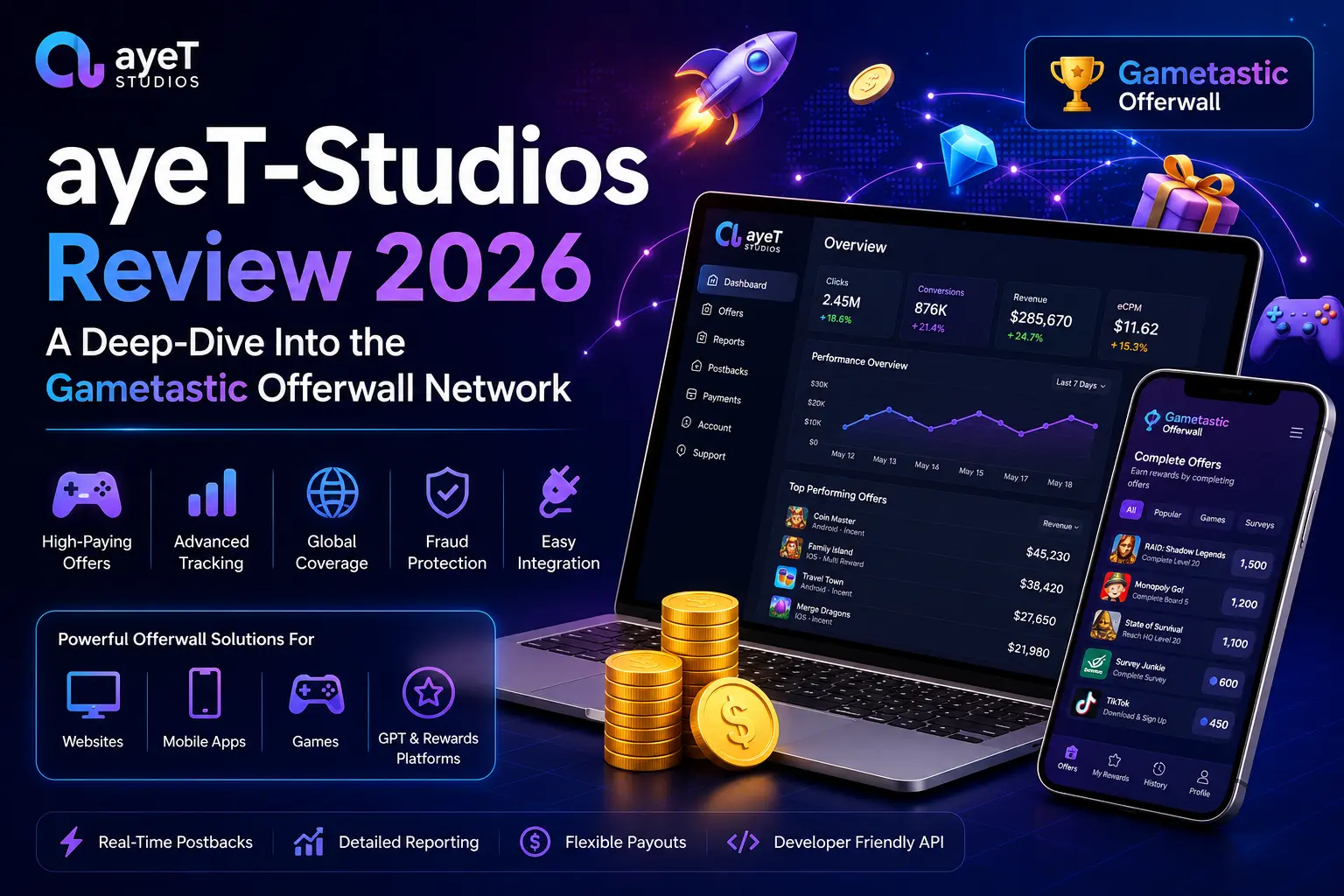
If you have been in the mobile monetization space for more than a few years, ayeT-Studios is a name that has probably crossed your radar more than once. Founded in 2014 and headquartered in Hannover, Germany, ayeT-Studios has built a dual-sided marketplace that serves both app publishers looking to monetize and advertisers hunting for engaged installs and post-install events. The company positions itself around three core products: Gametastic (the flagship offerwall), Polltastic (a dedicated surveywall), and GemTastic (rewarded video ads). They also operate myCashery, a first-party rewards app that gives them direct access to a reward-seeking audience without relying entirely on third-party publisher inventory.
On paper, the numbers look solid: over 550 active publishers, 12 million monthly active users, and claims of more than 200,000 successful mobile and web campaigns. Their advertiser-side value proposition is built around self-serve campaign creation with bids starting as low as $0.07 for CPI and $0.30 for CPE, while their publisher pitch focuses on high eCPMs, opt-in user engagement, and flexible integration methods.
But numbers on a landing page only tell half the story. After digging into their documentation, publisher terms, advertiser APIs, Trustpilot reputation, and actual integration workflows, this review breaks down what ayeT-Studios really delivers — and where it falls short — so you can decide whether it deserves a slot in your monetization stack.
2. Who Is It For?
ayeT-Studios is designed for two distinct audiences, and the platform experience differs significantly depending on which side of the fence you sit.
For Publishers: The platform is aimed at mobile app developers, webmasters running GPT (Get-Paid-To) platforms, casual game studios, loyalty apps, cashback sites, dating apps, and even fintech products that use virtual currency to drive engagement. If your app has a virtual economy — coins, gems, points, or credits — and you want to give users a way to earn that currency without opening their wallets, ayeT's offerwall is built exactly for that use case.
For Advertisers: The platform targets mobile game studios, subscription services, fintech apps, and e-commerce brands looking for user acquisition at scale. The self-serve dashboard is particularly attractive to smaller advertisers or indie developers who do not have the budget for a managed media buyer but still want to run CPI, CPA, or CPE campaigns across Android, iOS, and web.
3. Supported Platforms
ayeT-Studios covers the three pillars of modern digital distribution: Android, iOS, and Web. This is not a mobile-only shop. Their documentation explicitly supports Android App, iOS App, and Website placement types, each mapped to specific AdSlot configurations in the publisher dashboard. The cross-platform reach is one of their stronger selling points, especially if you are running a hybrid product with both a mobile app and a responsive web experience. They also support desktop web through their surveywall and offerwall API integrations, which is a nice touch for publishers with significant desktop traffic that many mobile-centric networks ignore.
4. Website Support
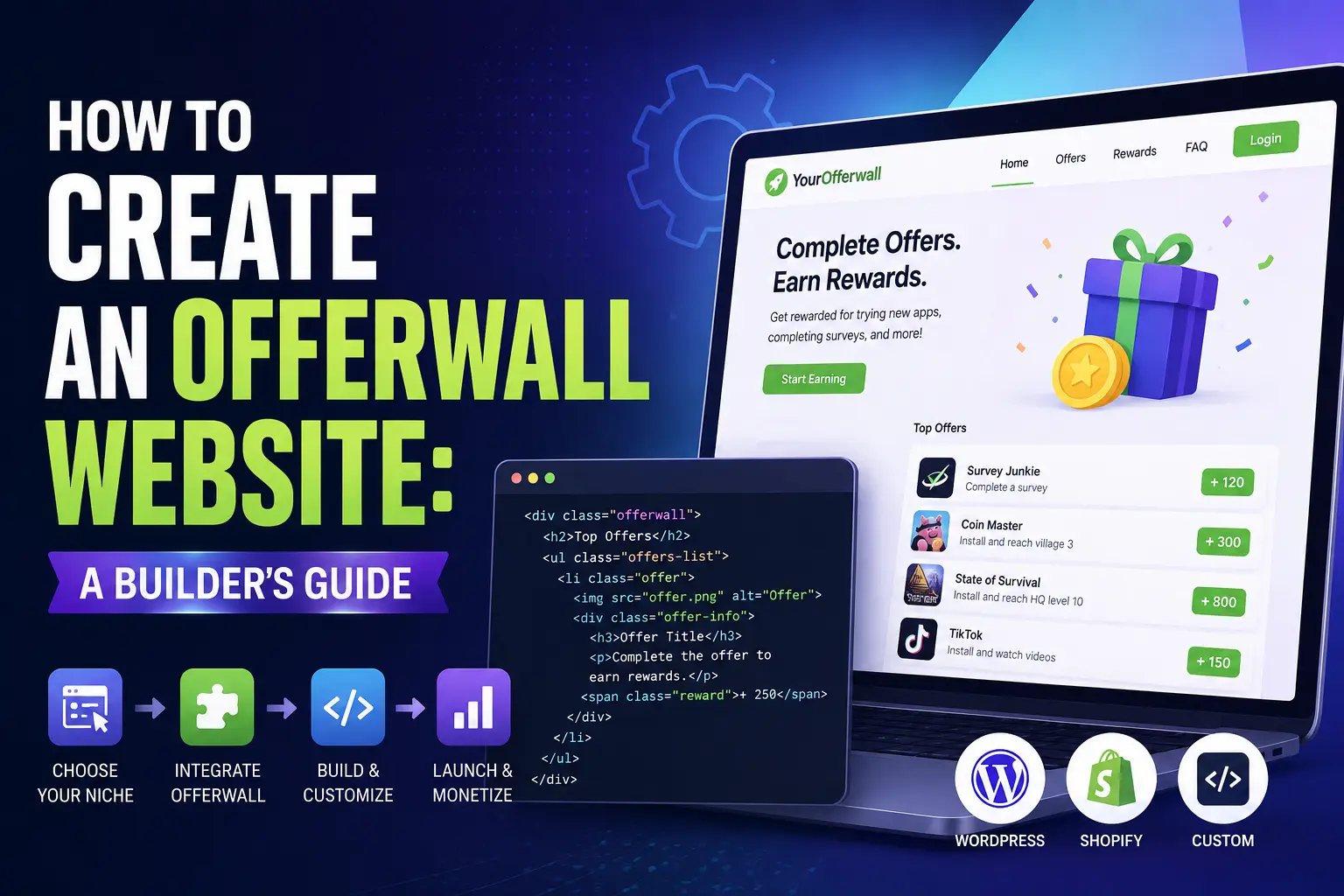
Web publishers are not treated as second-class citizens here. ayeT-Studios provides a Web Offerwall integration that can be implemented via a direct link, iframe, or full API integration. For the surveywall specifically, they recommend opening it in a new browser tab or loading it inside an iframe for desktop and mobile web users. They do caution that the web surveywall is designed for actual browsers and is not ideally suited for in-app webview integration — a detail that saved me hours of debugging when I was testing their flow. If you are running a WordPress-based rewards site, a Shopify storefront with loyalty mechanics, or a custom Laravel build, the web offerwall link approach is the fastest path to go live.
If you are technically inclined and want full control over the user experience, their Offerwall API lets you pull raw offer data and render it with your own UI. This is where ayeT shines for web publishers who care about brand consistency.
5. App Support
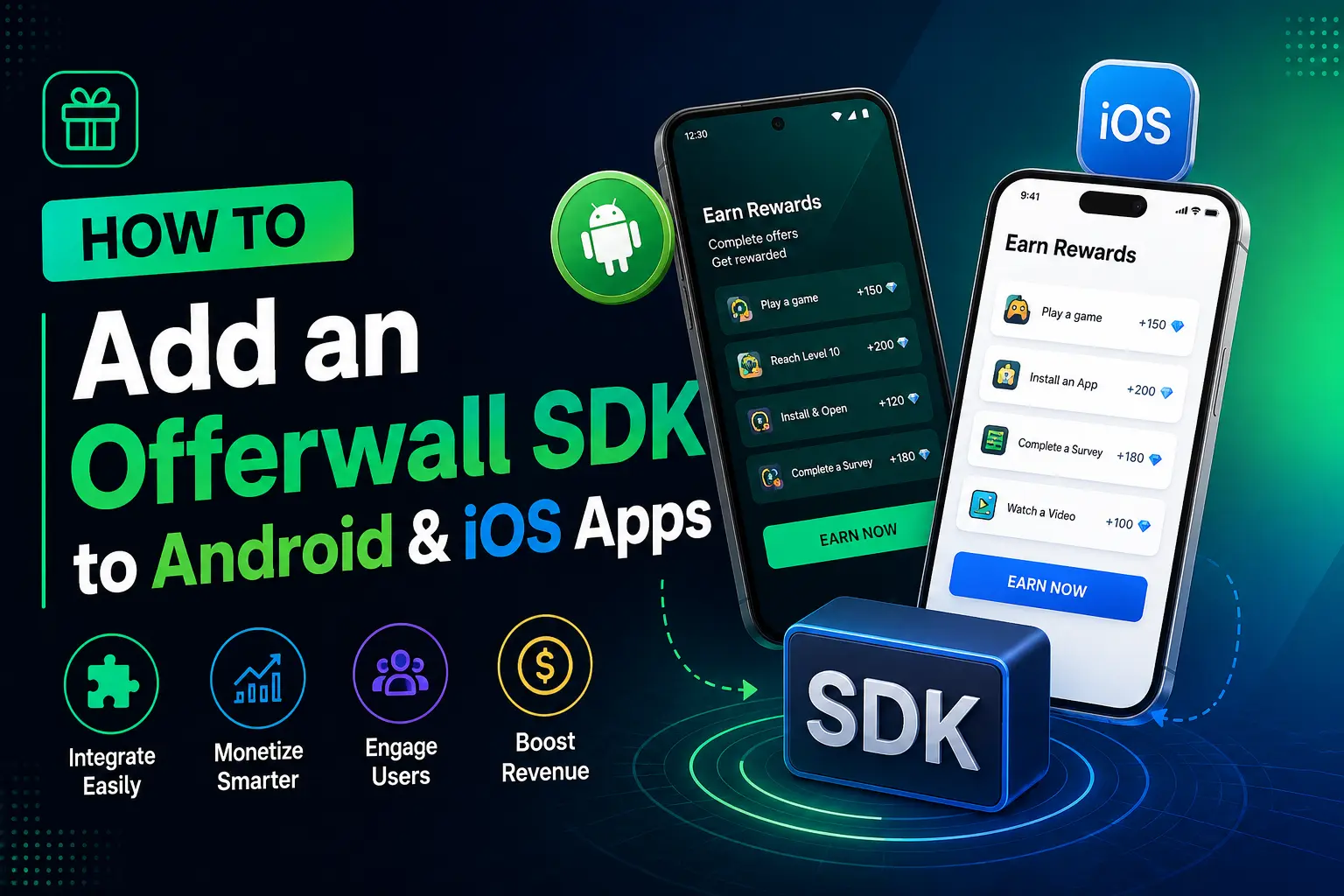
On the mobile side, ayeT-Studios offers native support for both Android and iOS through multiple integration paths. You can go the SDK route for a plug-and-play experience, use a WebView to load the web offerwall inside your app, or build a fully custom implementation using their Offerwall API. They also maintain a Flutter SDK on GitHub, which is a welcome addition for cross-platform developers who have standardized on Flutter instead of managing separate native codebases.
The SDK handles the heavy lifting: user identification, offer rendering, reward callbacks, and session management. For Android specifically, you need to add internet permissions and browser intent queries to your AndroidManifest.xml, which is standard but worth noting if you are auditing your app's permission footprint.
6. Game Support
Gaming is where ayeT-Studios built its reputation. Their marketing materials explicitly call out gaming, dating, cashback, loyalty, play-to-earn, casino, and social apps as ideal verticals. The Gametastic offerwall supports milestone-based rewards, meaning users can earn partial payouts as they progress through a promoted game — reach level 5, get X coins; reach level 20, get Y coins. This mechanic is proven to drive deeper post-install engagement than single-payout CPI offers, and it aligns incentives between the advertiser (who wants quality users), the publisher (who wants high eCPMs), and the end user (who wants fair compensation for their time).
Their own first-party app, myCashery, functions as a live testing ground for gaming offers, which gives ayeT a feedback loop that pure intermediary networks often lack.
7. Integration Methods
Flexibility is one of ayeT-Studios' genuine strengths. They offer four distinct integration paths:
- Direct Web Link / Web Offerwall — Fastest setup, ideal for web publishers and low-code apps.
- SDK Integration — Native Android, iOS, and Flutter SDKs for deep app integration.
- API Integration — Full REST API access for publishers who want to build custom offer walls.
- iFrame / WebView — Embed the offerwall inside your site or app without touching native code.
This tiered approach means you can start with a simple web link to test eCPMs and user engagement, then migrate to a native SDK once you have validated the revenue potential. I have seen too many publishers lock themselves into heavy SDK integrations only to discover the network underperforms in their GEOs. ayeT's modular integration strategy lets you de-risk that process.
8. API Availability
Both publishers and advertisers get API access, which is rarer than you might think in the offerwall space.
The Publisher API lets you retrieve offer feeds, filter by country, device, and category, and handle currency conversion logic on your own servers. The API responses include detailed metadata: payout in USD, EPC estimates, daily caps, conversion instructions in multiple languages, and even state-level targeting for markets like the US.
The Advertiser API is where things get interesting for UA managers. You can programmatically create, edit, pause, and reactivate campaigns; retrieve campaign summaries; and manage budgets. The API supports campaign types including CPI and CPE, and the documentation shows bid-per-conversion controls, budget caps, and burst-limit strategies. For teams running automated UA rules or connecting ayeT to an internal BI stack, this is a meaningful advantage over networks that force you to click around a dashboard.
9. iFrame Availability
Yes — iFrame integration is fully supported for both the offerwall and the surveywall. For web publishers, this means you can embed ayeT's inventory directly into your page layout without redirecting users to an external domain. The surveywall documentation specifically notes that it can be loaded inside an iframe on desktop and mobile web, though they recommend opening it in a new tab for the best user experience. If you are running a custom offerwall website, the iFrame option is the middle ground between a raw API build and a clunky redirect.
10. SDK Availability
ayeT-Studios provides SDKs for Android, iOS, and Flutter. The Flutter SDK is particularly notable because it is open-source on GitHub, which gives developers transparency into what the SDK is actually doing under the hood. The SDK initialization requires an adslotId and an externalIdentifier — the latter being a unique, persistent user ID that you manage. This is standard practice, but it puts the burden on you to maintain consistent user identifiers across sessions and devices if you want reliable reward attribution.
The SDKs handle offerwall presentation, close callbacks, and reward events. For publishers who want the cleanest UX with minimal engineering overhead, the SDK route is the recommended path.
11. Postback System
The postback system is where ayeT-Studios shows its enterprise-grade side. They support server-to-server (S2S) callbacks with HMAC security hashing, IP whitelisting, and replay protection. When a user completes an offer, ayeT's server pings your designated callback URL with parameters including external_identifier, currency_amount, payout_usd, and adslot_id.
Your server must respond with an HTTP 200 status code. If it does not, ayeT will retry the postback up to 12 times over the span of one hour before giving up. This retry logic is critical for maintaining reward accuracy during server maintenance or traffic spikes.
For advertisers, the platform supports custom S2S tracking with whitelisted callback IPs, which is exactly what you want when running paid acquisition at scale. They also integrate with AppsFlyer, Adjust, Tune, and Kochava for publishers and advertisers who prefer to route tracking through a mobile measurement partner (MMP) rather than managing raw postbacks.
12. Tracking
Tracking is handled through ayeT's proprietary system, and their terms make it clear that their numbers are final in case of discrepancies. That said, they claim to take "commercially reasonable measures" to meet industry technical standards.
For publishers, the tracking flow is straightforward: user clicks an offer — ayeT records the click with a unique identifier — user completes the action — advertiser confirms the conversion — ayeT fires the postback to your server. The entire loop is server-side, which means it is resilient against ad blockers, cookie deletion, and most client-side interference.
For advertisers, the platform supports both integrated MMP tracking and custom S2S postbacks. You can define conversion events, set attribution windows, and monitor campaign performance in real time through the self-serve dashboard.
13. Attribution Window
While ayeT-Studios does not publicly advertise a universal attribution window (such as a fixed 24-hour or 7-day click-to-install window), their API documentation reveals that individual offers carry a conversion_time and max_conversion_time parameter. In the sample data I reviewed, conversion times ranged from 900 seconds (15 minutes) to over 17,000 seconds (~4.8 hours) depending on the offer complexity. This suggests that attribution windows are offer-specific rather than platform-wide.
For advertisers, this means you should pay close attention to the conversion_time field when setting up campaigns. For publishers, it means some offers credit quickly while others — especially multi-event or deep-funnel CPE offers — may take hours or even days to confirm. This variability is standard in the offerwall industry, but it is worth setting user expectations accordingly.
14. Offer Types
ayeT-Studios runs a mixed inventory model that covers the full spectrum of rewarded engagement:
- CPI (Cost Per Install) — Users install and open an app. Bids start at $0.07.
- CPE (Cost Per Engagement/Event) — Users complete deeper actions like reaching a game level or signing up for a trial. Bids start at $0.30.
- CPA (Cost Per Action) — Form fills, registrations, and subscription signups.
- Surveys — Via Polltastic, users answer market research surveys for rewards.
- Rewarded Video — Via GemTastic, users watch video ads for virtual currency.
- Free Trials & Subscriptions — Users sign up for services like streaming trials or meal kits.
The diversity of offer types is a genuine strength. If your audience is burned out on install offers, you can lean into surveys or video. If you have a gaming audience, the CPE milestone offers typically deliver the highest eCPMs.
15. GEO Coverage
ayeT-Studios operates globally, but their strength is noticeably concentrated in EMEA (Europe, Middle East, and Africa). Their API sample data shows active offers targeting Germany, the United States, Indonesia, Italy, and many others. The platform supports country-level targeting and even US state-level targeting (e.g., California and New York), which is a level of granularity that many competitors reserve for managed campaigns only.
That said, if your traffic is heavily skewed toward Tier-1 English-speaking markets (US, UK, CA, AU), you may find that networks like AdGem or AdGate Media have deeper advertiser pools in those specific GEOs. ayeT is competitive globally but dominant in European markets.
16. Survey Inventory
Through Polltastic, ayeT-Studios offers a dedicated survey monetization layer. The surveywall is positioned as an opt-in, interactive experience that delivers "premium eCPMs" while keeping users engaged. The integration supports desktop web, mobile web, and in-app via SDK.
Survey inventory quality depends heavily on your user's demographic profile. If your audience aligns with market research demand (adults in Tier-1 countries, specific consumer segments), survey eCPMs can outperform install offers. For younger audiences or traffic from Tier-3 GEOs, survey fill rates tend to drop sharply. ayeT's surveywall is a solid addition to your monetization mix, but it should be treated as a complement to — not a replacement for — offerwall and video inventory.
17. Gaming Inventory
Gaming is the heart of ayeT's offerwall. Their advertiser materials explicitly promote multi-engagement campaigns that keep users active for up to 90 days. The milestone-based reward structure is particularly well-suited to mid-core and strategy games where progression is measured in days, not minutes.
For publishers, this means you can present offers like "Reach Castle Level 10 in Game X" with a payout that scales as the user hits each milestone. This structure outperforms single-event CPI offers in terms of both eCPM and user satisfaction because the user feels fairly compensated for the time invested.
18. Fraud Prevention
Fraud prevention is a make-or-break feature for any network handling incentivized traffic, and ayeT-Studios has built a multi-layered defense system. According to their advertiser-facing materials, they monitor:
- Performance discrepancies between expected and actual metrics
- Third-party tracking validation
- Non-human traffic (NHT) detection
- Statistical indicator anomalies
- Abnormal user behavior patterns
- Unexpected CTR/CR ratios
- Real-time traffic quality abnormalities
- Suspicious performance distribution
On the publisher side, their terms explicitly define fraud to include bot traffic, forced clicks, misleading links, automatic redirects, and any mechanism designed to inflate commissions artificially. If fraud is suspected, ayeT reserves the right to withhold payments until the publisher provides satisfactory evidence of legitimate traffic.
This is a double-edged sword. As an honest publisher, you want aggressive fraud filtering because it protects eCPMs from being diluted by bad actors. However, their Trustpilot profile reveals a recurring complaint: some users feel they were falsely flagged or had rewards denied despite providing screenshots and video proof. The lesson here is to document everything and maintain clean traffic sources from day one.
19. Reporting
ayeT-Studios provides a self-serve dashboard for both publishers and advertisers. Publishers can view earnings per placement, current billing cycles, credit notes, and payout status. Advertisers get real-time campaign analytics with controls for budget, bids, and targeting.
The reporting is functional but not exceptional. You get the metrics you need — impressions, clicks, conversions, eCPM, and revenue — but do not expect the deep cohort analysis or LTV forecasting that platforms like Unity LevelPlay or Digital Turbine provide. For most mid-sized publishers and advertisers, the dashboard is sufficient. For data-heavy operations, you will likely want to pull data via the API and pipe it into your own analytics stack.
20. Reward Flexibility
Publishers have full control over how rewards are denominated and displayed. You define your virtual currency and exchange rate; ayeT handles the USD payout calculation. The platform supports currency sales, which let you temporarily boost payouts to drive offerwall adoption during events or promotions. You can also run A/B tests to compare different offerwall configurations.
This flexibility is valuable. I have worked with networks that force you into their currency framework, which creates confusion when your app already has an established virtual economy. ayeT's approach respects your existing system.
21. Payout Model
ayeT-Studios operates on a revenue-share model for publishers. You earn a commission based on the value of the completed offers, paid out in your chosen currency. The exact revenue split is not publicly disclosed and likely varies by publisher volume and GEO mix, which is standard in this industry.
For advertisers, the pricing is transparent: CPI campaigns start at $0.07, and CPE campaigns start at $0.30. You control your bid, daily budget, and total campaign budget through the self-serve interface.
22. Payment Methods
Payment options include PayPal, wire transfer, and other standard methods. The minimum payout threshold varies by method — for example, PayPal has a $25 minimum. If you do not hit the threshold in a given month, your earnings roll over to the next billing cycle. Credit notes are generated automatically once you cross the threshold for your selected payout method.
For international publishers, wire transfer is available but typically carries a higher minimum threshold. You must keep your billing information current in the dashboard, and any changes should be communicated to billing@ayetstudios.com.
23. Approval Requirements
Getting started requires completing a registration process with accurate contact, payment, and tax information. You must provide corporate and tax identification numbers, and you are responsible for keeping your publisher property characteristics up to date.
ayeT-Studios reserves the right to review and approve accounts, though some community sources suggest that approval can be automatic for smaller publishers. Regardless, your properties must comply with their content guidelines: no illegal content, no spyware, no hate speech, no incentivized click fraud, and full compliance with app store policies (Google Play Developer Distribution Agreement and Apple Developer Program License Agreement). You also need a privacy policy that discloses third-party ad serving and tracking, plus affirmative user opt-in for data collection.
24. Minimum Traffic
ayeT-Studios does not publish a hard minimum traffic requirement, which makes them accessible to indie developers and smaller web publishers. However, as with most networks, your account manager attention and negotiating leverage improve significantly once you are driving meaningful volume. If you are just starting out, the self-serve dashboard and web link integration let you test the network without a lengthy sales cycle.
25. Publisher Support
This is where the narrative splits. On one hand, ayeT-Studios offers account managers for managed campaigns and a ticket-based support system. On the other hand, their Trustpilot rating sits at 2.6 out of 5 based on hundreds of reviews, with the most common complaints being slow response times, generic replies, and disputes over reward credits.
Some users report waiting weeks or months for support responses, while others say their issues were resolved promptly after providing sufficient proof. The inconsistency is concerning. If you are a publisher planning to rely on ayeT as a primary revenue source, you should factor in the possibility of needing to escalate support tickets and maintain meticulous documentation of offer completions.
26. Strengths
- Flexible integration options (SDK, API, iFrame, WebView, direct link) suit everything from indie apps to enterprise platforms.
- Strong EMEA presence with competitive offer density in European markets.
- Milestone-based CPE offers drive higher engagement and eCPMs than simple CPI walls.
- Self-serve advertiser dashboard lowers the barrier to entry for UA campaigns.
- S2S postbacks with HMAC security provide reliable, fraud-resistant tracking.
- Currency sale and A/B testing tools give publishers levers to optimize adoption.
- Flutter SDK is a thoughtful addition for cross-platform developers.
- First-party audience via myCashery gives them a unique supply channel.
27. Weaknesses
- Support inconsistency is the most cited pain point across user reviews and community forums.
- Trustpilot reputation is poor, with recurring complaints about denied rewards and tracking failures.
- Attribution disputes can be difficult to resolve without extensive documentation.
- Dashboard analytics lack the depth of more mature competitors like Unity LevelPlay or AdMob.
- Tier-1 GEO depth may lag behind networks that specialize in US/UK/CA traffic.
- Publisher terms heavily favor ayeT in dispute resolution, with their tracking numbers deemed final.
28. Best Use Case
ayeT-Studios shines as a secondary or tertiary offerwall in a mediation stack, particularly for publishers with European traffic or milestone-reward-friendly gaming audiences. It is also an excellent choice for advertisers with modest budgets who want to test incentivized user acquisition without committing to a managed service contract.
If you are building a GPT site or offerwall platform and want a network that is easy to integrate via API or iFrame, ayeT deserves a spot in your rotation. The low minimum payout and multiple integration paths make it low-risk to test.
29. Who Should Avoid It
- Publishers who need white-glove support should look elsewhere; the support experience is too inconsistent for mission-critical revenue.
- High-volume Tier-1 US publishers may find better eCPMs and fill rates with networks that specialize in North American inventory.
- Advertisers with zero fraud tolerance should be cautious; while ayeT has anti-fraud tech, incentivized traffic always carries quality variance.
- Developers who want turnkey deep analytics may find the reporting dashboard too basic for sophisticated cohort analysis.
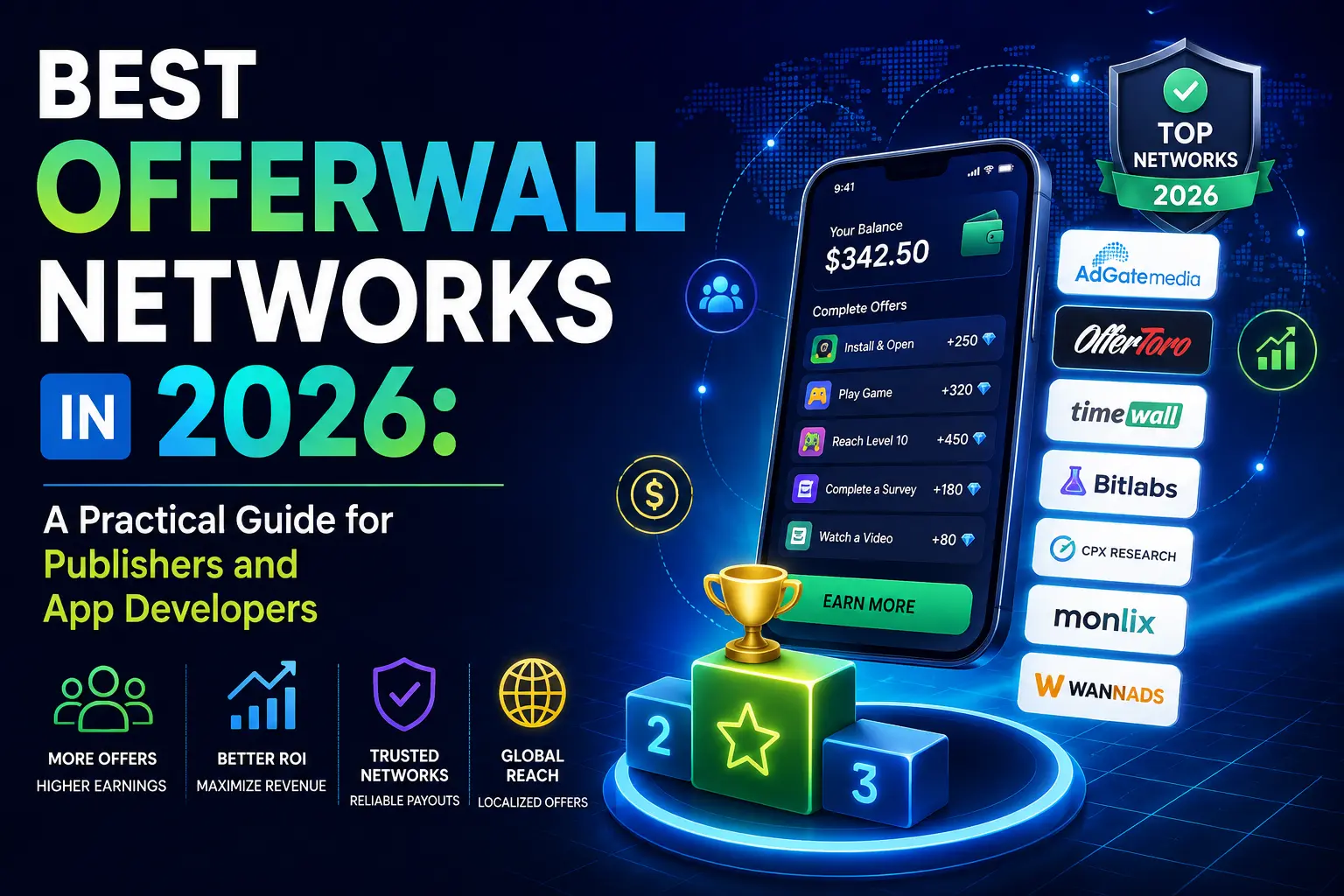
30. Alternatives
The offerwall space is crowded, and you should almost never rely on a single network. Here are the most credible alternatives to consider:
- AdGate Media — Strong all-rounder with surveys, installs, and video offers. Excellent for North American traffic.
- AdGem — Premium UX with per-user personalization and strong advertiser quality controls.
- BitLabs — Survey-first with exceptional Tier-1 eCPMs. Ideal if your audience matches market research panels.
- AppsPrize — Milestone-based offers with a multi-reward structure similar to ayeT's Gametastic.
- RevU — SDK-free offerwall with hands-on account management, popular among mid-sized game studios.
- Lootably — Web-based offerwall with deep design control, great for custom-branded experiences.
- Wannads — Global coverage with auto-translation and segmentation across 100+ countries.
- Torox — Fast onboarding and global fill, useful as a backfill network.
If you want a deeper comparison of how offerwalls fit into the broader online earning ecosystem, check out our guide on GPT Sites vs. Survey Sites vs. Cashback Platforms.
31. Final Rating
Table
| Criteria Score Notes | ||
| Integration Flexibility | 9/10 | SDK, API, iFrame, WebView — they cover every base. |
| Offer Diversity | 8/10 | Strong mix of CPI, CPE, surveys, and video. |
| GEO Coverage | 7/10 | Excellent in EMEA; decent globally; weaker in pure Tier-1 depth. |
| Tracking & Postbacks | 8/10 | S2S with HMAC, MMP integrations, and retry logic. |
| Publisher Dashboard | 6/10 | Functional but lacks advanced analytics. |
| Support Quality | 4/10 | The biggest weak spot; inconsistent and slow per user reviews. |
| Fraud Prevention | 7/10 | Good tech stack, but false positives seem common. |
| Payout Reliability | 7/10 | Monthly payouts with reasonable thresholds, but disputes are contentious. |
| Overall | 7.0 / 10 | A solid, flexible network held back by support and reputation issues. |
Verdict: ayeT-Studios is a capable, well-established offerwall network with genuinely flexible integration options and competitive European inventory. It earns a place in most publishers' mediation stacks — but not as the sole provider. Test it, monitor eCPMs closely, document every conversion dispute, and diversify your revenue across at least two other networks. If you are an advertiser with a modest budget and a self-serve mindset, the low minimum bids and campaign controls make it a worthwhile testing ground. Just go in with realistic expectations about support responsiveness and attribution resolution.


Comments (0)
No comments yet. Be the first to share your thoughts!