
1. Overview
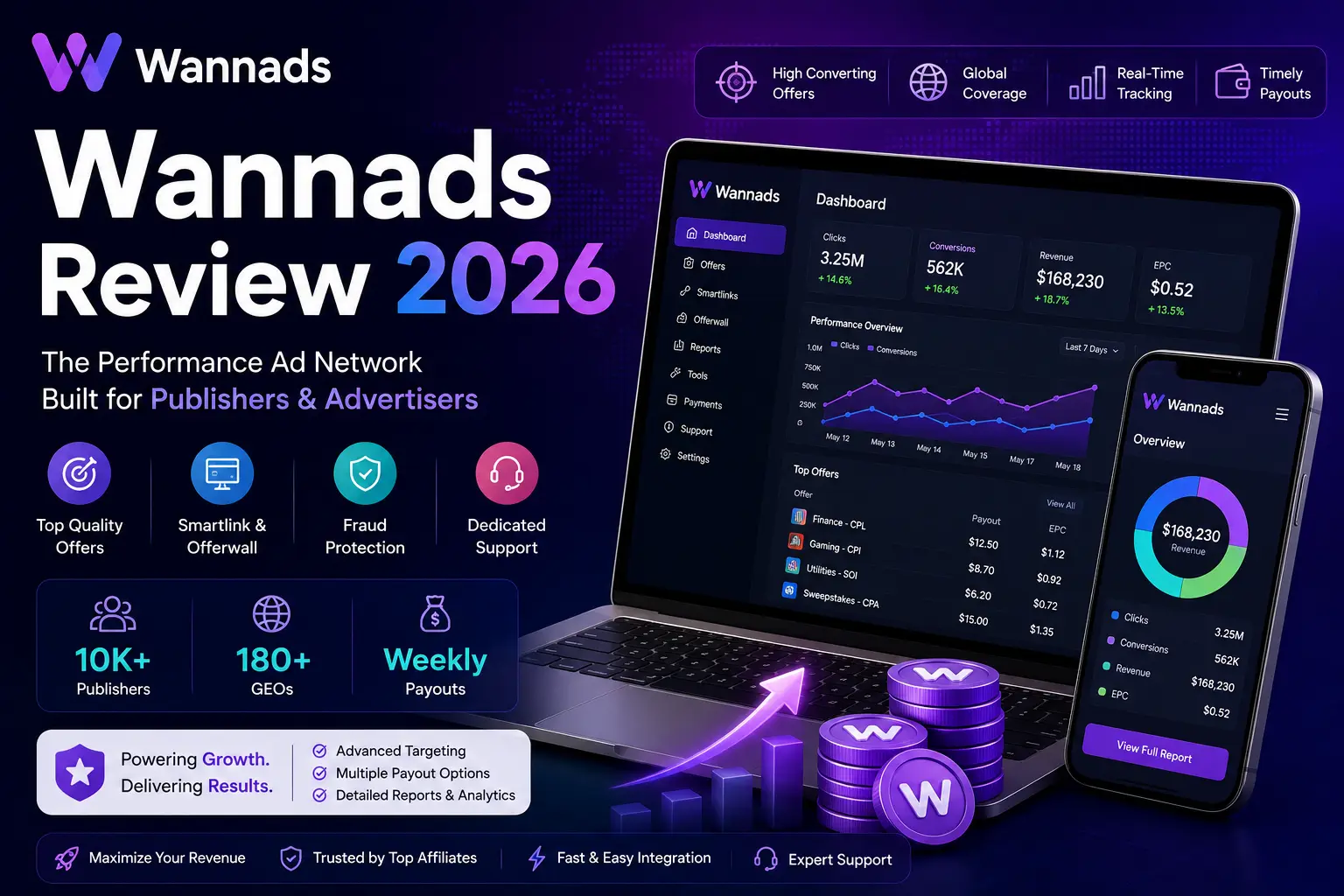
Wannads is an incentive advertising and offerwall platform designed for publishers that want to monetize websites, mobile applications, games, reward platforms, and other services by giving users something to do in exchange for virtual rewards.
The basic model is straightforward:
A publisher integrates Wannads into its platform. Users see available offers, surveys, app-install campaigns, games, sign-up activities, downloads, quizzes, and other advertiser-sponsored tasks. When a user completes a qualifying action, Wannads receives the advertiser-side revenue and the publisher can reward that user with its own points, credits, coins, or another virtual currency.
That model makes Wannads particularly relevant to GPT sites, reward apps, loyalty platforms, survey communities, gaming platforms, and services where a meaningful portion of the audience may not otherwise generate revenue.
Wannads currently presents four major monetization approaches: a hosted offerwall through iframe, an Offers API for custom implementations, mobile SDKs, and a dedicated paid-survey offerwall. Its website also says the platform supports websites, applications, and games and offers campaigns across more than 100 countries.
There is, however, an important distinction between the marketing site and the technical documentation. The current Wannads homepage advertises native Android and iOS SDKs, while the public Android and iOS documentation pages currently display — Coming soon. — That means developers should verify SDK availability with Wannads before making an implementation decision based on a native SDK alone.
Another point worth mentioning is the company transition. Wannads' current LinkedIn profile states that the company was acquired by Brown Boots in 2025. That makes older publisher reviews useful for historical context, but not sufficient as the only evidence for evaluating the platform in 2026.
From a practical publisher perspective, that is how I would approach Wannads: the product infrastructure is interesting and technically usable, but current operational conditions should be validated before moving a large share of your monetization to it.
For a broader explanation of how this business model works, see our guide on What Is an Offerwall? Meaning, Mechanics, and Earning Potential.
2. Who is it for?
Wannads is primarily aimed at publishers that already have a user-facing product and want to introduce rewarded monetization.
The strongest use cases include:
- GPT and Get-Paid-To websites
- Reward and loyalty platforms
- Survey websites
- Cashback platforms
- Mobile apps with virtual currencies
- Online games
- Social and community platforms
- Content websites that use reward systems
- Services where users can earn points for completing tasks
Wannads' own FAQ specifically mentions online games, applications, social networks, video or music sites, and mobile content as possible integration environments.
It is less suitable for someone looking for a traditional affiliate network where individual offers are promoted as normal affiliate links. Wannads is much more naturally positioned as a monetization layer inside an existing product.
That distinction matters.
If you own a reward website with 20,000 active users, an offerwall makes sense. If you have a normal blog with no account system, no virtual currency, and no user dashboard, simply adding an offerwall may produce a poor experience.
3. Supported platforms
Wannads is designed around multiple environments:
- Websites
- Mobile web
- Mobile applications
- Games
- Social platforms
- Reward/GPT services
The hosted offerwall can be embedded through HTML iframe, while the Offers API allows a publisher to retrieve campaign data and create a custom interface. The marketing site also advertises mobile SDK integration.
For publishers, this is a good architecture because it supports two very different approaches:
Fast deployment: use the hosted wall.
Custom product: consume the API and build your own UI.
That flexibility is one of Wannads' better technical characteristics.
4. Website support
Website support is one of the clearest strengths of Wannads.
The official documentation provides a hosted HTML offerwall that can be embedded directly into a website using an iframe. The wall is designed to adapt to desktop and mobile screen sizes and can show offers according to device and location.
You can also open the wall in a new tab rather than embedding it.
For a small or early-stage publisher, that reduces implementation time considerably.
You don't need to build:
- Offer cards
- Offer filtering
- Campaign routing
- Reward descriptions
- Advertiser redirects
- Basic offerwall presentation
Wannads handles those parts.
5. App support
App monetization is clearly within Wannads' intended use case.
The API documentation accepts a user ID, IP address, device information, demographic parameters, and custom tracking parameters, allowing the platform to return user-relevant offers.
The platform also advertises native Android and iOS SDKs. However, the public SDK documentation currently says that both Android and iOS SDKs are — Coming soon. —
Therefore, my practical assessment is:
App support: Yes. Native SDK documentation: not sufficiently mature publicly.
For a new mobile app, I would confirm SDK availability with the Wannads team before committing engineering resources around an SDK-based implementation.
6. Game support
Games are a natural fit for Wannads because the offer categories include gaming campaigns and app-install campaigns.
The API documentation explicitly lists Games as a category and also includes Android App, iOS App, CPI, Download, and multi-stage offer categories.
That creates opportunities for game publishers to monetize players through activities that sit outside normal in-game advertising.
For example, instead of showing another interstitial ad, a game could offer:
Complete an advertiser task and receive 5,000 coins.
This can work particularly well when the game already has a strong internal currency system.
The important part is balance. Offerwalls should be an optional monetization path, not something that makes the game feel like a reward farm.
7. Integration methods
Wannads provides three important integration concepts:
- Hosted HTML/iframe offerwall
- Offers API
- Mobile SDK approach
The iframe is the fastest.
The API is the most flexible.
The SDK is the most attractive option for native mobile applications if and when the current documentation moves beyond its — Coming soon — state.
For publishers building custom GPT software, the API is arguably the most interesting option because it gives you direct control over how offers appear to users.
8. API availability
Yes, Wannads provides an Offers API.
The API can return offers specific to a user and supports parameters such as:
- API key
- API secret
- User ID
- IP
- Gender
- Age
- Device
- Custom sub parameters
- Offer categories
- Pagination
The documentation says the API can return user-relevant offers based on previous experience and profile data.
The separate API documentation also provides endpoints for categories, devices, and active offers and recommends refreshing the offers endpoint roughly every 30 minutes to one hour, while less frequently changing reference data can be updated weekly.
This is useful for developers building a custom marketplace rather than simply displaying Wannads' standard wall.
9. iFrame availability
Yes.
The iframe integration is one of the most straightforward parts of the Wannads platform.
The official example uses an iframe pointing to the Wannads hosted wall and passes an API key and user ID. The documentation also supports custom parameters such as aff_sub, aff_sub2, aff_sub3, and aff_sub4, which can later be returned in the postback.
This is particularly useful when you need to associate a completed transaction with a specific internal user, session, campaign, or tracking value.
For small teams, this can dramatically reduce development time.
10. SDK availability
This is one area where I would be careful.
Wannads' current homepage advertises native Android and iOS mobile SDKs.
However, the official Android and iOS documentation pages currently show:
— Coming soon. —
That is an obvious documentation mismatch.
So I would rate the situation as:
Marketing availability: Yes.
Public technical readiness: Unclear.
A serious app publisher should not assume the SDK is production-ready solely because it appears on the marketing page.
11. Postback system
Wannads has a proper server-to-server postback mechanism, and this is one of the strongest parts of its technical setup.
When a user completes an offer, Wannads can send an HTTP GET request to your configured postback URL. The postback can include values such as:
- User ID
- Reward
- Goal ID
- Goal name
- Transaction ID
- IP
- Payout
- Signature
For rejected conversions, the system can send a negative reward or a rejected status depending on the implementation.
The global postback documentation also supports:
- Status
- Offer ID
- Offer name
- Click ID
- Affiliate sub parameters
- Transaction ID
- IP
- Goal ID
- Goal name
- Payout
Wannads also documents an IP address for its postback server and provides an MD5 signature option for verifying postback authenticity.
For developers, this is significantly better than relying on client-side JavaScript to award credits.
Your own system should still implement:
- Idempotency
- Transaction uniqueness
- Duplicate protection
- Reward ledgering
- Reversal handling
- Signature validation
The postback should be treated as a financial event, not simply as a URL hit.
12. Tracking
Wannads supports practical tracking parameters such as aff_sub through aff_sub4, as well as aff_click_id and transaction IDs in postback workflows.
This allows a publisher to connect the external offerwall event with its internal system.
For example, your internal user ID might be attached to the offer session, while another sub parameter can represent a campaign placement or traffic segment.
The API response also exposes offer-level details such as offer ID, name, description, country, payout, and related metadata.
That gives developers enough infrastructure to build their own reconciliation layer.
13. Attribution window
This is one of the areas where Wannads' public documentation is not sufficiently specific.
I did not find a current official public page defining one universal attribution window such as 7, 30, or 60 days for all offers.
That is not necessarily a technical weakness because attribution windows can vary by advertiser and offer type. But it does mean publishers should not publish a fixed Wannads-wide attribution period unless Wannads confirms it for the relevant campaigns.
For high-value or multi-step offers, ask your account manager about:
- Click-to-conversion attribution
- Reinstallation rules
- Multi-device behavior
- Delayed conversion windows
- Reversals
- Multi-reward attribution
- Existing advertiser attribution conflicts
14. Offer types
Wannads supports a broad range of campaign categories.
Its API documentation lists categories including:
- Survey Router
- Sign-ups
- Games
- Dating
- Finance
- Product Trials
- Sweepstakes
- Purchases
- Surveys
- Quizzes
- Android Apps
- iOS Apps
- Downloads
- CPI
- Deposits
- DOI
- SOI
The category list also includes Survey Panels and other specialized formats.
That diversity is important because offerwall revenue can become highly volatile when a publisher relies entirely on one offer type.
Surveys may perform well in one GEO while app-install campaigns perform better in another. Games can produce larger individual rewards but often require more user commitment.
15. GEO coverage
Wannads describes itself as a global service and says it can provide automated, segmented, and automatically translated offers from more than 100 countries.
That sounds strong, but GEO coverage should be interpreted correctly.
— Available in 100+ countries — does not mean every country receives equal inventory.
Wannads explicitly states that advertiser requirements determine the audience by factors such as age, sex, and location, and that some countries may have little or no advertising inventory when advertiser demand is low.
This is normal for the performance-advertising industry.
For Egyptian, MENA, African, Latin American, or other non-US traffic, I would always test actual offer depth rather than relying on a global coverage claim.
16. Survey inventory
Surveys appear to be one of Wannads' core strengths.
The company operates a dedicated Paid Surveys OfferWall, and its API categories include Survey Router, Survey Panels, and Survey.
This makes Wannads particularly interesting for:
- Survey websites
- GPT platforms
- Reward communities
- Loyalty products
- Apps with daily earning sections
The reality with surveys, however, is that inventory quantity is only one part of quality.
A survey user cares about:
- Qualification rate
- Screenout frequency
- Credit speed
- Stability
- Survey length
- Reward accuracy
- Country availability
That means a wall with fewer but better-matched surveys can outperform one with hundreds of technically available campaigns.
17. Gaming inventory
Wannads supports gaming-related offers, and its category system explicitly includes Games as well as mobile-app and CPI categories.
This makes it appropriate for rewards systems where users can complete game-related milestones.
For publishers, game offers can be attractive because they can produce repeated engagement instead of one short interaction.
The trade-off is tracking complexity.
A gaming offer may require:
- Installation
- First launch
- Registration
- Tutorial completion
- Level progression
- Purchase
- Time-based retention
The more complicated the offer, the more important it becomes to correctly handle multi-reward goals and rejected transactions.
18. Fraud prevention
Wannads clearly includes validation and reversal concepts in its postback architecture.
The system supports:
- Transaction IDs
- Status changes
- Rejected conversions
- IP information
- Signed postbacks
- Goal-level identifiers
These mechanisms are useful for transaction integrity and fraud-control workflows.
However, I would not describe Wannads as publicly documenting a complete, transparent anti-fraud stack.
I did not find a current technical page that lays out a detailed public system for device fingerprinting, emulator detection, VPN intelligence, behavioral scoring, or every other modern fraud layer.
For a publisher, this matters because offerwall fraud ultimately becomes a shared problem.
You should still implement your own controls around:
- Multiple accounts
- VPN/proxy use
- Device duplication
- Suspicious completion velocity
- Impossible time-to-completion
- Repeated withdrawals
- Chargeback patterns
- Reward abuse
Never assume the network alone will protect your reward economy.
19. Reporting
Wannads provides a publisher dashboard and describes it as one of the platform's core tools. The company's site also highlights dashboards in customer testimonials.
The practical reporting signals available through the technical system include offers, transaction IDs, payout data, goals, and user-related identifiers.
For a sophisticated publisher, however, I recommend maintaining your own reporting layer.
Track at minimum:
- Clicks
- Starts
- Completions
- Reward value
- Gross revenue
- Net revenue
- Reversals
- Revenue per active user
- Revenue per country
- Revenue per device
- Offer completion rate
That lets you compare Wannads against alternatives rather than relying exclusively on the network's dashboard.
20. Reward flexibility
Wannads is designed around virtual rewards rather than forcing the publisher to distribute a specific reward product.
Its official FAQ describes users earning virtual currency, credits, or points after completing advertiser campaigns.
This is a major advantage for businesses that already have their own economy.
For example:
- 1 USD advertiser payout can become 1,000 platform points
- 100,000 points can equal a $10 withdrawal
- Game coins can be awarded after successful completion
The exact economics are controlled by the publisher.
That lets you preserve your own branding instead of forcing users to interact with a third-party reward system.
21. Payout model
Wannads' terms state that publishers are paid based on a revenue-share model calculated from Net Revenue, with the actual payment determined according to the payout policies in effect and factors such as the quantity, quality, and validity of clicks, impressions, and actions.
This is important because you should not think about the gross advertiser payout as automatically becoming your final earnings.
There may be:
- Advertiser-side reversals
- Invalid traffic adjustments
- Rejected conversions
- Network revenue share
- Offer-specific conditions
The terms also state that payments are made in U.S. dollars and approximately 30 days after the end of each calendar month.
The current FAQ on the main website says payments are handled through Ramp and are typically issued electronically through ACH against approved invoices.
Because payment procedures can change, publishers should verify the exact payment workflow shown inside their account before relying on older third-party reviews.
22. Payment methods
The current official FAQ says Wannads uses Ramp for accounts payable and that payments are issued electronically, typically through ACH, against approved invoices.
The legal terms describe electronic bank payments and state that banking or wire-related charges are the publisher's responsibility.
This is different from some older third-party articles that listed PayPal as a payment method.
For that reason, I would not publish PayPal as a guaranteed current Wannads payout method in 2026 without confirming it directly.
This is exactly the sort of information that becomes outdated quickly in the affiliate industry.
23. Approval requirements
Wannads requires registration and account approval for access to its publisher network.
The API documentation specifically states that the affiliate account must be approved before using the affiliate offer endpoint.
What I could not find is a single official public checklist that guarantees approval based on a specific traffic volume, domain age, monthly visitors, or revenue level.
That means publishers should focus on presenting a legitimate, functional platform with:
- Real traffic
- Clear ownership
- Visible content
- Valid user experience
- Proper reward mechanics
- No obvious incentivized fraud
- No prohibited traffic methods
A serious application is always easier to review than an empty domain with no visible product.
24. Minimum traffic
Wannads does not currently publish a clear universal minimum traffic requirement in the public documentation I reviewed.
That is important because many old offerwall reviews quote specific minimum traffic or withdrawal thresholds that may no longer reflect current policy.
I would therefore treat any fixed — you need X visitors per month — statement from an old review as unreliable unless Wannads confirms it.
A third-party 2026 offerwall comparison also describes Wannads as having no specific traffic minimum, but this is not as authoritative as confirmation from Wannads itself.
The safer conclusion is:
No clearly documented universal traffic minimum was found. Approval remains discretionary.
25. Publisher support
Wannads emphasizes publisher support on its own website and includes several long-term customer testimonials praising responsiveness and account-manager assistance.
That is encouraging, especially for reward businesses where technical implementation is only half the battle.
A good account manager can make a major difference with:
- GEO inventory
- Offer quality
- Campaign availability
- Conversion disputes
- Tracking issues
- Payout questions
- Custom integrations
However, there is a significant counterpoint.
Current Trustpilot data is much less positive. Wannads currently has a 1.4/5 TrustScore based on 52 reviews, with the overwhelming majority being one-star reviews. Trustpilot also notes that the reviews are opinions of individual users and may not be representative.
There are also recent 2026 complaints alleging payment and communication problems following the company's acquisition by Brown Boots. These are customer allegations, not independently verified findings, so they should be treated as warning signals rather than proof of misconduct.
This is probably the biggest reason I would test Wannads with a controlled allocation rather than immediately making it your only offerwall provider.
26. Strengths
Wannads has several legitimate advantages.
Strong offerwall model
It is built specifically around rewarded monetization rather than being a generic advertising platform.
Dedicated survey product
The presence of a dedicated paid-survey wall gives Wannads a meaningful position in survey-heavy reward platforms.
Multiple integration paths
Publishers can use iframe, API-based integration, and the advertised mobile SDK approach.
Good postback architecture
Transaction IDs, goals, status, payout, user information, and signatures make the integration appropriate for serious reward accounting.
Global reach
Wannads claims campaigns across more than 100 countries.
Flexible user rewards
The publisher can operate its own point or credit system rather than being locked to Wannads' branding.
27. Weaknesses
The weaknesses deserve just as much attention.
SDK documentation is inconsistent
The homepage markets Android and iOS SDKs, while the documentation pages currently say — Coming soon. —
Public attribution details are limited
There is no clearly documented universal attribution window.
Payment information has changed over time
Current official information points toward Ramp/ACH, while older articles often mention PayPal.
Current public reputation is weak
Trustpilot's current rating is extremely low, although the sample is small and reviews are not necessarily representative of the publisher-side experience.
Inventory depends heavily on GEO
Global availability does not mean equally strong inventory everywhere.
Fraud documentation is not especially transparent
The postback system provides useful security controls, but Wannads does not publicly expose an especially detailed anti-fraud technical architecture.
28. Best use case
The best Wannads use case is a reward platform with an existing user base and its own virtual currency.
For example:
A GPT site has users who earn points through surveys, offers, and games. Wannads becomes one of several external earning sources. Users see the offerwall inside a dedicated — Earn — section, and the platform credits users when Wannads confirms a completion.
This is where the business model makes sense.
It also works well as a secondary monetization channel for apps and games.
I would especially consider Wannads when:
- Surveys matter
- The audience is international
- You have a reward wallet
- You already understand S2S postbacks
- You can compare multiple offerwall networks
For broader implementation guidance, our Complete 2026 Guide to Mobile App Monetization Platforms covers offerwalls, APIs, SDKs, analytics, and fraud protection in a wider context.
29. Who should avoid it
I would avoid making Wannads the first choice for:
Brand-new websites without users
An offerwall does not magically create traffic.
Publishers without a reward economy
If your site does not have points, credits, cash balances, or another reward mechanism, the integration may feel unnatural.
Developers looking specifically for a mature documented mobile SDK
The current SDK documentation does not provide enough confidence for that requirement.
Publishers who require highly predictable payment procedures
Given the current public complaints and the discrepancy between older payout information and today's payment workflow, payment terms should be confirmed before scaling heavily.
Publishers depending on one network
This is not unique to Wannads.
Offerwall inventory changes. Advertisers pause campaigns. Surveys disappear. GEO performance fluctuates.
A resilient rewards business should normally have more than one monetization source.
30. Alternatives
Wannads should be evaluated as part of an offerwall stack rather than in isolation.
Depending on your audience, you may also compare it with:
- AdGate Media — broad offerwall inventory and a well-known publisher ecosystem.
- RevU — useful for publishers looking for a mixture of offers and strong campaign-level monetization.
- Lootably — often considered for gaming, offers, and reward-focused inventory.
- AyeT-Studios — particularly relevant to mobile-oriented rewarded monetization.
- Adscend Media — another established option for reward and GPT publishers.
- Torox — useful as another network to compare for mobile and performance-based offer inventory.
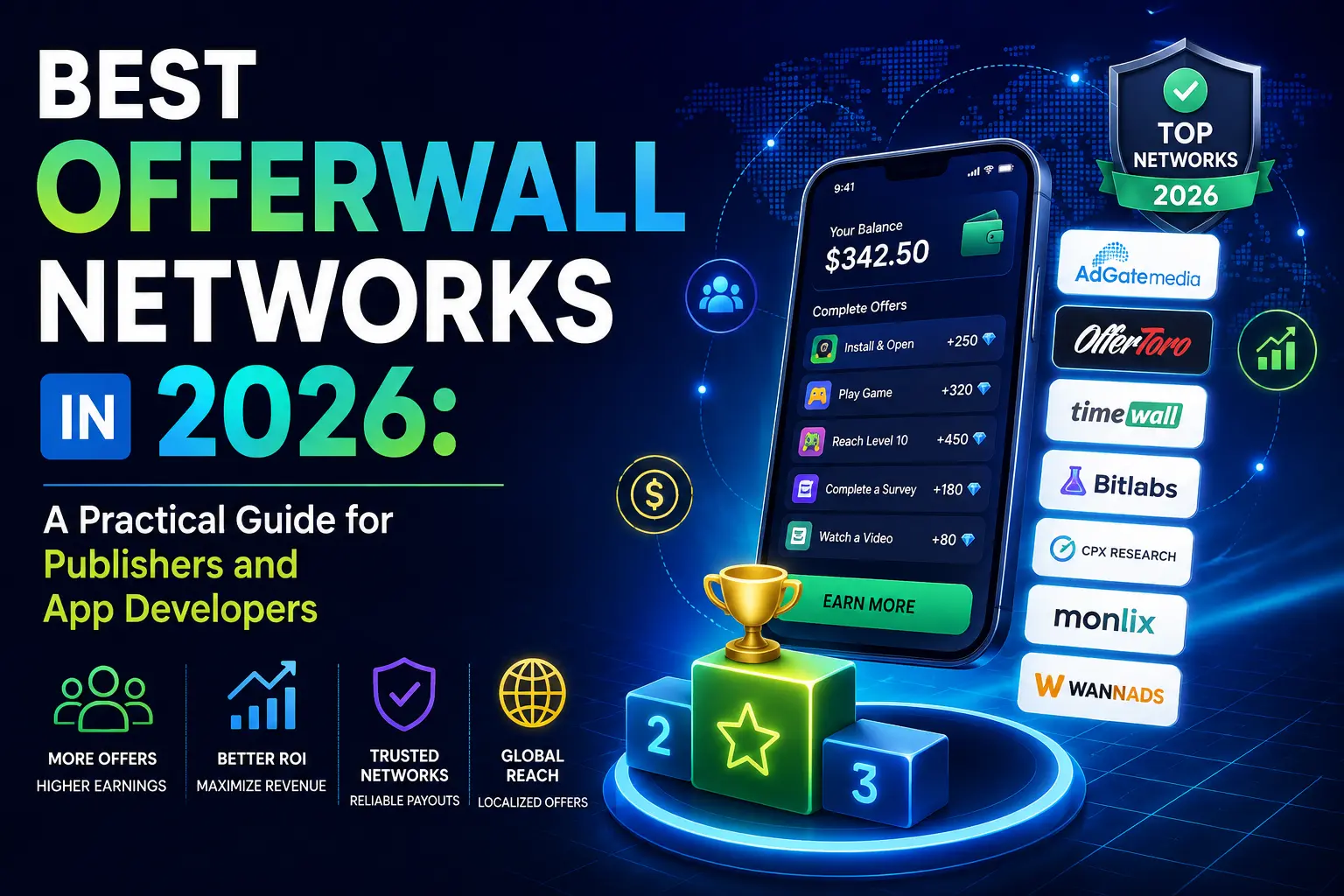
You can also see our broader Best Offerwall Sites in 2026 comparison before choosing a primary network.
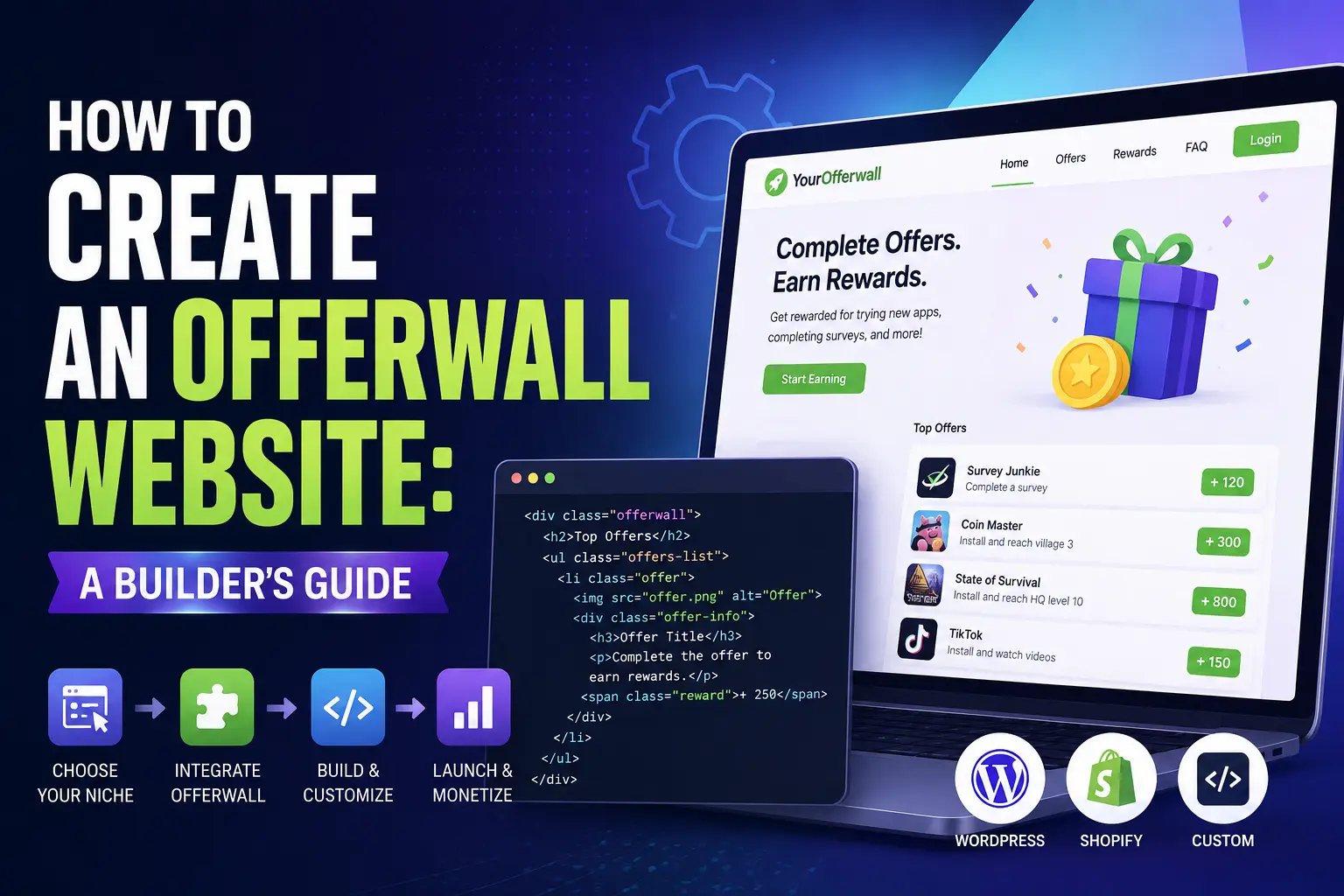
For a developer building the infrastructure yourself, our How to Create an Offerwall Website guide explains the technical model around Laravel, S2S postbacks, wallet ledgers, fraud prevention, and withdrawals.
31. Final rating
Wannads Rating for 2026: 7.1/10
| CategoryRating | |
| Offerwall Quality | 7.5/10 |
| Survey Inventory | 8.0/10 |
| Gaming Inventory | 7.0/10 |
| API | 8.0/10 |
| iFrame Integration | 9.0/10 |
| Postbacks | 8.5/10 |
| Tracking | 8.0/10 |
| GEO Coverage | 8.0/10 |
| Reward Flexibility | 8.5/10 |
| Reporting | 7.0/10 |
| SDK Readiness | 5.0/10 |
| Documentation | 6.5/10 |
| Publisher Support | 6.5/10 |
| Payment Transparency | 6.0/10 |
| Overall Publisher Confidence | 6.5/10 |
Final verdict
Wannads is still a technically interesting offerwall platform in 2026, especially for publishers focused on surveys, rewarded tasks, GPT websites, apps, and games.
Its strongest assets are not flashy features. They are the fundamentals: a hosted iframe, an Offers API, user-specific targeting parameters, a real S2S postback system, goal tracking, flexible reward mechanics, and broad international coverage.
Where I would be more cautious is the operational side.
The current public documentation is not perfectly aligned with the marketing site, particularly around SDK availability. Payment information has evolved over time, and current public review sentiment is poor enough that it deserves to be considered before scaling.
That does not automatically make Wannads a bad network.
It means the sensible strategy is to treat it as a testable monetization partner, not as a platform you should trust blindly.
For a new or growing reward platform, I would integrate Wannads alongside at least one or two competing offerwalls, compare actual EPC, completion rates, reversal rates, GEO fill, support response time, and payment consistency, and then allocate traffic according to measured performance.
That is a much better way to evaluate an offerwall than simply asking which network advertises the highest payout.
External references
- Wannads official website: Wannads Official Website
- Wannads official API documentation: Wannads API Documentation
- Wannads iframe documentation: Wannads iframe Integration
- Wannads postback documentation: Wannads Postback Documentation
- Wannads terms and conditions: Wannads Terms and Conditions
- Wannads Trustpilot reviews: Wannads on Trustpilot
Editorial note: This review is based on current public Wannads documentation, the current company website, current legal terms, and independently published user feedback available during research in August 2026. Where Wannads does not publicly document a specific metric — such as a universal attribution window or fixed minimum traffic requirement — I have deliberately marked it as undocumented instead of presenting an unsupported number as fact.


Comments (0)
No comments yet. Be the first to share your thoughts!