
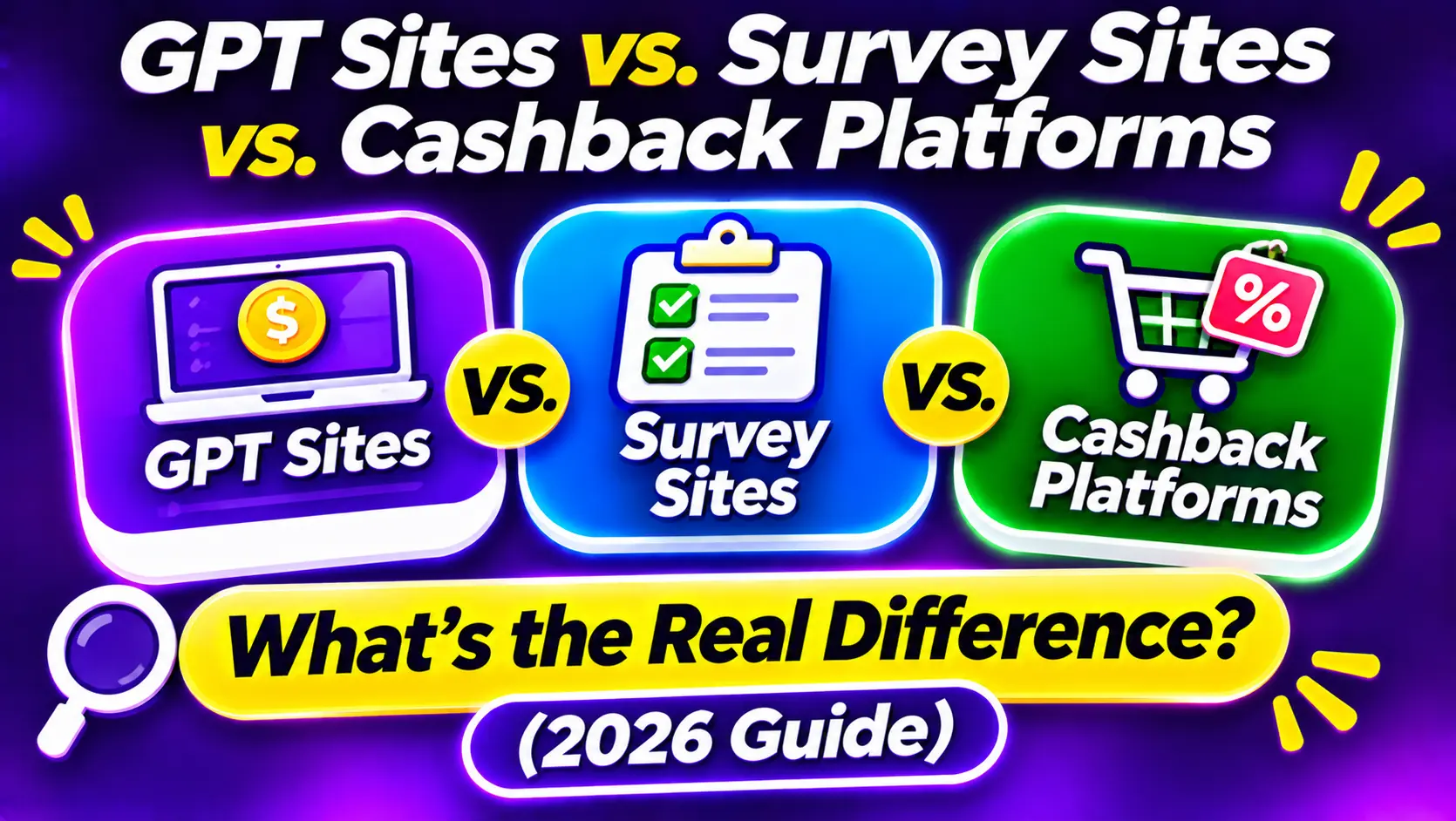
VibeCash and Swagbucks are two names that come up whenever someone researches the get-paid-to (GPT) space, but they are not the same kind of product. Comparing them fairly requires understanding what each one actually is before weighing features. This guide compares VibeCash (a self-hosted rewards platform you buy and operate) with Swagbucks (a consumer rewards program run by Prodege that you join, not software you buy), on the criteria that matter to an operator: ownership, control, economics, payouts, fraud handling, and lock-in. It also explains when each model makes sense and how to avoid comparing things that are not comparable.
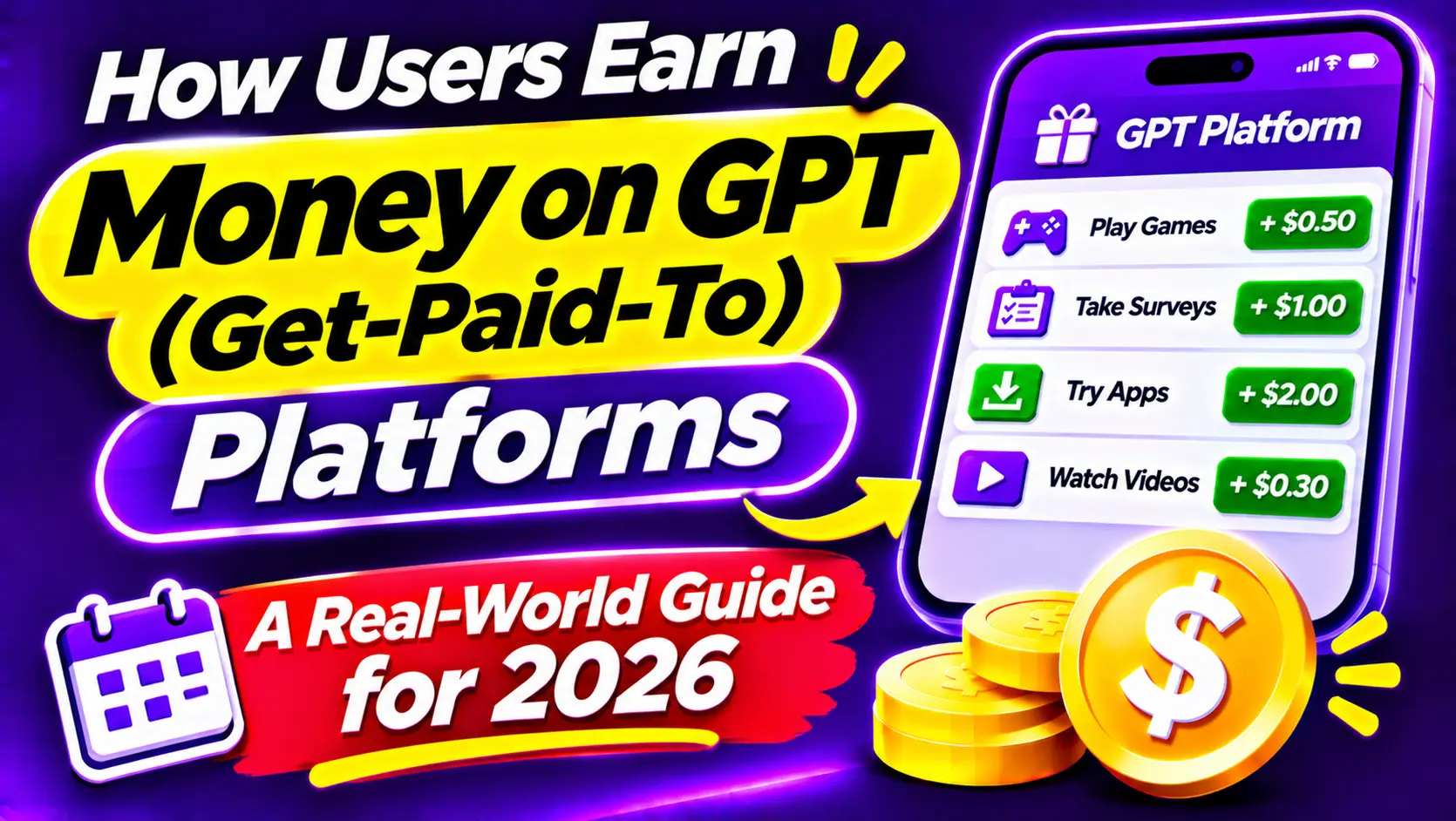
If you are new to the model, what a GPT website is and how the GPT business model works provide the necessary background. For a broader framework for evaluating platform software, see how to evaluate GPT platform software.
What VibeCash is
VibeCash is a self-hosted rewards and offerwall platform sold as source code. You purchase a license, install it on your own server, and operate the rewards site yourself: members earn coins from offerwalls, surveys, tasks, streaks, and referrals, then request cashouts that you review and pay. According to the product listing, it ships as version 3.2.1 at a regular price of $49 (compare-at $99), as a regular (single-installation) license, with a live demo at vibecash.hansaldev.com. Verified product facts from the VibeCash landing page and product row include:
- Self-hosted Laravel application with full unencrypted source, two frontend themes (React storefront and classic Blade/Livewire), and an admin panel.
- 23 offer-network parsers, each implementing its own signature scheme (MD5/SHA-256 hashes, HMAC-SHA1, signed query strings, password comparison, or source-IP allowlist); six networks can sync their catalogue on a schedule.
- A coin ledger to eight decimal places with a transaction row per movement, and postback verification that refuses to activate a network without its credentials configured.
- Fraud controls in the box: captcha, throttles, device fingerprinting, VPN/proxy detection.
- Operator-reviewed cashout queue with server-side fee recalculation, a risk panel (account age, device fingerprint, 24-hour earnings velocity, IP geography), batch approval, and an audit trail.
- Referral programme with three single-level commission tiers (3%, 5%, 7% at 1, 25, and 200 referrals), commission paid as a share of the referred member's offer earnings.
- 46 tables in the shipped schema, 33 admin permissions across three roles, 359 automated test methods, 12 verified PHP extensions.
- Cashout is operator-processed: there is no automated payout adapter for any provider; four payout method templates ship, all disabled by default.
Because you own the code and the database, you control the economy, the branding, and the data. The trade-off is that you are responsible for hosting, updates, security, and payouts.
What Swagbucks is
Swagbucks is not software you buy. It is a consumer rewards program operated by Prodege, LLC, an American online marketing, polling, and market research company founded in 2005 by Josef Gorowitz and based in El Segundo, California. Swagbucks launched in February 2008 as an online rewards portal under co-founders Josef Gorowitz and Scott Dudelson, introducing Swag Bucks (SB) as a digital currency earned for activity across its network of websites. These facts are verified against the Wikipedia article on Prodege (retrieved 2026), which cites its sources.
According to that article, Swagbucks is a website and application where users shop and participate in other earning activities for cash rewards and gift cards. Prodege operates several consumer brands, including Swagbucks, MyPoints, InboxDollars (known in the UK as InboxPounds), Tada, Upromise, Ysense, Pollfish, and CouponCause. Prodege had 600 employees and received a $60 million investment from Technology Crossover Ventures in 2014; it acquired AdGate Media in 2022. Swagbucks is a hosted consumer platform: a member signs up, earns, and requests payout through Prodege's own system. You cannot self-host Swagbucks, and you do not own its code or data.
For an operator, Swagbucks is relevant in two ways: as a competitor whose member experience sets expectations in your market, and as a potential partner or traffic source (for example, through offer networks or affiliate arrangements) rather than as a product you deploy.
At a glance
| Dimension | VibeCash | Swagbucks (Prodege) |
|---|---|---|
| What it is | Self-hosted rewards platform software (source code you buy and run) | Hosted consumer rewards program you join (not purchasable software) |
| Ownership of code/data | Full source and your own database | Prodege owns code and data; you are a member or affiliate |
| Pricing model | One-time license ($49 regular, $99 compare-at) for a single installation | Free for members; Prodege earns from advertisers and offer networks |
| Hosting responsibility | You host, update, and secure it | Prodege hosts it |
| Earn surfaces | Offers, offerwalls, surveys, tasks, streaks, referrals, spin wheel, leaderboards (configurable) | Shopping, surveys, and other earning activities for cash/gift cards (per Wikipedia) |
| Payouts | Operator-reviewed queue, methods you define, server-side fee recalculation, risk panel | Prodege's own payout system; not under your control |
| Fraud controls | Captcha, throttles, device fingerprinting, VPN/proxy detection (verified in product) | Managed by Prodege; not visible or configurable by you |
| Customization | Full: economy, branding, themes, features | None for an operator; brand is fixed |
| Scalability of effort | Your operational capacity (hosting, moderation, payouts) | Prodege's operational capacity; you are not the operator |
Rows for Swagbucks reflect only what is verifiable from the cited source. Where a cell says "not under your control" or "managed by Prodege," that is the structural consequence of a hosted consumer platform, not an unverified claim about its internals.
Ownership and control
The fundamental difference is who owns the stack. With VibeCash, you receive the source and run it yourself: you own the member data, the ledger, the branding, and the economy parameters, and you can change any of them. With Swagbucks, you are a participant in someone else's platform: you cannot change earn rates, payout methods, or branding, and your data lives in Prodege's systems.
This is not a defect of either model. Self-hosting trades convenience for control; joining a hosted platform trades control for convenience. The right choice depends on whether you want to run a rewards business or earn within one. An operator evaluating "VibeCash vs Swagbucks" is usually really asking "should I build my own rewards site or participate in an established one?" — and the answer depends on your goals, skills, and capital.
Economics: who earns what
In a self-hosted model like VibeCash, your revenue is the spread between what offer networks pay you and what you pay members, minus your operational costs (hosting, support, payouts, your time). You keep the margin and the member relationship, but you also absorb the risk of fraud, chargebacks, and payout timing. How GPT sites make money covers this model in detail.
In a hosted consumer model like Swagbucks, the platform operator (Prodege) captures the margin and the member relationship. A member earns rewards; a publisher or affiliate may earn a referral or revenue-share commission depending on the programme terms. Your economics are whatever the platform's affiliate or publisher programme offers, which is typically smaller and less controllable than running your own site, but requires far less capital and effort.
Because these are different economic roles, comparing "earnings" across them is misleading. A fair comparison is between your expected margin per member on a self-hosted site (after costs) and your expected commission per referral on a hosted platform, over the same time horizon.
Payouts
Payout handling is where the two models diverge most sharply for an operator.
VibeCash uses an operator-reviewed cashout queue. Members request a payout; the request debits the balance inside a row-locked transaction so it cannot double-spend; points are held until you approve; fees are recalculated on the server from the locked method record (not from client input); rejecting a request returns the full amount with an audit entry. A risk panel (account age, device fingerprint, 24-hour earnings velocity, IP geography) sits beside the approve control, and batch approval is supported for paying many members to the same destination. Payouts are manual: there is no automated payment-gateway adapter, so you pay members by hand through your own accounts. This gives you control and an audit trail, but it costs your time.
Swagbucks pays members through Prodege's own system. As a member or affiliate you do not control payout methods, minimums, fees, or timing; you receive whatever Prodege's programme provides. The advantage is that Prodege handles the operational burden and the payment infrastructure; the disadvantage is that you cannot tune the payout experience or economics for your audience.
When comparing, ask: do you want to own the payout relationship (and its workload) or delegate it? There is no universally right answer, but the choice should be deliberate. How GPT site cashouts work describes the self-hosted flow in detail.
Fraud and abuse
Farming is the default failure mode for reward sites, and the two models handle it differently.
VibeCash ships fraud controls in the box: captcha (enabled by default), login throttles, device fingerprinting, VPN and proxy detection, and referral fraud heuristics. Referral commission is single-level (tiers change the rate, not the depth), and commission is paid only on the referred member's offer earnings — not on streak bonuses, spin wins, or leaderboard prizes. These limits are stated explicitly because the product's own marketing shorthand can imply multi-level. Postback security is per-network: each parser implements its own signature scheme, and a network cannot be activated without its credentials configured.
Swagbucks manages fraud internally as part of Prodege's platform. As a member or affiliate you do not see or configure these controls, and you cannot audit them. This removes your operational burden but also removes your visibility and control. If your audience or traffic profile differs from Swagbucks' typical member, you cannot adapt the fraud posture to match.
Integration and offer networks
For an operator, the breadth and reliability of offer-network integration determines how much inventory you can show and how much manual reconciliation you face.
VibeCash supports 23 offer-network parsers, each with its own verification method, plus postback URL templates per network, a postback simulator for testing integrations without real traffic, and catalogue sync for six networks (with a guard that refuses to delete a catalogue when the upstream response is too small to be real). This is a verifiable, code-level claim from the product.
Swagbucks, as a hosted consumer platform, manages its own network integrations internally. You do not integrate networks yourself; you participate in whatever inventory Prodege offers. The advantage is zero integration work; the disadvantage is no control over which networks or offers appear to your audience.
If you plan to run your own offers or connect your own networks, self-hosting is the only path. If you want inventory without integration work, a hosted platform is the better fit.
Costs and lock-in
Cost comparison must include the full picture, not headline prices.
- VibeCash: one-time license ($49 regular) for a single installation, plus your hosting, support, and time. You own the code and data, so there is no revenue share or per-member fee, and you can export or migrate your data. Updates may be included or charged separately — verify the licence terms for the version you buy.
- Swagbucks: free to join as a member. If you participate as an affiliate or publisher, your economics are defined by Prodege's programme terms, which can change. There is no upfront cost, but there is also no ownership and no portability: you cannot take your member base or earnings history with you if you leave.
Lock-in is the hidden cost of the hosted model. A self-hosted platform costs more upfront in time and money but gives you an exit: your data, your code, your member relationships. A hosted platform costs less to start but makes leaving expensive or impossible. Decide based on your time horizon and risk tolerance, and document the decision.
When to choose which
Choose a self-hosted platform like VibeCash when:
- You want to run a rewards business, not just earn within one.
- You have (or can hire) the technical capacity to host, update, and secure a Laravel application.
- You want to own your member data, economy, and branding.
- You want to connect your own offer networks or customise earn surfaces.
- You have capital for upfront licensing and hosting, and a multi-month time horizon.
Participate in a hosted platform like Swagbucks when:
- You want to earn rewards without operating a business.
- You prefer zero hosting, security, and payout workload.
- You are testing the market before committing to your own site.
- You accept the platform's economics, branding, and data terms.
These are not competitors in the strict sense; they serve different roles. Many operators start as members of a hosted platform to learn the model, then move to self-hosting when they have an audience and a plan. The reverse also happens: operators who underestimate the operational burden of self-hosting sometimes step back to affiliate participation.
Red flags when comparing
- Comparing non-comparable things: rating a consumer platform and a software product on the same feature list produces nonsense. Separate the questions.
- Unverifiable claims: "50+ payment gateways" or "instant automated payouts" that cannot be traced to code or docs. VibeCash explicitly states payouts are operator-processed and that no automated payout adapter exists; treat any platform that claims otherwise with caution.
- Opaque economics: if you cannot calculate your margin per member or per referral, the platform is hiding its model.
- Undocumented limitations: marketing that implies multi-level referrals while the code implements single-level, or implies automation while payouts are manual. The gap between claim and code is where operators get hurt.
- Lock-in without disclosure: revenue share, per-member fees, or non-exportable data not stated up front.
A practical comparison checklist
- Define your role: operator of a rewards business, or participant in one. Do not mix them.
- For a self-hosted option: verify code ownership, licence terms, schema, hosting requirements, and update policy.
- Verify ledger correctness: row locks, transactions, audit trail, double-spend prevention.
- Verify postback handling: per-network signature, credential gating, chargeback reversal, postback log.
- Verify fraud controls: captcha default-on, throttles, fingerprinting, VPN/proxy detection, referral fraud checks.
- Verify cashout handling: queue states, server-side fee recalculation, risk panel, batch approval, manual vs automated.
- For a hosted option: verify programme terms, commission structure, data ownership, and exit terms.
- Calculate total cost of ownership for each path over your time horizon.
- Set a review date and re-evaluate with real usage data.
How this connects to growth
Whichever path you choose, the platform decision shapes what you can publish and how you are discovered. A self-hosted site gives you full control over content, URLs, and SEO; a hosted platform gives you whatever the operator provides. If you run your own GPT or offerwall site, SEO for GPT and offerwall platforms covers how to structure that content. The underlying economics of the model are covered in the GPT business model and GPT site monetization guides referenced above.
Frequently asked questions
Is Swagbucks a software product I can buy and self-host?
No. Swagbucks is a consumer rewards program operated by Prodege, LLC. You cannot buy or self-host it; you join it as a member or participate through its affiliate or publisher programmes. If you want to run your own rewards site, you need self-hosted software such as VibeCash.
Can I compare VibeCash and Swagbucks on features directly?
Only with care. VibeCash is operator software; Swagbucks is a consumer platform. Compare them on the role you want (operator vs participant), ownership, economics, payouts, and lock-in - not on a shared feature checklist, which would be meaningless.
Which is cheaper to start with?
Joining Swagbucks costs nothing as a member. Running VibeCash costs a license fee plus hosting and your time, but you own the business and keep the margin. Compare total cost of ownership over your time horizon, including lock-in costs for the hosted option.
Do payouts work the same way on both?
No. VibeCash uses an operator-reviewed cashout queue with server-side fee recalculation and an audit trail, and payouts are processed manually by the operator. Swagbucks pays members through Prodege's own system, which you do not control. The trade-off is control and auditability versus convenience.
Final takeaway
VibeCash and Swagbucks are not direct competitors: one is software you buy to run a rewards business, the other is a consumer platform you join. Compare them by the role you want, the ownership and control you need, the economics you can verify, and the operational burden you can carry. Do not compare feature lists across different kinds of product. Choose deliberately, document why, and revisit the decision with real usage data.

Comments (0)
No comments yet. Be the first to share your thoughts!