

Why Build a GPT Website in 2026?
The origin story repeats across this space: a small affiliate blog in the “make money online” niche, decent traffic — around 15,000 monthly visitors — and frustratingly thin revenue. Weeks of content work earn pennies from display ads and sporadic affiliate commissions. Then a pattern becomes obvious: the audience isn't just reading about making money online. It's actively looking for ways to earn. The same questions keep arriving in inboxes: “Where can I complete offers for cash?” or “Which GPT site actually pays?”
That observation changes everything.
The natural next step: researching the Get-Paid-To economy more seriously — signing up for Swagbucks, Freecash, PrizeRebel, and a dozen smaller platforms, completing offers, cashing out, studying their UX, and reverse-engineering their business models. What that research reveals is staggering: the GPT market was already worth over $5 billion and growing at roughly 14% annually. More importantly, the barrier to entry isn't as high as it looks — provided the build starts with the right technical foundation and business strategy.
So the platform gets built. It takes about six months from first line of code to first paying user. The learning curve is brutal. Early postback-handling mistakes cost revenue. Integrating the wrong CPA networks craters effective CPM. Underestimating fraud forces detection systems to be rebuilt from scratch. But eventually, it works — and this guide exists to save new builders from every one of those painful mistakes.
If you're reading this, you're probably asking the same question: Can I actually build a GPT website from scratch and make it profitable? The answer is yes — but only if you understand that a GPT site isn't just “a website with some offers on it.” It's a financial platform. It handles real money, real user trust, and real advertiser relationships. Treat it like a hobby, and it will fail. Treat it like a business, and it can become a serious revenue stream.
Understanding the $5 Billion GPT Economy
Before writing a single line of code, understand the ecosystem you're entering. The GPT economy operates on a simple three-sided marketplace:
- Users complete tasks (surveys, app installs, sign-ups, video views) and earn rewards.
- Advertisers pay for those completed actions because they're acquiring customers, data, or engagement.
- You (the platform) sit in the middle, taking a cut of the advertiser's payment and passing the rest to the user as their reward.
The economics are beautiful in their simplicity, but brutal in their execution. Advertisers typically pay between $0.50 and $50 per completed action depending on the vertical. Your platform keeps anywhere from 20% to 50% of that payout, depending on your negotiation power and network relationships. The rest goes to the user.
What makes this model powerful is scale. A single user might only earn you $0.30 per day. But 10,000 active users? That's $3,000 daily revenue. 100,000 users? You're looking at a seven-figure annual business. The real economics behind successful GPT platforms revolve around three metrics: user acquisition cost (UAC), lifetime value (LTV), and offer conversion rate. Master those, and you've built a money-printing machine.
But here's what most newcomers miss: the money isn't in having an offerwall. It's in having the best offerwall for your specific audience. Generic platforms get generic results. The winners in this space are the ones who curate offers aggressively, optimize their UX obsessively, and build trust relentlessly.
Phase 1: Planning Your GPT Platform
Defining your niche and audience
The biggest mistake new builders make? Trying to be everything to everyone. “We'll have surveys, apps, games, videos, cashback, and microtasks!” Sounds great on paper. In reality, it spreads you thin and creates a confusing user experience.
Instead, pick a lane:
- Survey-focused platforms appeal to users who want predictable, low-effort earnings
- App install / CPE (Cost Per Engagement) platforms attract mobile gamers and app enthusiasts
- Mixed offerwall platforms work best when you have the curation engine to surface the right offers to the right users
- Niche GPT sites (crypto rewards, gaming rewards, student-focused) can command higher engagement because they speak to a specific community
Starting with a generalist approach is the classic regret. Conversion rates come out mediocre because gaming offers get shown to survey takers and survey offers to gamers. One builder who narrowed focus to mobile app discovery — helping users find and try new apps for rewards — watched EPC (earnings per click) double within 60 days.
Choosing your monetization model
There are several ways to structure a GPT platform:
Direct CPA network integration (recommended)
You integrate directly with CPA networks like MaxBounty, CPAlead, or MyLead. You get API access to offers, set your own reward margins, and handle everything from display to postback processing. This gives you maximum control and the highest margins — typically 30–50% of the advertiser payout.
Third-party offerwall SDKs
You embed an existing offerwall (like RevU, IronSource, or AdGate) into your site. Easier setup, but they take a significant revenue share. Your margins might drop to 15–25%. Good for testing, bad for long-term profitability.
Hybrid model
You run direct CPA integrations for your core offers, then backfill with third-party offerwalls for geographic or vertical coverage you can't fill yourself. This is what most successful platforms do in 2026.
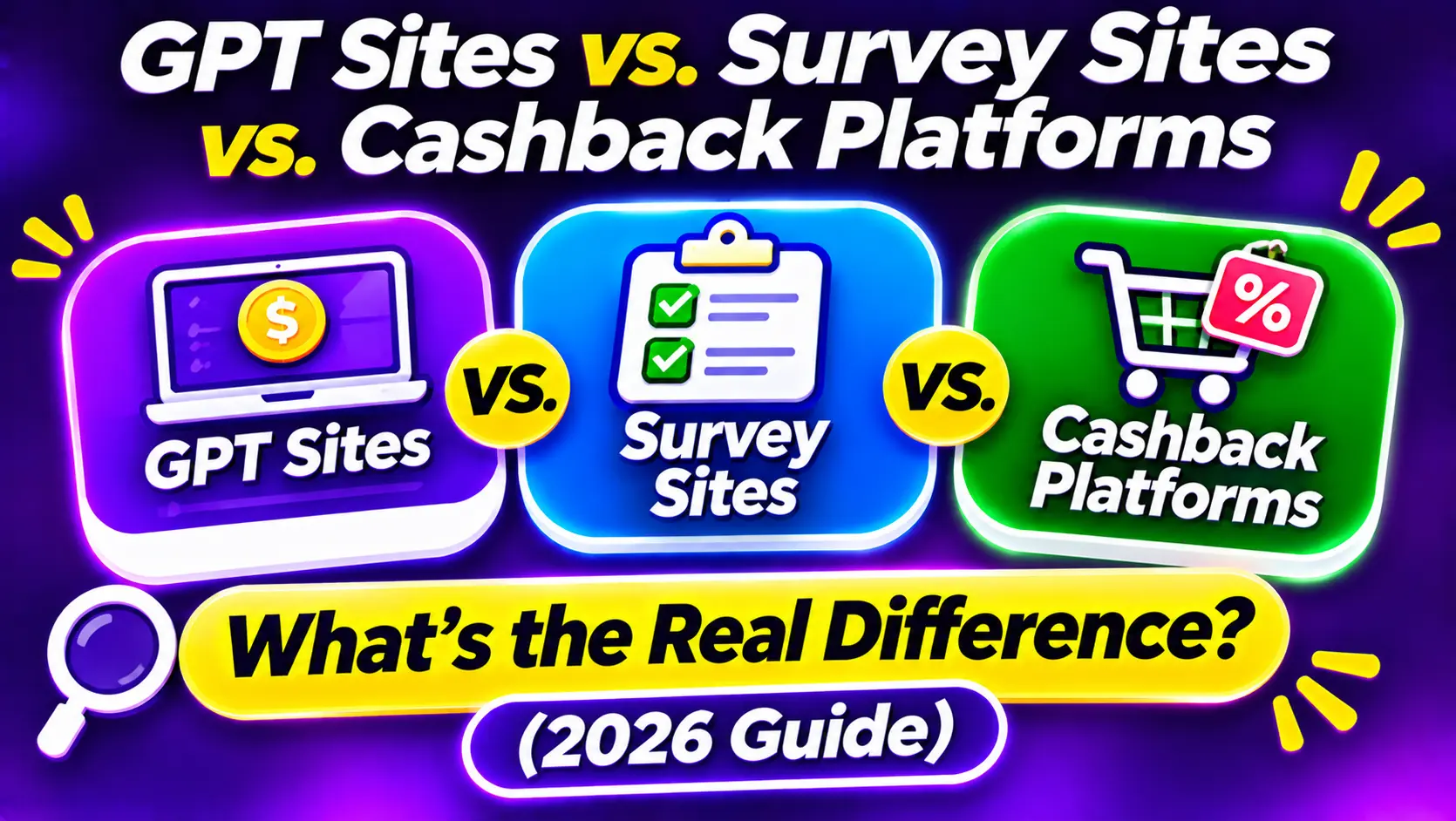
For a scratch build, the sensible sequence is direct CPA integration with one or two networks, then expansion. The difference between GPT sites, survey sites, and cashback platforms matters here — make sure you understand which model fits your audience before you commit.
Legal and compliance foundation
Before launch, you need:
- Terms of Service — Cover user eligibility, prohibited activities, reward policies, and account termination
- Privacy Policy — GDPR and CCPA compliance are non-negotiable; you're collecting behavioral data
- Cookie Consent — Required in most jurisdictions
- Anti-Money Laundering (AML) Policies — If you're handling significant volume, some regions require KYC for withdrawals above certain thresholds
- Age Restrictions — Most CPA networks require users to be 18+; some allow 13+ with parental consent for specific verticals
This gets learned the hard way when a European user files a GDPR complaint because the platform has no proper data deletion process — $2,000 in legal fees to fix what should have been a $50 template. Don't skip compliance.
Phase 2: Choosing the Right Tech Stack
Your tech stack is the foundation everything else builds on. Choose wrong, and you'll be rewriting core systems six months in. Choose right, and you can scale to hundreds of thousands of users without breaking a sweat.
The frontend: what users see
For a GPT platform, your frontend needs to be:
- Fast — Users abandon slow offerwalls immediately
- Responsive — 60–70% of GPT traffic is mobile
- SEO-friendly — Organic traffic is your cheapest acquisition channel
In 2026, the dominant choices are:
React + Next.js — This has become the default for production web apps. Next.js supports server-side rendering, static generation, and API routes in a single framework. If you're building a modern, dynamic offerwall interface, this is the default pick. The component-based architecture makes it easy to build reusable offer cards, filter systems, and user dashboards.
Vue.js + Nuxt — A solid alternative if your team prefers Vue's learning curve. Slightly less ecosystem depth than React, but faster to prototype with.
Plain HTML/CSS/JS — Only if you're building the simplest possible MVP and plan to rebuild immediately after validation. Not recommended for anything beyond a proof of concept.
The backend: where the money happens
This is where your postbacks get processed, your user balances get updated, and your fraud detection runs. It needs to be reliable, secure, and fast.
PHP / Laravel — Don't let anyone tell you PHP is dead. Laravel remains dominant in CMS and e-commerce contexts, and for good reason. It's production-ready out of the box with packages for payments (Cashier), API auth (Sanctum), queues (Horizon), and more. If you have PHP experience, this is a fast path to production. Offshore Laravel developers are also the most affordable and abundant talent pool globally.
Node.js / Express or NestJS — Excellent if your frontend is React and you want JavaScript across the stack. Great for real-time features (live leaderboards, instant notifications). NestJS adds structure if you're building a team. The ecosystem for SaaS tooling is mature but less vertically integrated than Laravel.
Python / Django or FastAPI — Best if you plan to integrate ML/AI features later (fraud detection, offer recommendation engines). FastAPI is particularly strong for API-heavy applications. The tradeoff is slightly higher development costs and a smaller talent pool for web-specific work.
Go — If you're planning for massive scale from day one, Go's performance is unmatched. But development speed is slower, and the talent pool is thinner. Not recommended for a first build unless Go expertise exists in-house.
For most builders, the recommended combination is Laravel for the backend API and Next.js for the frontend. This combination gives you rapid development, excellent security defaults, and a clear scaling path.
The database
PostgreSQL is the recommendation for a GPT platform. It handles complex queries well, has excellent JSON support for flexible offer data, and scales vertically better than MySQL for write-heavy workloads (which your conversions table will be).
You'll need tables for:
- Users (auth, profile, balances, fraud scores)
- Offers (cached from CPA networks, with your margins applied)
- Conversions (postback records — this table grows fast)
- Transactions (withdrawals, deposits, reward history)
- Fraud Logs (IP records, device fingerprints, behavior patterns)
Infrastructure & hosting
- VPS/Cloud: DigitalOcean, Linode, or AWS EC2 for your application servers
- CDN: Cloudflare (free tier handles most needs)
- Queue System: Redis for processing postbacks asynchronously
- SSL: Let's Encrypt (free) or Cloudflare SSL
- Monitoring: Sentry for error tracking, Grafana for metrics
Your postback endpoint must be on HTTPS. CPA networks will reject HTTP endpoints, and rightfully so — you're handling financial transactions.
Phase 3: Architecture & Database Design
This is the section most “how to build a GPT site” guides skip entirely. They'll tell you to “install WordPress and a plugin.” That's fine if you want a blog. It's catastrophic if you're building a financial platform.
Core system architecture
A production GPT platform has four integrated systems:
User management system
- Registration, authentication, email verification
- Profile management, referral tracking
- Balance tracking (available, pending, lifetime)
- KYC/verification workflows for high-value withdrawals
Offer management system
- API sync with CPA networks (pull offers, update caps, refresh creatives)
- Offer categorization and tagging
- Geo-targeting and device filtering
- Margin calculation and reward pricing
- A/B testing framework for offer placement
Tracking & attribution system
- Click tracking (redirect through your server to the network)
- Postback receiving and validation
- Conversion deduplication
- Reversal handling
- Real-time balance updates
Fraud detection system
- Device fingerprinting
- IP analysis and geolocation verification
- Velocity checks (too many conversions too fast)
- Proxy/VPN detection
- Behavioral pattern analysis
Database schema essentials
Here's a simplified version of what your core tables should look like:
-- Users table
CREATE TABLE users (
    id BIGSERIAL PRIMARY KEY,
    email VARCHAR(255) UNIQUE NOT NULL,
    password_hash VARCHAR(255) NOT NULL,
    username VARCHAR(50) UNIQUE,
    balance DECIMAL(12,4) DEFAULT 0,
    pending_balance DECIMAL(12,4) DEFAULT 0,
    lifetime_earnings DECIMAL(12,4) DEFAULT 0,
    country_code CHAR(2),
    referral_code VARCHAR(20) UNIQUE,
    referred_by BIGINT REFERENCES users(id),
    fraud_score INT DEFAULT 0,
    status VARCHAR(20) DEFAULT 'active',
    created_at TIMESTAMP DEFAULT NOW(),
    updated_at TIMESTAMP DEFAULT NOW()
);

-- Offers table (cached from networks)
CREATE TABLE offers (
    id BIGSERIAL PRIMARY KEY,
    network_id VARCHAR(50) NOT NULL,
    network_offer_id VARCHAR(100) NOT NULL,
    title VARCHAR(255) NOT NULL,
    description TEXT,
    payout DECIMAL(10,4) NOT NULL,        -- What network pays you
    user_reward DECIMAL(10,4) NOT NULL,   -- What you pay user
    currency VARCHAR(10) DEFAULT 'USD',
    tracking_url TEXT NOT NULL,
    requirements TEXT,
    category VARCHAR(50),
    allowed_countries JSONB,
    allowed_devices JSONB,
    daily_cap INT,
    daily_conversions INT DEFAULT 0,
    status VARCHAR(20) DEFAULT 'active',
    epc DECIMAL(10,4) DEFAULT 0, -- Earnings per click
    conversion_rate DECIMAL(5,4) DEFAULT 0,
    last_synced_at TIMESTAMP,
    created_at TIMESTAMP DEFAULT NOW()
);

-- Conversions table (postback records)
CREATE TABLE conversions (
    id BIGSERIAL PRIMARY KEY,
    transaction_id VARCHAR(255) UNIQUE NOT NULL,
    user_id BIGINT REFERENCES users(id),
    offer_id BIGINT REFERENCES offers(id),
    network_offer_id VARCHAR(100),
    payout DECIMAL(10,4),
    user_reward DECIMAL(10,4),
    status VARCHAR(20) DEFAULT 'pending', -- pending, approved, reversed
    ip_address INET,
    user_agent TEXT,
    raw_postback TEXT,
    created_at TIMESTAMP DEFAULT NOW(),
    updated_at TIMESTAMP DEFAULT NOW()
);

-- Withdrawals table
CREATE TABLE withdrawals (
    id BIGSERIAL PRIMARY KEY,
    user_id BIGINT REFERENCES users(id),
    amount DECIMAL(12,4) NOT NULL,
    method VARCHAR(50) NOT NULL, -- paypal, crypto, giftcard
    destination VARCHAR(255) NOT NULL,
    status VARCHAR(20) DEFAULT 'pending',
    processed_at TIMESTAMP,
    created_at TIMESTAMP DEFAULT NOW()
);
Index aggressively on conversions.transaction_id, conversions.user_id, and conversions.created_at. Your conversions table will be your highest-traffic table, and slow queries here will kill your platform.
The offer sync engine
You need a background job that runs every 15–30 minutes to:
- Pull fresh offers from each CPA network API
- Normalize the data (different networks use different field names)
- Apply your margin calculations
- Update or insert into your offers table
- Deactivate offers that have hit their daily cap
- Log any API errors for monitoring
This is where Laravel's queue system (Horizon) or Node.js workers with Bull Queue shine. Never do this synchronously during a user request.
Phase 4: Offerwall API Integration & Postback Tracking
This is the technical heart of your platform. Get this wrong, and users don't get paid. When users don't get paid, they leave, complain, and trash your reputation on Reddit and Trustpilot.
How offerwall tracking works
The data flow looks like this:
- User clicks offer on your site
- Your server redirects to network tracking URL (with user's ID as sub1/sub2)
- Network redirects user to advertiser landing page
- User completes the action (install, signup, purchase)
- Advertiser confirms conversion to network
- Network fires postback to your server endpoint
- Your server validates, records conversion, credits user
The critical piece is the sub-ID parameter (usually sub1, sid, or click_id). This is how you know which user completed the offer. Without it, you cannot credit anyone.
Building the postback handler
Your postback endpoint is the most security-sensitive part of your entire application. Here's what a robust handler needs to do:
Validate the source
Check that the request comes from an IP address belonging to the CPA network. Most networks publish their server IP ranges in their documentation.
Validate the secret token
Include a secret token in your postback URL that only you and the network know. Rotate it quarterly.
Check for duplicates
Use a unique index on transaction_id to prevent the same conversion from being credited twice. Networks sometimes send duplicate postbacks during retries.
Validate the payout
Cross-reference the payout amount against your expected payout for that offer. If it differs by more than 20%, flag it for manual review.
Handle reversals
Advertisers sometimes reverse conversions (user refunded, fraudulent completion). Your handler must deduct the previously credited amount from the user's balance.
Return proper HTTP codes
200 OKfor successful processing (prevents network retries)403 Forbiddenfor invalid secrets or IPs500 Server Erroronly for genuine unexpected errors (triggers network retry)
Here's pseudocode for a production-ready handler:
function handle_postback(request):
    // Security checks
    if request.ip not in ALLOWED_NETWORK_IPS:
        return 403
    if request.secret != ENV.POSTBACK_SECRET:
        return 403
    // Parse fields
    user_id = request.user_id
    offer_id = request.offer_id
    payout = request.payout
    tx_id = request.transaction_id
    status = request.status
    // Validate required fields
    if missing_any(user_id, offer_id, payout, tx_id):
        return 400
    // Check duplicate
    if conversion_exists(tx_id):
        if status == "reversed" and existing.status == "approved":
            handle_reversal(existing, user_id)
        return 200
    // Find user
    user = find_user(user_id)
    if not user:
        return 200  // Don't let networks retry for bad user IDs
    // Calculate reward
    offer = find_offer(offer_id)
    if offer:
        reward = offer.user_reward
    else:
        reward = payout * 0.70  // Fallback margin
    // Record conversion
    create_conversion(tx_id, user_id, offer_id, payout, reward, status)
    // Credit user if approved
    if status == "approved":
        increment_user_balance(user_id, reward)
        send_notification(user_id, "You earned $" + reward)
    return 200
For a deeper technical dive, the complete builder's guide to creating an offerwall website covers the full build.
Working with multiple CPA networks
No single network has enough offers to fill a global platform. Most successful GPT sites aggregate from 3–5 networks. Here's how to manage that:
Normalize offer data
Each network returns offers in a different format. Create an internal “unified offer” structure and map network-specific fields to it during your sync process.
Separate postback endpoints
Use /api/postback/network-a, /api/postback/network-b, etc. This lets you apply network-specific validation rules and makes debugging much easier.
Unified display
Merge all offers into a single sorted list. Users shouldn't know (or care) which network provides each offer.
Track network attribution
Record which network each conversion came from. This is essential for revenue reconciliation and identifying which networks perform best for your audience.
Recommended CPA networks for beginners
Based on current market data:
MaxBounty — Excellent for structured content and search traffic. Requires a phone interview, but approval is straightforward if you can explain your traffic source clearly.
CPAlead — Lowest barrier to entry. Light application process, no interview for small publishers. Great for your first test.
MyLead — Good for beginners with low payout thresholds and weekly withdrawals.
CrakRevenue — Strong in gaming and entertainment verticals. High-converting offers but more compliance scrutiny.
For a full breakdown of the best networks by category, Business of Apps maintains an updated list of top CPA affiliate networks.
Phase 5: Building the User Experience
You can have the best offers in the world, but if your UX is clunky, users will bounce before they click anything. Platforms with worse offer selection routinely outperform competitors simply because they're easier to use.
The offerwall interface
Your offerwall page should answer three questions within 3 seconds:
- What can I earn? — Clear reward amounts, prominently displayed
- What do I need to do? — Concise, scannable requirements
- How long will it take? — Estimated completion time
Offer Cards should include:
- App/brand logo (builds trust)
- Clear title and description
- Reward amount in the user's local currency
- Estimated time to complete
- Difficulty indicator (easy/medium/hard)
- Category tag (Games, Surveys, Sign-ups, etc.)
Filtering & Sorting are critical:
- By category
- By reward amount (high to low)
- By estimated time (quick wins first)
- By device compatibility
- By “trending” or “most completed”
Extensive A/B testing of offerwall layouts keeps landing on the same winner: a clean card grid with a sticky filter bar at the top. Users spent 40% more time on that layout and completed 23% more offers.
The user dashboard
Your dashboard is where trust is built or broken. It needs to show:
- Available Balance — What they can withdraw now
- Pending Balance — Earnings awaiting advertiser confirmation
- Lifetime Earnings — Social proof and motivation
- Recent Activity — Every click, conversion, and withdrawal
- Progress to Next Withdrawal — Gamification element
Withdrawal system
This is where most new platforms fail. Users need to feel confident they'll actually get paid.
Supported Methods (in order of popularity):
- PayPal
- Cryptocurrency (USDT, BTC, ETH)
- Gift Cards (Amazon, Visa prepaid)
- Bank Transfer (for high-volume users)
Critical Features:
- Minimum withdrawal threshold ($1–$5 is standard for new platforms)
- Processing time transparency (“PayPal: 24–48 hours”)
- Withdrawal history with status tracking
- Email notifications at each stage (requested, processing, completed)
A $10 minimum is a common first mistake — one platform watched user retention crater, dropped it to $3, and completion rates jumped 35%. Sometimes margin has to be sacrificed for volume.
Mobile experience
If your platform isn't optimized for mobile, you're dead in the water. Most offer completions happen on smartphones. Your mobile experience should be:
- Thumb-friendly navigation
- Fast-loading offer cards
- One-tap offer starts
- Sticky header with balance visible
- Bottom-sheet filters instead of sidebar menus
If you're also building a mobile app, the guide on how to add an offerwall SDK to Android and iOS covers the technical implementation.
Phase 6: Fraud Prevention & Security
Fraud is the silent killer of GPT platforms. Platforms that underinvest here routinely lose thousands of dollars in their first months — one operator reported losing nearly $8,000 in the first three months. Here are the attack vectors to defend against:
Types of GPT fraud
- Multi-accounting — one person creates dozens of accounts to exploit referral bonuses or complete the same offer multiple times
- VPN/proxy abuse — users mask their location to access higher-paying offers intended for other countries
- Click fraud / botting — automated scripts complete offers or generate fake clicks
- Offer reversal fraud — users complete offers and then request chargebacks or refunds
- Postback spoofing — attackers send fake postbacks to your endpoint to generate free credits
Defense strategies
Device fingerprinting
Collect 20+ device attributes (screen resolution, fonts, WebGL signatures, canvas fingerprints, timezone, language) and hash them into a fingerprint. Flag accounts sharing fingerprints.
IP intelligence
- Block known datacenter IPs (DigitalOcean, AWS, etc.) from user registration
- Check IP against proxy/VPN blacklists (IPQualityScore, MaxMind)
- Compare IP geolocation against user's stated country
Velocity checks
- Max 3 registrations per IP per day
- Max 5 offer completions per hour per user
- Flag users who complete offers faster than humanly possible
Behavioral analysis
- Mouse movement patterns (bots move in straight lines)
- Time-on-page metrics
- Conversion rate anomalies (if a user converts on 90% of offers they click, they're probably cheating)
Postback security
- IP whitelisting (only accept postbacks from known network IPs)
- Secret token validation
- Transaction deduplication
- Payout validation against expected values
Account verification
- Email verification mandatory
- Phone verification for withdrawals above $10
- ID verification for withdrawals above $50
Mistplay's offerwall research emphasizes that modern offerwalls must balance revenue generation with fraud prevention to maintain long-term platform health.
Building trust with users
Fraud prevention isn't just about stopping cheaters — it's about protecting legitimate users. When you catch a fraud ring, publicize it (anonymously) in your community. Users respect platforms that protect the integrity of the ecosystem.
Also, be transparent about your fraud detection. A simple line in the platform's Terms does a lot of work: “We use automated systems to detect fraudulent activity. False positives are rare, but if you believe your account was flagged incorrectly, contact support.” That transparency reduces angry tickets.
Phase 7: Monetization & Revenue Optimization
Setting your margins
This is where art meets science. Your margin is the difference between what the advertiser pays and what you pay the user.
Typical Margins by Vertical:
- Surveys: 25–35%
- App installs (CPI): 30–45%
- Sign-ups (CPL): 35–50%
- Purchases (CPS): 20–30%
- Video views: 40–60%
A flat 30% across all offers is the classic first-margin mistake. Some offers convert so well they can absorb 45% and still pay users competitively; others are so competitive that dropping to 20% is the only way to get conversions at all.
Dynamic margin strategy
Analyze each offer's EPC and conversion rate weekly. High-performing offers can absorb higher margins. Low-performing offers need lower margins or deactivation.
Revenue optimization tactics
Offer ranking
Sort your offerwall by a weighted score, not just payout:
score = (EPC × 0.4) + (conversion_rate × 0.3) + (user_reward × 0.3)
This surfaces offers that actually convert, not just ones that pay well.
Geo-optimization
Different countries have different offer availability and payouts. Create region-specific offerwalls. US users see high-paying app installs; Indian users see more survey opportunities.
Retargeting campaigns
Email users who clicked offers but didn't complete them. “Still interested in earning $3.50 from Coin Master? Here's a tip to reach Level 5 faster.”
Referral programs
A strong referral system is your cheapest acquisition channel. Structure it as:
- Referrer gets 10% of referee's lifetime earnings
- Referee gets $1 sign-up bonus
- Minimum referee activity required before referrer gets paid (prevents abuse)
Leaderboards & gamification
Weekly earning leaderboards with small prizes ($5–$25) drive massive engagement. Users will complete extra offers just to climb the ranks.
The numbers that matter
Track these metrics religiously:
| Metric | Target | Why It Matters |
|---|---|---|
| DAU/MAU Ratio | >20% | Measures stickiness |
| Average Revenue Per User (ARPU) | >$0.25/day | Your core unit economics |
| Offer Click-Through Rate | >8% | Offerwall UX quality |
| Conversion Rate (Click to Complete) | >12% | Offer quality and targeting |
| Withdrawal Request Rate | >60% of eligible users | Trust indicator |
| Fraud Rate | <2% | Platform health |
For a deeper understanding of what makes GPT platforms profitable, the breakdown of the real economics behind successful GPT platforms goes much further.
Phase 8: Launch, Test & Scale
Pre-launch testing checklist
Before you let a single real user on your platform:
Functional Testing:
- User registration and login work across devices
- Email verification delivers and validates
- Offerwall loads and displays correctly
- Click tracking redirects properly to advertiser pages
- Postback handler receives, validates, and credits correctly
- Duplicate postbacks are rejected
- Reversal postbacks deduct user balance
- Withdrawal requests process correctly
- Referral tracking attributes correctly
Security Testing:
- Postback endpoint rejects invalid secrets
- Postback endpoint rejects requests from unknown IPs
- SQL injection attempts are blocked
- XSS attempts in user inputs are sanitized
- Rate limiting works on all endpoints
Load Testing:
- Postback endpoint handles 100 requests/minute
- Offerwall loads in under 2 seconds with 500 offers
- Database queries complete in under 100ms
Soft launch strategy
Don't blast Reddit and Twitter on day one. Start with a soft launch:
Week 1–2: Invite 50–100 beta users from your personal network. Give them a small bonus for feedback. Watch your logs like a hawk.
Week 3–4: Open to a single traffic source (one Facebook group, one subreddit, one Discord community). Monitor conversion rates and fraud signals.
Month 2: Scale to multiple channels. Start SEO content marketing. Begin outreach to CPA network account managers for better payouts.
Month 3+: Paid acquisition if your unit economics support it. If your ARPU is $0.30/day and your CPA is $0.50, you break even in under 2 days. That's a green light for paid traffic.
Scaling infrastructure
As you grow:
- Database: Add read replicas for offerwall queries. Shard conversions table by month if you hit millions of records.
- Caching: Redis for offer data and user sessions
- CDN: Cloudflare for static assets and DDoS protection
- Monitoring: Set up alerts for zero postbacks in 1 hour (network issue), error rate >1%, or withdrawal queue backing up
Common Mistakes That Kill New GPT Sites
These are the failures that show up again and again in first builds:
Integrating too many networks too soon
Start with 1–2 networks. Master the integration. Adding five networks at launch creates a debugging nightmare when conversions don't track properly.
Ignoring mobile UX
If your offerwall doesn't work perfectly on a 6-inch screen, you've lost 60% of your audience before you start.
Setting withdrawal minimums too high
Users need to experience a cashout quickly to trust your platform. $10 minimums kill momentum. Start at $1–$3.
Poor postback validation
One operator credited a user $4,200 because payout amounts weren't validated — a spoofed postback with an inflated payout slipped through. That mistake cost real money and credibility.
Neglecting customer support
GPT users are anxious about getting paid. If they email you and don't hear back in 24 hours, they assume you're a scam. Hire support help before you think you need it.
Copying big platforms exactly
Swagbucks can afford to be generic — they have brand recognition. You can't. Find a niche, a unique angle, or a superior UX to differentiate.
Not reading network terms
Some CPA networks prohibit incentivized traffic for certain offers. Running those on a GPT site gets you banned from the network and clawbacks on your earnings.
Frequently Asked Questions
How long does it take to build a GPT website from scratch?
About six months from first line of code to first paying user for a serious build — planning, tech stack, architecture, integration, UX, fraud prevention, and a soft launch. Rushing the postback and fraud work is what turns six months of effort into a dead platform.
What tech stack do most GPT platforms use?
Laravel for the backend API and Next.js for the frontend, on PostgreSQL, is the recommended combination for most builders — rapid development, strong security defaults, and a clear scaling path. Node.js and Python/Django are solid alternatives depending on team experience.
How does postback tracking work on a GPT site?
The user clicks an offer, your server redirects them to the network's tracking URL with their ID attached as a sub-ID parameter, and when the advertiser confirms the conversion, the network fires a postback to your server endpoint. Your handler validates the source IP and secret token, deduplicates the transaction, and credits the user's balance.
How much money do you need to run a GPT platform?
Beyond the build budget itself, you need operating capital to pay users before advertiser payments clear, plus reserves for fraud losses while your detection systems mature. Compliance shortcuts are the most expensive mistake — fixing a missing data-deletion process after a GDPR complaint cost one operator $2,000 in legal fees for what should have been a $50 template.
What withdrawal minimum should a new GPT site set?
$1–$3. A $10 minimum makes users grind for weeks before their first cashout, and that kills trust. One platform dropped its minimum from $10 to $3 and saw completion rates jump 35%.
How do GPT platforms detect fraud?
Layered defenses: device fingerprinting, IP intelligence against datacenter and proxy/VPN blacklists, velocity checks on registrations and completions, behavioral analysis, and postback security (IP whitelisting, secret tokens, transaction deduplication, payout validation).
Final Takeaway: Is It Worth It in 2026?
If you're wondering whether GPT websites are still profitable, the answer is a qualified yes.
The market is more competitive than it was five years ago. Users are savvier. Advertisers are pickier. The days of throwing up a generic offerwall and watching the money roll in are over.
But the opportunity is still massive for builders who:
- Understand their niche deeply
- Build robust, secure technology
- Curate offers obsessively
- Protect their ecosystem from fraud
- Treat users with respect and transparency
There's no sugarcoating it: building a GPT platform from scratch is hard work. It's not a weekend project. It's not passive income. It's a real business that requires real engineering, real marketing, and real customer service.
But if you do it right, it's also one of the most scalable online business models available. Your marginal cost per user approaches zero. Your revenue compounds as your user base grows. And in a world where everyone is looking for side income, you're building the infrastructure that connects ambition with opportunity.
Start small. Build smart. Scale carefully. And never, ever skip the postback validation.
Ready to build? Start with the complete offerwall builder's guide for the technical deep-dive, or explore how the GPT market works to validate your niche before you commit.
Related Guides and Reviews
- How To Create An Offerwall Website
- Add Offerwall Sdk Android Ios
- How Gpt Site Payouts Work
- How Gpt Sites Make Money
- What Is A Gpt Website
- How To Market A Get Paid To Site





Comments (0)
No comments yet. Be the first to share your thoughts!